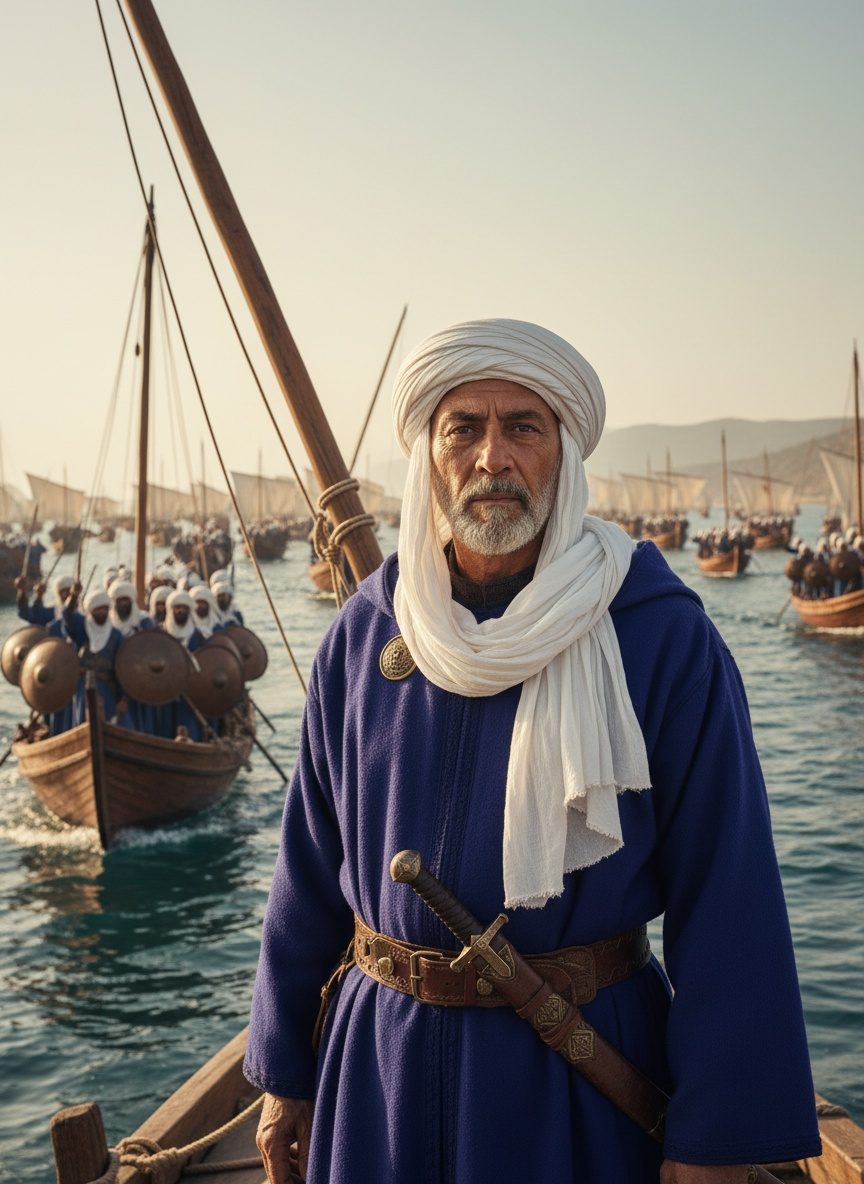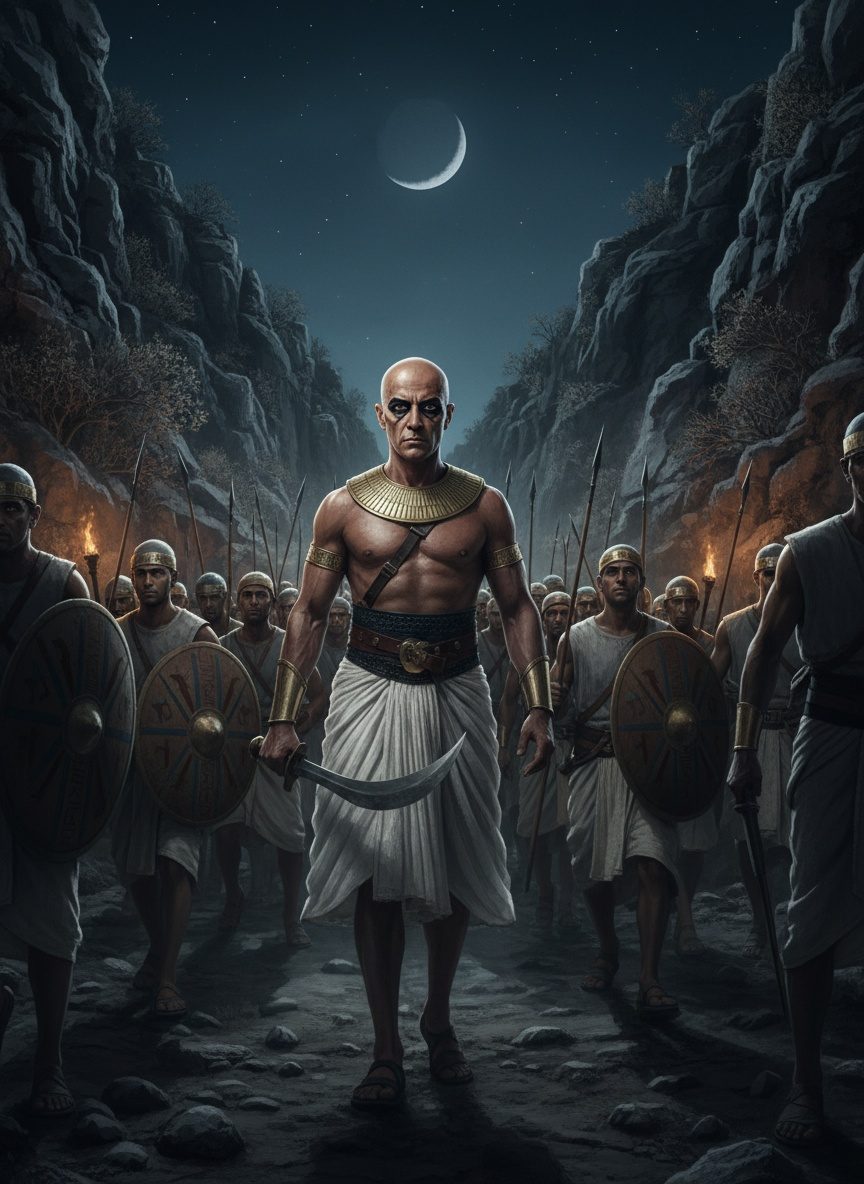
Thutmose III’s army had only one road to Megiddo. They carved a path through the impossible night.
Setting the Stage for Battle
In 1457 BC, the renowned fortress of Megiddo loomed large in the consciousness of Ancient Egypt and its adversaries. Nestled in the heart of Canaan, this citadel was more than just a defensive stronghold—it was an emblem of power and resistance. The Canaanite coalition, a determined alliance of regional kings, believed they had secured the upper hand. Safely tucked within Megiddo’s formidable walls, they anticipated their geographic advantage would grant them victory over any Egyptian force daring enough to challenge them.
Yet, amid the shifting sands of Egyptian ambition, Pharaoh Thutmose III emerged as a military innovator. Known for his strategic prowess, Thutmose had already begun to sculpt his reputation as one of Egypt’s greatest warrior kings. By uniting his troops under a single banner of determination, he sought to break the Canaanite coalition’s grip on Megiddo and reassert Egypt’s supremacy. The terrain leading to Megiddo offered a singular path—an arduous and narrow mountain pass. Conventional wisdom dictated that this path was predictably treacherous and easily defensible. The coalition’s confidence swelled with the notion that they held the key to their own victory in the topography itself.
The Night Crossing
Enter General Djehuty, a gifted tactician whose name would soon be etched indelibly into the annals of history. Under Thutmose’s command, Djehuty orchestrated a bold maneuver that would defy the logic of warfare. As twilight settled over the land, the Egyptians enacted their daring plan. Cloaked in the obscurity of night, their army moved silently, guided only by the dim glow of the stars and their unwavering resolve. The narrow pass, a towering challenge by day, became their subterfuge under the cover of darkness. It was a march of silence punctuated by the rhythmic shuffle of sandals against rock.
With each step, Djehuty’s forces outmaneuvered the perception of the enemy. Their gamble was as audacious as it was calculated—an infiltration that would place them within striking distance of Megiddo before dawn’s first light. The coalition behind Megiddo’s walls remained oblivious as Djehuty’s troops advanced through vulnerability incarnate, their advance masked by a canvas of ink-black night. As first light brushed against the horizon, the unthinkable became apparent to the defenders. The gate that was meant to be the final bastion of resistance stood perilously unguarded, a gap that would soon flood with the determination of Egyptian soldiers.
The Victory and Its Ripple Effect
What unfolded at Megiddo was not just a military conquest; it was an echo through time, a vignette of how daring strategy can overwhelm even the most steadfast defenses. The Canaanite coalition, caught off guard by Egypt’s ingenuity, saw their strategic facade crumble. As Thutmose III's forces surged through the unprepared gates, the tides of battle shifted irreversibly. The Egyptians, emboldened by their nocturnal triumph, swiftly surrounded the fortress, their calculated audacity paying dividends in both morale and momentum.
Megiddo's capture was not just a victory of arms but a statement of cunning, illustrating the importance of adaptability in warfare. Thutmose III solidified his position as a formidable pharaoh, with Egypt's dominance radiating outward across the Near East. The outcome at Megiddo set a precedent, serving as an early example of how innovation and audacity could redefine the potential of military campaigns. General Djehuty’s nocturnal crossing became a cornerstone for tactical studies—not only within Egypt but reverberating down the corridors of military history.
In the broader narrative of history, the story of Thutmose III’s campaign at Megiddo serves as a reminder of the inherent power in flexibility and the human capacity for bold, transformative action. The Egyptians’ ability to leverage the silent march of night reshaped the contours of their geopolitical landscape, illustrating that while fortresses may serve as physical barriers, it is often the unexpected that redefines the course of events. Today, the tale of Megiddo continues to captivate with its lessons on risk, strategy, and the timeless interplay of chance and choice. Though the sands of time have long since shifted, the echoes of Djehuty’s audacious gamble remind us of the eternal dance between human ambition and the shadowed paths that lead to triumph.