Ingólfr Arnarson sailed to Iceland with certainty. Yet, he embraced uncertainty by letting the sea decide his settlement.
The Call of the Unknown
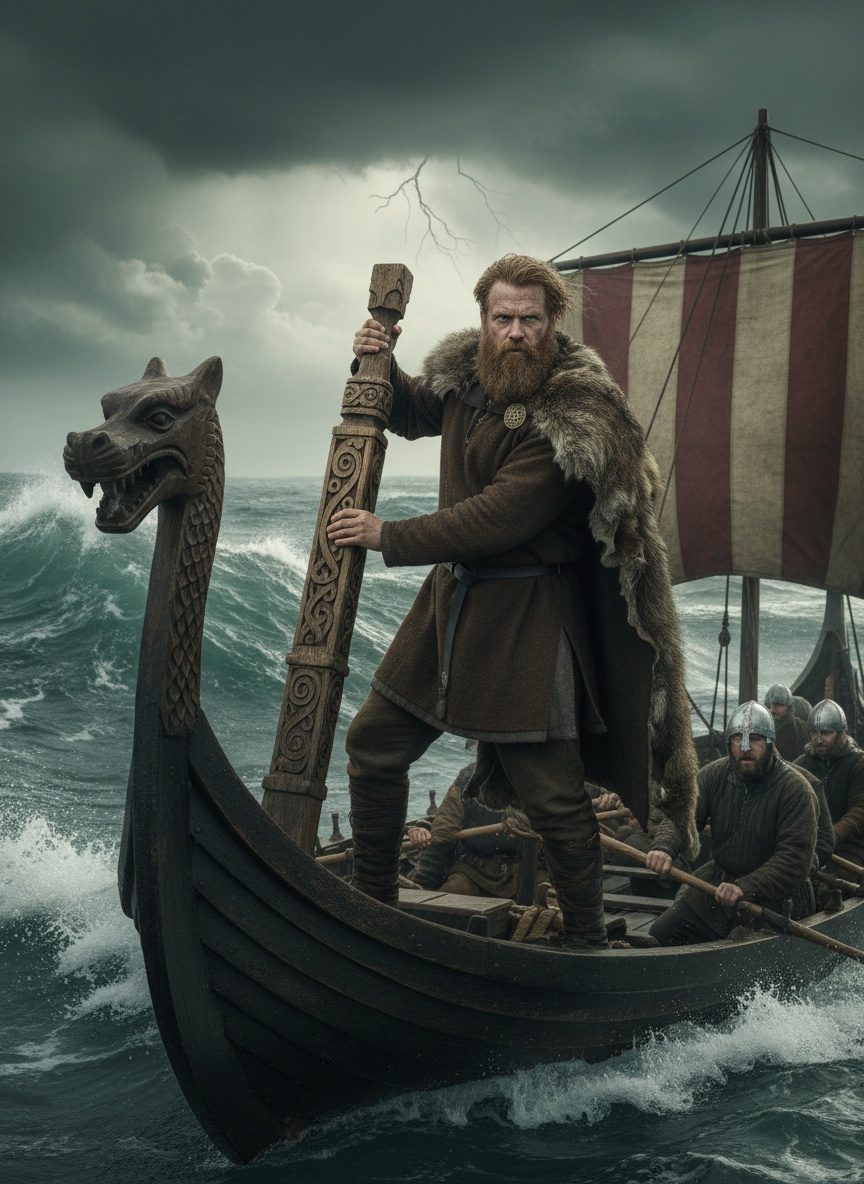
As the ninth century drew to a close, a fierce Norse chieftain named Ingólfr Arnarson looked out over the churning North Atlantic. He was in search of a new homeland, far from the strife of Scandinavia. In his eyes, Iceland shimmered with promise, a land untouched and ready for those brave enough to claim it. He did not embark on this voyage lightly or without peril. The open sea was no friend to the feeble, and Ingólfr was no stranger to its moods — nor to the superstitions that governed their lives.
To ask the gods for guidance, Ingólfr cast his sacred high-seat pillars into the turbulent sea, a bold gesture that would seem reckless to any bystander unfamiliar with the Viking worldview. These pillars were not just mere hunks of wood but deeply sacred objects, symbols of his chieftaincy and links to the Norse gods. It was a pact with fate, a vow: he would settle wherever the waves carried these pillars.
Drifting on Destiny
With sails full and stomachs hollowed by anticipation, the voyage to Iceland was a challenging endeavor. The harsh realities of such a journey were not for the fainthearted. Drifting forward, Ingólfr's ships battled icy winds and tumultuous seas, driven more by belief than by navigational acumen. For three grueling years, the search continued without relent, his people scraping a living from whatever landings they made. This waiting game was a test of their patience, faith, and resilience.
The arduous task of locating the two wooden pillars was left to Ingólfr's thralls. These enslaved workers scoured the inhospitable and rocky coastline, possibly cursing the gods in their Nordic tongue for turning their fortune into such an ordeal. As the seasons turned, little seemed to change, leading the crew deeper into the island’s cold heart without any inkling of their fate.
Discovery and Settlement
At last, after years that tested their resolve, Ingólfr’s thralls found what they sought. The pillars had washed ashore on a part of Iceland’s rugged landscape that would eventually bear witness to the birth of a significant settlement. As his exhausted thralls revealed the find, the sense of destiny fulfilled was palpable among them. It was as if the gods themselves had declared this spot as the destined home for Ingólfr and his kin.
Believing this to be a divine proclamation, Ingólfr began constructing his homestead in the shadows of smokey geothermal tablets. He called this new haven Reykjavík, which derives from the Norse words for "smoke bay," aptly capturing the steam rising from the earth and water. It was here, amidst a wild landscape of fire and ice, that roots of civilization began to form — humble hallmarks of what would become a thriving Norse settlement.
The Rise of a New Nordic Saga
The shores of Iceland, once silent and untamed, began to echo with the sounds of Norsemen hammering timber, shaping stones, and eking existence from Iceland's volcanic soil. Ingólfr's dreams were no longer intangible aspirations but a developing narrative of survival and growth. Reykjavík became the cradle for a community marked by shared struggles and achievements.
This settlement was more than just homes clustered in a far-off land. It became a hub for future generations, a foundational node for the brave souls fleeing from the Scandinavian mainland in search of opportunity and peace. Alongside his family and followers, Ingólfr planted the Viking Age firmly in the Icelandic landscape, not just as a historical backdrop but as ground zero for a future nation.
A Legacy Cast in Stone and Saga
Fast forward to today, and those stones echo the tales of Ingólfr Arnarson. Reykjavík stands as the capital of Iceland, a monument to visionaries who sought the future in uncharted territories. This narrative raises questions steeped in timelessness — was it chance, fate, or human grit that settled them there? Ingólfr’s tale is as much about the journey as it is about the destination, about the courage to choose a path shaped by natural forces beyond control.
In understanding Ingólfr’s legacy, we also glance at a worldview where reliance on nature’s whims taught the Vikings resilience and adaptability. The pillars he cast still offer allegorical guidance: life’s currents can sometimes lead to shores unforeseen but ultimately rewarding. Just as Ingólfr trusted his fate to the Nordic seas, his story challenges us to cast our aspirations freely and embrace what lies beyond the horizon.