The Battle of Stirling Bridge was a straightforward affair. The truth is far more complex and intriguing.
The Stage Is Set
In the sultry autumn of 1297, the lush Scottish Highlands were reverberating with cries of rebellion. William Wallace, a name that would soon become synonymous with fiery Scottish resistance, joined forces with Andrew Moray. Together, they represented the burgeoning hopes of a nation bristling under English domination. Their target: the strategic crossing at Stirling Bridge. It was a critical juncture, a key to Scotland itself, and both sides knew it.
The English, under the command of John de Warenne, 6th Earl of Surrey, and the treasurer of the English administration in Scotland, Hugh de Cressingham, were a formidable force. This wasn't just a skirmish over a bridge—the English were moving to crush a rebellion and reinforce King Edward I's grip on Scotland. Their army boasted trained knights, experienced foot soldiers, and a reputation of near invincibility. What could a ragtag band of Scotsmen do against such odds? As it turned out, more than anyone expected.
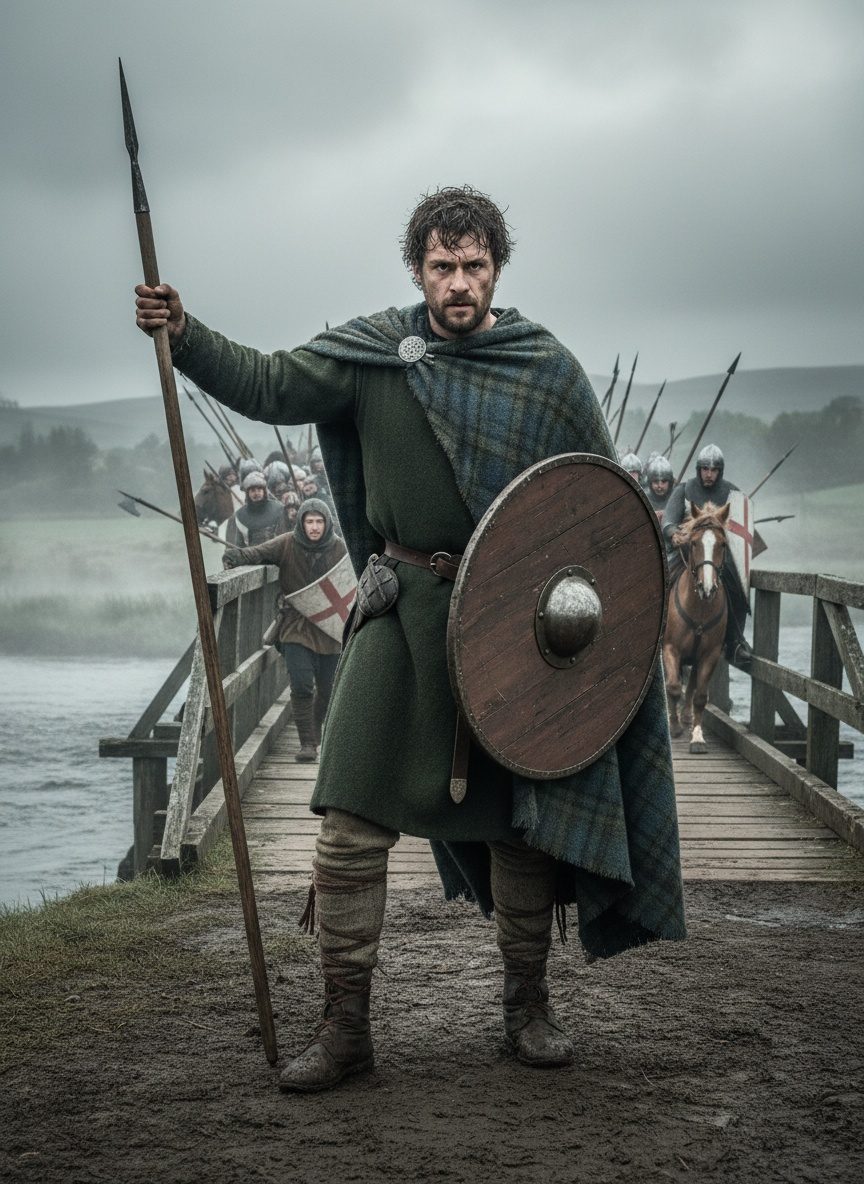
Stirling Bridge itself was a narrow wooden structure poised precariously over the River Forth. It offered a restricted crossing for any army, a fact that later played crucially in Wallace and Moray's plans. As the Scottish forces watched the English gather on the opposite bank, an extraordinary strategem unfurled in their minds. Let the English cross. Wait until their numbers were just right. Then unleash chaos.
The Art of Waiting
Stirling and its environs were alive with tension on September 11, 1297. The Scots lay in wait at Abbey Craig, a commanding position overlooking the contested bridge. From there, Wallace and Moray could see the full English force, bright in their armor, flowing like an unstoppable tide toward the narrow opening of the Forth crossing.
For the Scots, the decision to hold back was fraught with anxiety. The longer they waited, the greater the risk. Imagine the quiet, save the breath of a Highland breeze and the hushed whispers among men bracing for what could be their last stand. The Scots watched as Surrey began the tentative crossing. A trickle of soldiers, followed by a thicker stream. The narrowness of the bridge meant that only a few men could cross at once. A weakness perfectly suited for the trap set by the waiting Scots.
Historians often marvel at the patience and discipline displayed by Wallace and Moray. It was one thing to make a plan, quite another to see it through while hundreds of enemy forces slowly amassed right in front of your eyes. Yet, they waited, biding their time while chaos loomed potentially near.
The Clash at Stirling Bridge
Success hinged on nerve and timing. Once nearly half of the English army had crossed, Wallace and Moray sprang into action. The ambush was swift and brutal. Unleashing their pent-up fury, the Scots fell upon the segmented English forces with a vengeance. The English, caught in the narrow confines between the river and their advancing compatriots, found coordination nearly impossible. Horses screamed and clashed in futility on the bottleneck of the bridge, where movement was restricted.
It is said that the English commander, Hugh de Cressingham, was among the first to fall, his strategic prowess failing him at this critical juncture. Legend has it his skin was later flayed and turned into trophies by the Scots, a grim reminder of their ferocity. Even Surrey, watching in disbelief from the south bank, could not have imagined the carnage that was unfolding before his eyes.
The bridge itself became a death trap. The remaining English troops, realizing the dire straits, attempted to retreat, but the bridge could only support so much weight. In a catastrophic collapse, many were plunged into the river below, adding to the chaos and breaking the morale of an overwhelmed English force.
By day's end, the fields near Stirling were strewn with the remnants of England's military pride. The Scottish victory was not just a win in battle but a profound psychological triumph. In one decisive move, the English invincibility myth crumbled with their broken troops.
A Turning Tide
The victory at Stirling Bridge was more than a tactical masterpiece; it was a clarion call that resounded throughout Scotland, galvanizing further resistance against English rule. For Wallace and Moray, it was a validation of their leadership and a testament to the indomitable spirit of the Scottish people. As tales of the battle spread, the legend of William Wallace grew, inspiring countless others to join the fight for Scotland's independence.
Though Moray would succumb to injuries later that year, and Wallace's own fate lay fraught with perilous battles and eventual betrayal, Stirling Bridge marked a critical turning point. Despite their eventual overtake by English forces, the Scots had demonstrated that courage and ingenuity could defy even the most formidable armies. The principles of guerrilla warfare etched into history at Stirling Bridge would echo in countless uprisings across centuries, proving once more that terrain and strategy can outweigh might and armory.
The Battle of Stirling Bridge remains a vivid tableaux of courage, cunning, and resistance against overwhelming odds. It was where a narrow wooden bridge on a morning in September became the stage for unlikely heroes, springing forth from shadows to challenge a mighty empire. Their lesson endures: strategies of patience, place, and opportunity can turn the tide of history against any seemingly insurmountable force.