Leif Eriksson discovered America. Except history almost forgot him.
The Quest for New Lands
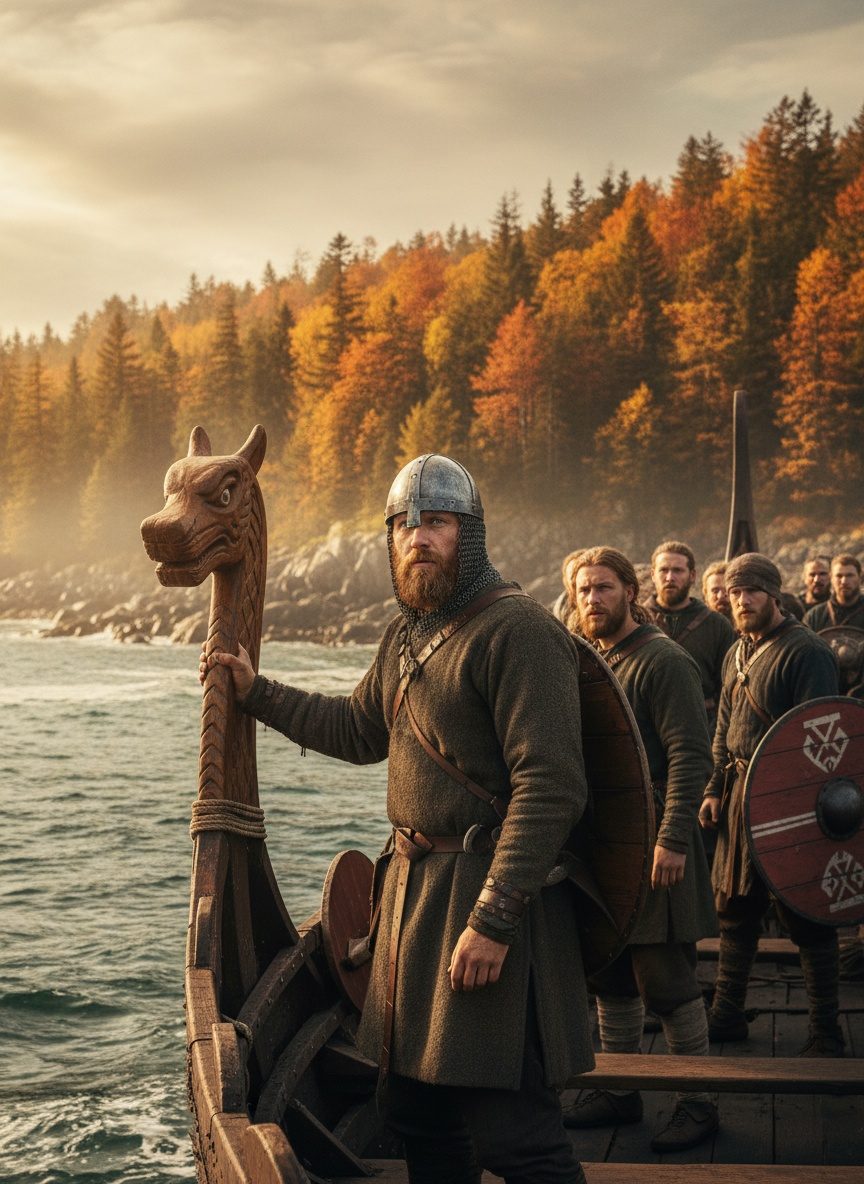
In the twilight of the Viking Age, when Norsemen were famed for raiding, exploring, and settling across Europe, a remarkable voyage unfolded. Around the year 1000 AD, a Norse explorer named Leif Eriksson set his sights on a tantalizing expanse of land rumored to lie beyond the vast Atlantic. With a sturdy longship beneath him, known for its fearsome dragon-headed prow, Leif sailed from Greenland, emboldened by tales of his father Erik the Red, who had famously named Greenland for its pastoral appeal.
Leif's journey was one of curiosity and adventure. These Vikings, born in the fjords of Scandinavia, were natural explorers. Their mythology spoke of distant lands and unknown horizons, encouraging them to seek new territories. It was likely the stories heard from returning sailors, mentioning lands lush and fertile, that spurred Leif's journey. The sea was their highway, and the horizons were their boundaries. Leif steered westwards into the unknown, ultimately landing on the shores of what would later be called North America.
Imagine the coast as Leif found it—rugged, wild, and untouched. Stepping ashore, Leif encountered a landscape vastly different from icy Greenland. He called it "Vinland," possibly inspired by the wild grapes he discovered there. This was a land of promise, vibrant and teeming with life, offering a stark contrast to the harsh, barren nature of Greenland's icy expanses. For Leif and his men, it was a chance to build anew, a foothold on yet another corner of the world.
Wintering in the New World
Building a settlement was no small feat. Leif and his crew constructed shelters using the natural resources around them—trees that stood in abundance against the Atlantic winds. These structures were not unlike those built back in Greenland and Iceland, expertly crafted for warmth and shelter against the elements. The settlement buzzed with the energy of discovery and survival. It was an symbiotic dance between man and land, nature providing in response to quiet industry.
Winters in Vinland were different from what the Norsemen knew. The weather, although cold, was kinder compared to the icy grip of Greenland. The settlement was alive. By day, the men explored, hunted, and gathered, their curious eyes cataloging every leaf, fruit, and animal. These were the first Europeans to witness the wonders of the American continent, its forests echoing the songs of many birds, its rivers thick with fish.
At night, they huddled together within their earthen shelters, the firelight dancing on faces filled with stories of home and dreams of new legacies. The Norse sagas would later recount these tales—a mix of truth and legend, though often seen through a veil of time and myth. The settlers shared a solitary connection with the land and, perhaps, with other tribes that roamed these territories long before. Yet it was Leif's return to Greenland that sealed the journey in history, his tales transporting this new wonder across the Atlantic to European ears.
Forgotten Footsteps
Leif Eriksson's journey was chronicled in the epic Norse sagas, ensuring his feat was recorded for posterity. However, the story of Vinland faded into obscurity, eclipsed by the exploits of later explorers. The Middle Ages were a time of turmoil and transformation in Europe—wars, trade, and religion remodelled societies, leaving little room to ponder a mysterious land across the sea.
While Leif's voyage to America predated Columbus's renowned journey by around five centuries, it would be Columbus who claimed the glory of discovery for himself and Spain. The stories of the sagas lingered on, admired more as folklore than fact, until archaeological discoveries in the 20th century confirmed the Norse presence in North America. The unearthing of a Norse settlement at L'Anse aux Meadows in Newfoundland validated Leif's journey, rewriting a chapter of shared history that had been lost to time.
Today, Leif Eriksson's story serves as a reminder of the adventurous spirit that resides within humanity. It challenges us to question what we know of history and explore the tales that remain in shadows. As we peel back the layers of myth, we uncover the truth—stories of bravery, discovery, and the timeless human yearning to venture beyond the known. Leif's journey adds a rich tapestry to our understanding of exploration, reminding us that history is far more interconnected than we sometimes perceive. In celebrating his achievement, we honor a legacy not only of exploration but of opening new paths for those daring enough to tread them.