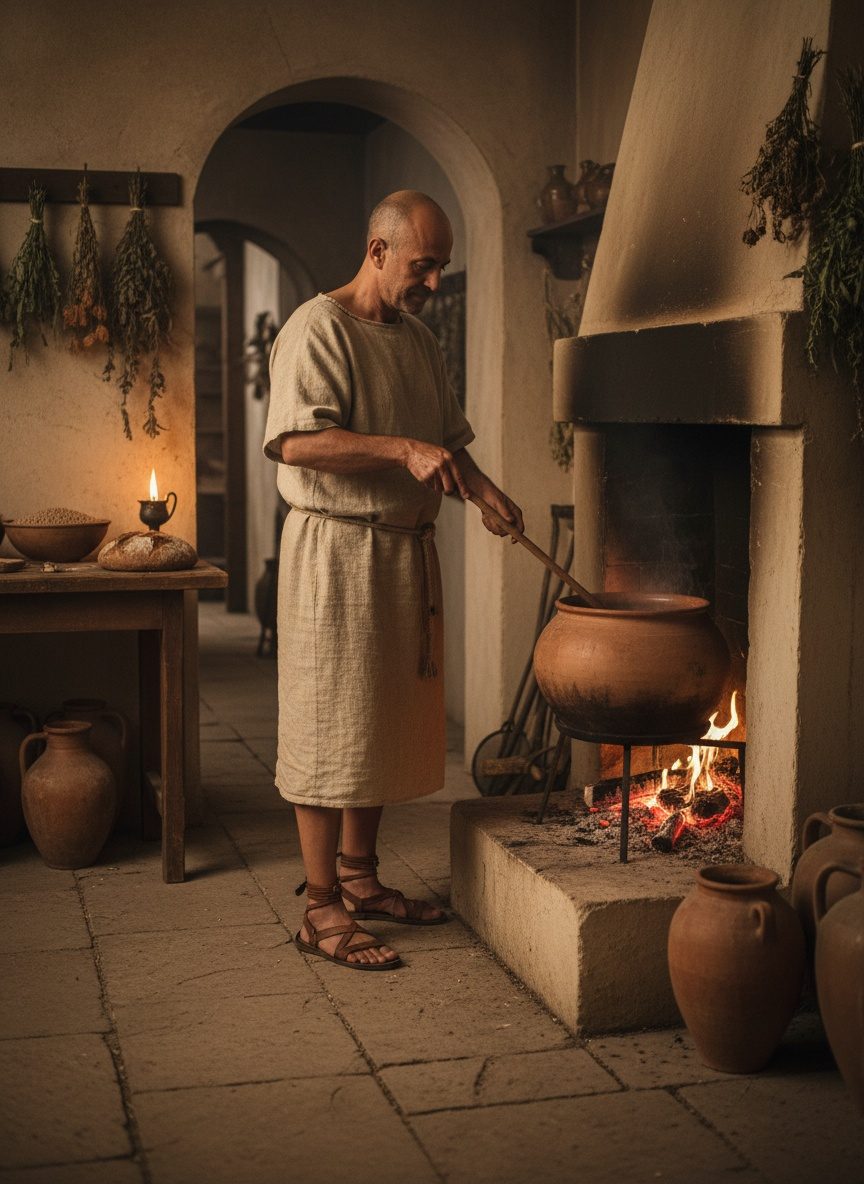
January 17, 100 CE. The aroma of simmering lentils filled the modest kitchen.
The Modest Meals of the Mighty
In the heart of Rome, amidst the grandeur of marble and the echoes of cheering crowds, Trajan — ruler of an empire that stretched from the misty hills of Britain to the sun-baked sands of the Persian Gulf — dined in simplicity that belied his stature. Unlike tales of emperors reveling in excessive feasts, Trajan preferred meals akin to what his legionnaires might eat. Despite governing millions, each evening saw him seated before a meal of lentils, fish, olives, and bread. In a world that celebrated excess, this choice of diet was intentional, reflecting a life governed by discipline and relatability.
The Humble Chef of an Emperor
At the heart of this culinary simplicity was a single slave, entrusted with the task of preparing these modest meals. Within a small, unadorned kitchen, the cook worked amidst clay pots and wooden utensils, crafting dishes characterized by nutrients, not excess. This cook, an unsung hero of daily life, knew the peculiarities of an emperor's diet better than anyone else. With limited ingredients, he spun nourishment from the earth's simplest offerings, transforming them into meals fit for a man who wielded unprecedented power. It was a practice steeped in tradition and practicality — simple recipes passed down through generations, beloved by commoners and elite alike.
Culinary Symbolism of Power
Why such simplicity? For Trajan, the answer may have been rooted deeper than routine. Rome's emperor lived in contradiction to the stereotype of opulence associated with his role — an anomaly in a city accustomed to spectacle. Trajan's choice served as a powerful symbol to his people. While he controlled vast riches and resources, he demonstrated that true power lay not in indulgence but in restraint. This was a message to those he led: that the greatest leaders were those who understood the lives of their subjects, including the unadorned meal of a Roman soldier. In an empire often divided by class, such acts of deliberate humility bridged societal gaps, weaving the emperor into the fabric of everyday life.
Rome through a Dining Table
As Trajan dined simply, the lines between ruler and ruled blurred at his table. Could it be that the emperor's meals were reflective of an ideal Rome tried to project — strong, disciplined, and unified? Beyond the chef's small domain, markets bustled with vibrant stalls offering spices, oils, and an exotic display of imported goods. Yet, in the hustle and bustle of Rome's chaotic pulse, the emperor’s modest table anchored a different kind of feast. Though Trajan never feasted on gold-plated platters or flamingo tongues, the fare shared importance with the elaborate banquets of his predecessors. His meals became a dialogue with his people, a daily act showing that grandeur rests in commonality, a notion still echoing through modern leadership theories today.
The Legacy of a Simple Meal
Such narratives are often overshadowed by tales of conquest and power, but the emperor’s choice carries timeless relevance. The modest meals prepared by his dedicated cook highlight a leadership philosophy that values empathy and grounded humility. Trajan's adherence to simplicity challenges us to reconsider our own perceptions of power and success — urging us to appreciate the strength found in understanding and embracing the commonplace rhythms of life. His dinner table became more than a place of nourishment; it stood as a quiet stage for a lesson in leadership, resonating through time as a fundamental element of the human experience. It posits a question for every age: might the most profound influence stem from shared bread rather than shimmering gold?