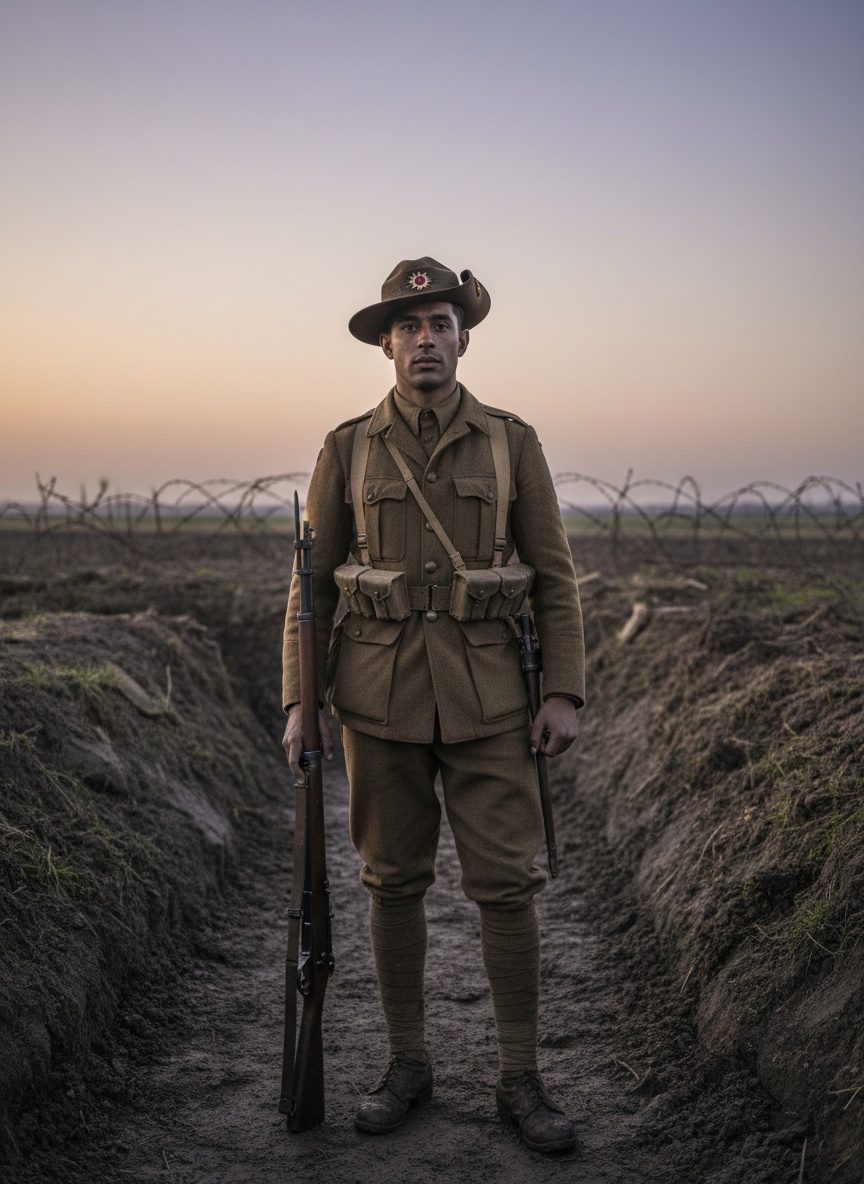
He never returned home, and he never saw his parents again. Yet, Private Alfred Momplhait's identity was lost for nearly a century. Only the science of DNA could finally whisper the tale his silence had kept hidden.
The Fateful Day that Shattered the 32nd Battalion
On July 19, 1916, in the grim heart of World War One, men from the 32nd Battalion marched into the pages of history, their bravery immortalized but soured by tragedy. The swelling optimism of their youth was met by the grim orchestration of war at Fromelles, Northern France. The battlefield, laced with crisscrossing trenches and the shadow of death, engulfed them.
As the dawn broke, a fierce exchange of artillery fire bore down upon them. A disastrous attack, hastily planned to divert German forces from the Battle of the Somme, turned into a cataclysm. In the ensuing chaos, 718 Australian soldiers fell, a devastating blow. Among them was Private Alfred Momplhait, a name lost amidst the roll call of the fallen, unknowingly marking an absence that would linger unresolved for generations.
A Name Among the Nameless
Alfred Momplhait's story is one of identity reclaimed from the clutches of anonymity. Born as the son of a Mauritian settler and an Australian woman in Adelaide, life steered him far from the dusty streets of home. By the time he reached the frontline, Momplhait, like many soldiers, must have looked ahead with hope. Fromelles, however, was where hope was abruptly shrouded in the finality of death.
His body was swept from the battlefield by the Germans, part of a sombre collection of the war's debris. Buried in a mass grave, the soldiers were afforded no individual recognition, becoming shadows in the earth. For nearly a century, Alfred's name was etched in memorials but not on any identified grave, leaving a void in the history of a family and a nation.
Unveiling the Mass Grave
The hidden grave at Pheasant Wood remained undisturbed, its secrets tightly guarded by the passing years. Not until the early 21st century did an archaeological survey bring to light the harrowing discovery. A collective burial site, containing the remains of soldiers from the ill-fated attack, hinted at the possibility of resolving once-sealed fates.
This was a pivotal moment. Science, through the lens of forensics, stood ready to unmask the silent. Advances in DNA technology held the keys to the vaults of the past. Here was the turning point—one that would unravel the anonymity that had cloaked Alfred Momplhait and others like him.
The DNA Revolution: A Century in the Making
With meticulous care, the process of identification began in earnest. DNA samples were extracted, supported by an international effort woven together by historians, archaeologists, and scientists. Comparing these samples to family members who had provided their DNA, the puzzle of the past started to align.
For 92 years, Private Alfred Momplhait had lain in obscurity, but science finally gave him back his name—a revelation that echoed beyond the gravesite, signaling a deeper understanding of personal sacrifice. Archaeologists and forensic experts worked alongside historians to piece together biographies and bring to light the faces behind the numbers lost in the statistics of war.
Reclaiming a Legacy
When Alfred Momplhait’s name was restored, it was not just a solitary reclamation of identity. It was an act of giving voice to the silenced, of honouring those who paved the muddy lanes with their sacrifice but who had remained nameless for too long. Families, like that of Alfred, could finally lay their ancestors to rest with the dignity and respect they deserved.
The story of Private Alfred Momplhait and the unearthing of his identity through science transcends its era. It reminds us of the quiet courage and the lost generations, bridging a gap between the worlds of the past and present. This journey through time speaks volumes to the enduring power of memory and the tenacity of truth, reinforcing the notion that history—often seen as distant and immutable—can be rewritten, even a century later, with a single whisper of a name.