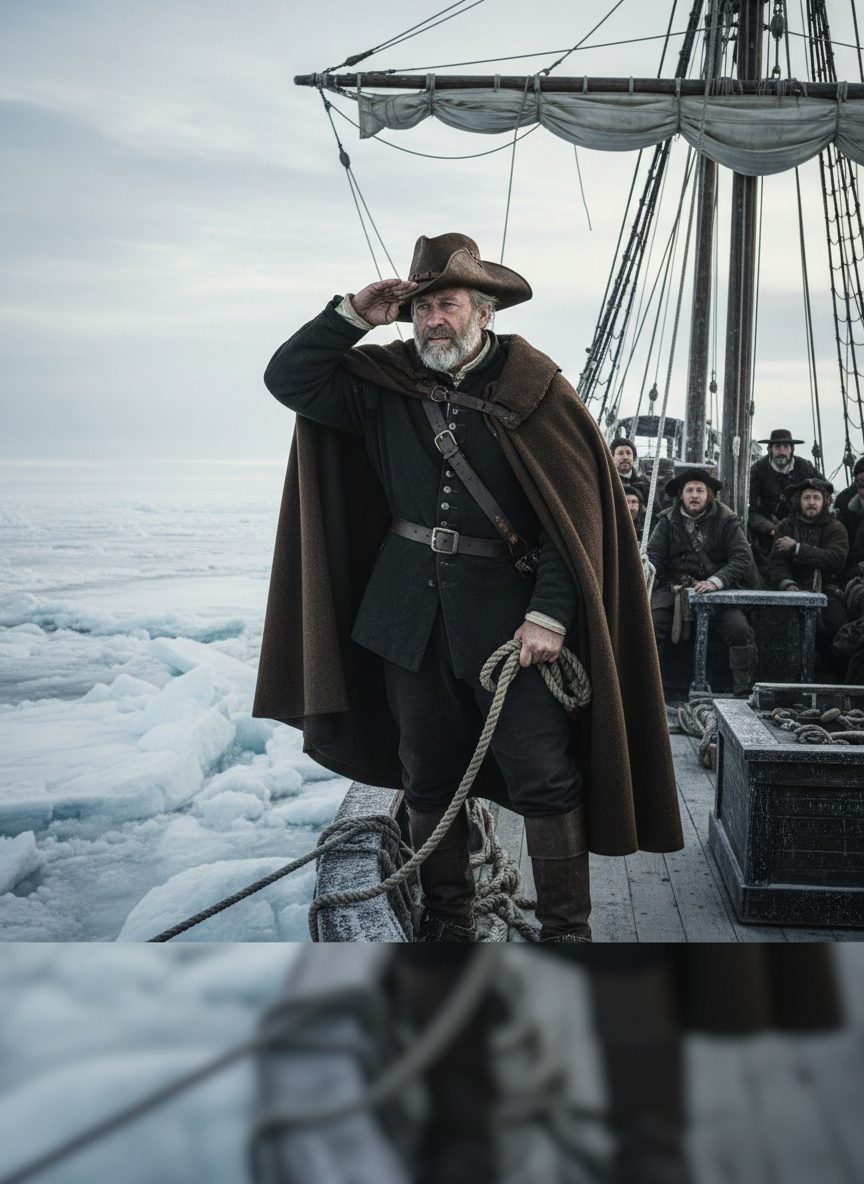
The HMS Resolute was forever lost in Arctic ice. Yet, against all odds, it found its way back across two continents.
An Icy Fate
In 1854, the Arctic ice held HMS Resolute in a relentless grip, sealing its fate in a frozen demise. Under the command of Captain Henry Kellett, the British naval vessel was a part of a squadron in one of the many gallant attempts to discover the fate of the earlier lost Franklin Expedition. As desperate conditions worsened with each passing day, the crew had to make a heart-wrenching decision. Abandon the sturdy oak-framed ship, their home in the icy void, and trudge through the bitter expanse with hopes dimming like the Arctic sun.
Marooned in latitude unknown but the spirit unbroken, they set off across the forbidding ice towards the distant promise of safety. The ship that had been home and haven slipped away, fated to join the untold wrecks that peppered the Arctic's long history of exploration. Meanwhile, Captain Kellett and his men endured perilous journeys on foot and by other vessels, ultimately returning to Britain while HMS Resolute remained resigned to a silent, frozen end.
An Unexpected Discovery
Years passed and history might have forgotten the Resolute, yet the sea had different plans. In 1855, an American whaler named James Buddington was nearing the end of his voyage aboard the George Henry in the Davis Strait off the coast of Baffin Island when he encountered an extraordinary sight. Through the dense Arctic mist, Resolute emerged, adrift and astonishingly intact, hundreds of miles from where she had been left.
Buddington boarded the ship, discovering it empty but perfectly preserved. The echo of departure still lingered in its timbers. Faded logbooks with tales of heroism lay open alongside navigational charts marked by hands that had expected never to return. Buddington, perhaps sensing the broader story, decided this ship was more than salvage—it was history.
The Resolute’s return to American shores was remarkable not just for its improbability but for its condition. Time in the ice had preserved rather than destroyed her. Her masts stood tall against New England skies, her hull unbreached. Her voyage from certain freezing to the warm embrace of land was the stuff of myth.
The Gesture of Goodwill
The United States, recognizing the significance of the Resolute’s return, decided on a profound gesture. Rather than claiming the ship as a prize, Congress authorized funds to have the vessel refitted and restored. This act of unprecedented goodwill reflected growing diplomatic warmth between the two nations, who had so recently been adversaries.
In 1856, a fully revived HMS Resolute sailed back across the Atlantic to her homeland in a statement of international friendship and respect rare in an age often defined by colonial competition. Upon her arrival in Britain, she was received with celebration. For Queen Victoria, this was more than the return of a ship; it was a harbinger of new transatlantic relations built not on conquest but camaraderie.
The Queen's Gift That Endures
Time ultimately claimed HMS Resolute's seafaring days. By 1879, the great ship was decommissioned and her timbers dismantled. However, Queen Victoria, moved by the ship's extraordinary journey and the friendship it symbolized, commissioned something even more enduring. From her timbers, a massive and distinguished desk was crafted, a gift to President Rutherford B. Hayes in 1880.
Today, the Resolute Desk occupies a place of pride in the Oval Office. Presidents lean across its surface as they make decisions shaping both the nation and the world. It stands not just as a piece of furniture but a testament to the resilience, cooperation, and unexpected kinship between nations. The Resolute Desk, much like the vessel from which it was born, is a reminder that sometimes the silent drift of history brings us to shore with gifts we hadn't anticipated, gifts that bind two nations together in an unbreakable legacy.