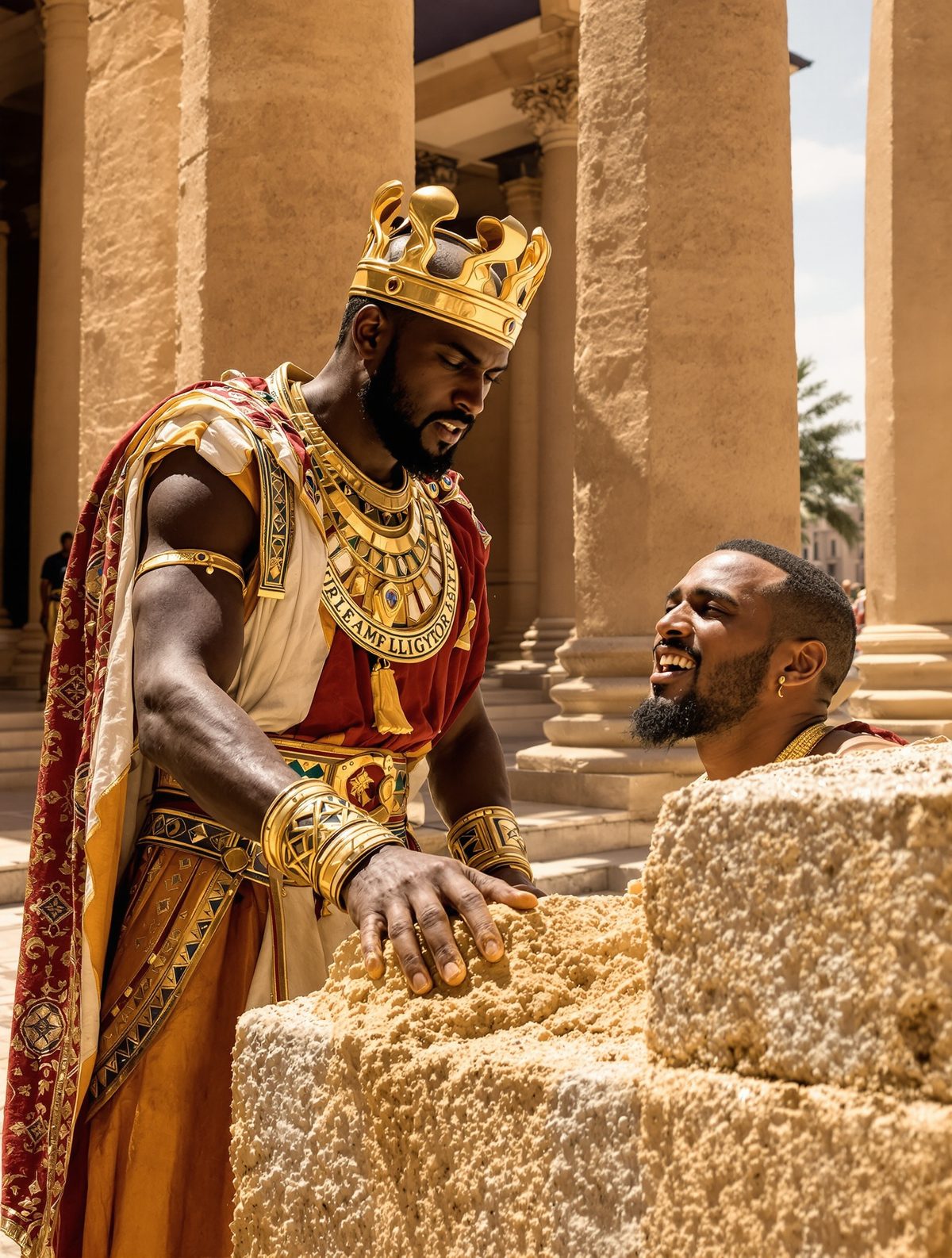
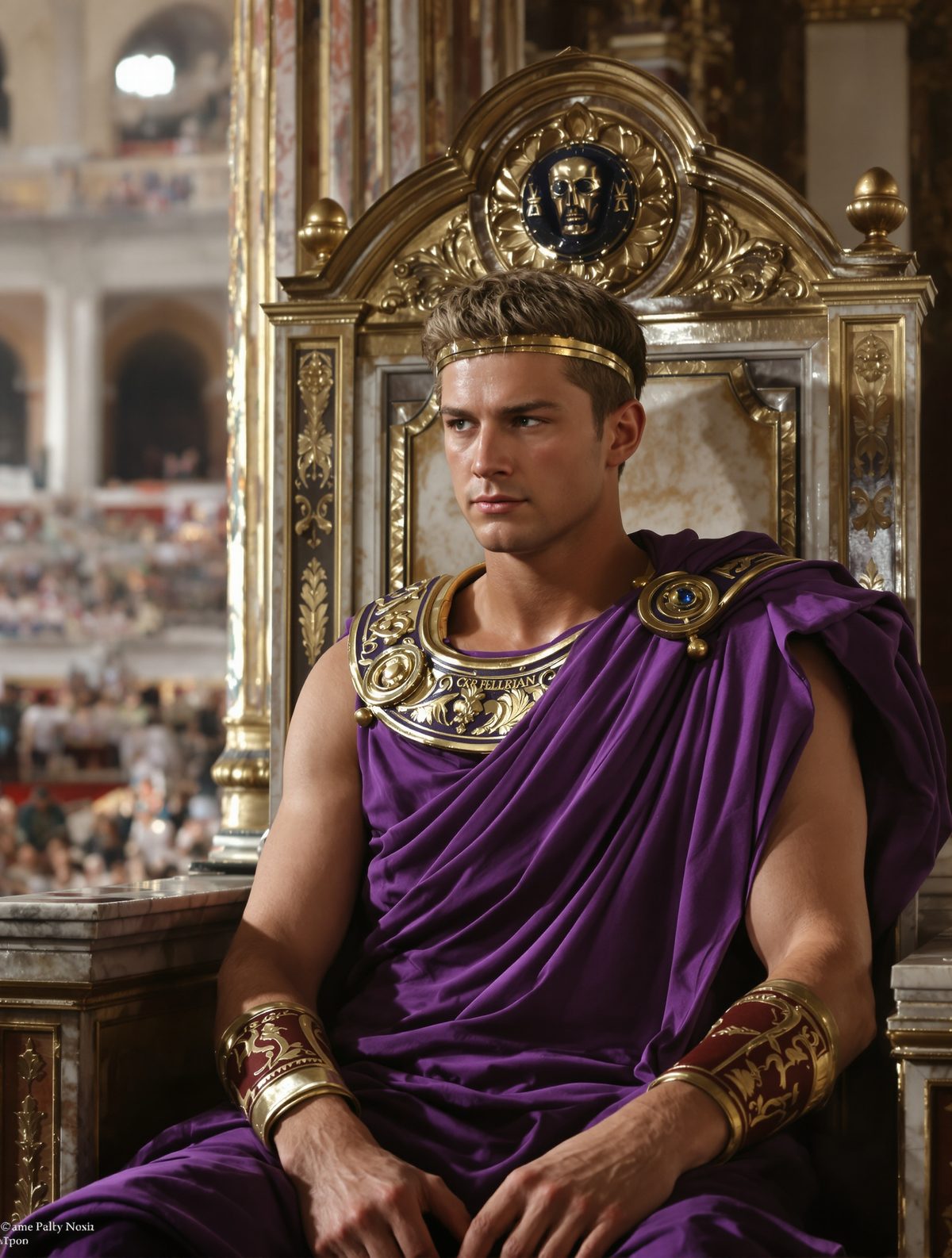
Picture this: you're the most powerful man in the ancient world, hosting the feast of your lifetime. Foreign dignitaries hang on your every word, servants glide between marble columns bearing platters of delicacies, and the finest wine flows like water. Then a donkey wanders into your banquet hall, starts munching on your expensive figs, and you laugh so hard it literally kills you.
This isn't the plot of a satirical comedy—it's exactly how Roman Emperor Chrysippus died on a sweltering summer evening in 207 BC, creating what historians would later call the most ridiculous royal death in human history.
The Man Who Ruled an Empire
Emperor Chrysippus wasn't supposed to die laughing. By 207 BC, he had spent nearly a decade transforming Rome from a regional power into a Mediterranean juggernaut. Standing barely five feet tall with a notorious temper, Chrysippus compensated for his diminutive stature with an iron will and an unexpected sense of humor that both charmed and terrified his subjects.
Born into the patrician Cornelius family, Chrysippus had earned his purple through a combination of military brilliance and political cunning. His campaigns against the Carthaginians had secured Rome's dominance over Sicily, while his domestic policies had won him the grudging respect of the Senate. But it was his legendary dinner parties that truly set him apart from other emperors.
The Romans took their feasts seriously—these weren't mere meals but elaborate theatrical productions that could last up to ten hours. Chrysippus had elevated this tradition to an art form, hosting banquets so extravagant that senators would fast for days beforehand just to fully appreciate the experience.
A Feast to End All Feasts
The banquet of July 23rd, 207 BC was meant to be Chrysippus's masterpiece. He had invited over 200 guests to his sprawling villa overlooking the Tiber River, including ambassadors from Egypt, Greece, and the recently conquered territories in Spain. The guest list read like a who's who of the ancient world—everyone from celebrated poets to wealthy merchants to military heroes.
For weeks, the emperor's staff had been preparing. Apicius, his head chef, had imported peacocks from India, oysters from Britain, and exotic spices that cost more than most Romans earned in a year. The dining hall itself had been transformed into a garden paradise, with live nightingales in golden cages and fountains scented with rose water.
The pièce de résistance was a towering display of fresh figs from Syria—each one the size of a child's fist, glazed with honey and dusted with gold leaf. These weren't just desserts; they were edible symbols of Rome's reach across the known world. A single fig cost roughly what a skilled craftsman might earn in a month.
As the sun set over the seven hills, Chrysippus surveyed his creation with satisfaction. Everything was perfect. Too perfect, as it turned out.
The Uninvited Guest
Nobody knows exactly how the donkey got in. Some accounts suggest it belonged to a wine merchant making a late delivery. Others claim it was a sacrificial animal that had wandered away from a nearby temple. What everyone agrees on is that around the feast's fourth hour—just as Chrysippus was delivering a particularly pompous speech about Roman superiority—a scruffy brown donkey ambled through the main entrance as if it owned the place.
The reaction was immediate and mortifying. Dignified ambassadors scrambled onto couches, their togas billowing around them. Servants froze mid-pour, wine goblets trembling in their hands. One Egyptian diplomat reportedly fainted into a bowl of dormice.
But the donkey seemed utterly unfazed by the chaos it had created. With the single-minded determination that only donkeys possess, it made a beeline for the magnificent fig display. And then, as two hundred of the ancient world's most important people watched in stunned silence, it began to eat.
Not daintily. Not politely. The donkey attacked those precious, gold-dusted figs with the enthusiasm of a creature that had stumbled upon the greatest treasure in the world. Honey dripped from its whiskers. Gold leaf stuck to its nose. Fig juice splattered across the pristine marble floor.
Death by Laughter
What happened next defied every rule of imperial dignity. Instead of flying into one of his legendary rages, Chrysippus began to laugh. Not a polite chuckle or a nervous giggle, but a deep, uncontrollable belly laugh that seemed to come from his very soul.
The sight was apparently irresistible—this mangy donkey, completely oblivious to the fortune it was devouring, methodically working its way through months of careful preparation while the most powerful people in the Mediterranean cowered on furniture. According to the historian Pliny, Chrysippus laughed so hard he couldn't breathe. Tears streamed down his face. He doubled over, clutching his sides.
"Look at him!" the emperor reportedly gasped between fits of laughter. "He has better taste than any of us!" This only made him laugh harder.
The laughter went on for nearly ten minutes—an eternity in a formal dining setting. Guests began to look concerned as Chrysippus's face turned red, then purple. His breathing became labored and shallow. Still, he couldn't stop laughing.
Then, with shocking suddenness, he collapsed.
The imperial physicians would later determine that Chrysippus had suffered what we would now recognize as a heart attack, brought on by the physical stress of uncontrolled laughter. He died within minutes, his last words allegedly being, "At least... the donkey... enjoyed the figs."
The Aftermath of Absurdity
News of Chrysippus's death spread through Rome like wildfire, but not in the way anyone expected. Instead of mourning their fallen leader, citizens couldn't stop talking about the sheer ridiculousness of his demise. Street vendors began selling "Chrysippus figs" (regular figs with a donkey carved into them). Graffiti appeared on walls throughout the city: "Beware of laughing donkeys."
The Senate, faced with the impossible task of eulogizing an emperor who had died laughing at farm animal, chose to emphasize his military victories instead. But the people remembered the donkey.
Remarkably, the animal itself became something of a celebrity. Rather than being destroyed (as many expected), it was adopted by the temple of Bacchus, god of wine and revelry. Priests declared it sacred, reasoning that any creature capable of killing an emperor through pure comedy must be divinely blessed.
The donkey lived for another seven years, during which time it was fed the finest food in Rome and became a pilgrimage destination for those seeking good fortune. When it finally died of old age, the Romans erected a small statue in its honor—one of the few monuments to a donkey in the entire empire.
When Laughter Really Was the Best Medicine (Except When It Wasn't)
Chrysippus's death might seem like nothing more than a historical curiosity, but it reveals something profound about the nature of power, dignity, and human absurdity. Here was a man who controlled the fate of millions, who commanded legions and shaped the course of civilizations—brought low by his inability to control his own laughter.
Modern medicine confirms that fatal laughter, while extremely rare, is indeed possible. Gelastic syncope can cause loss of consciousness, and in people with underlying heart conditions, intense laughter can trigger cardiac episodes. Chrysippus, it seems, was ahead of his time in discovering that comedy really can be a matter of life and death.
But perhaps there's a deeper lesson here about the randomness of fate and the futility of taking ourselves too seriously. In our age of social media outrage and political grandstanding, maybe we could all learn something from an emperor who died laughing and a donkey who just wanted some figs. After all, memento mori—remember you must die—but Chrysippus proved you might as well laugh while you're alive, even if it kills you.