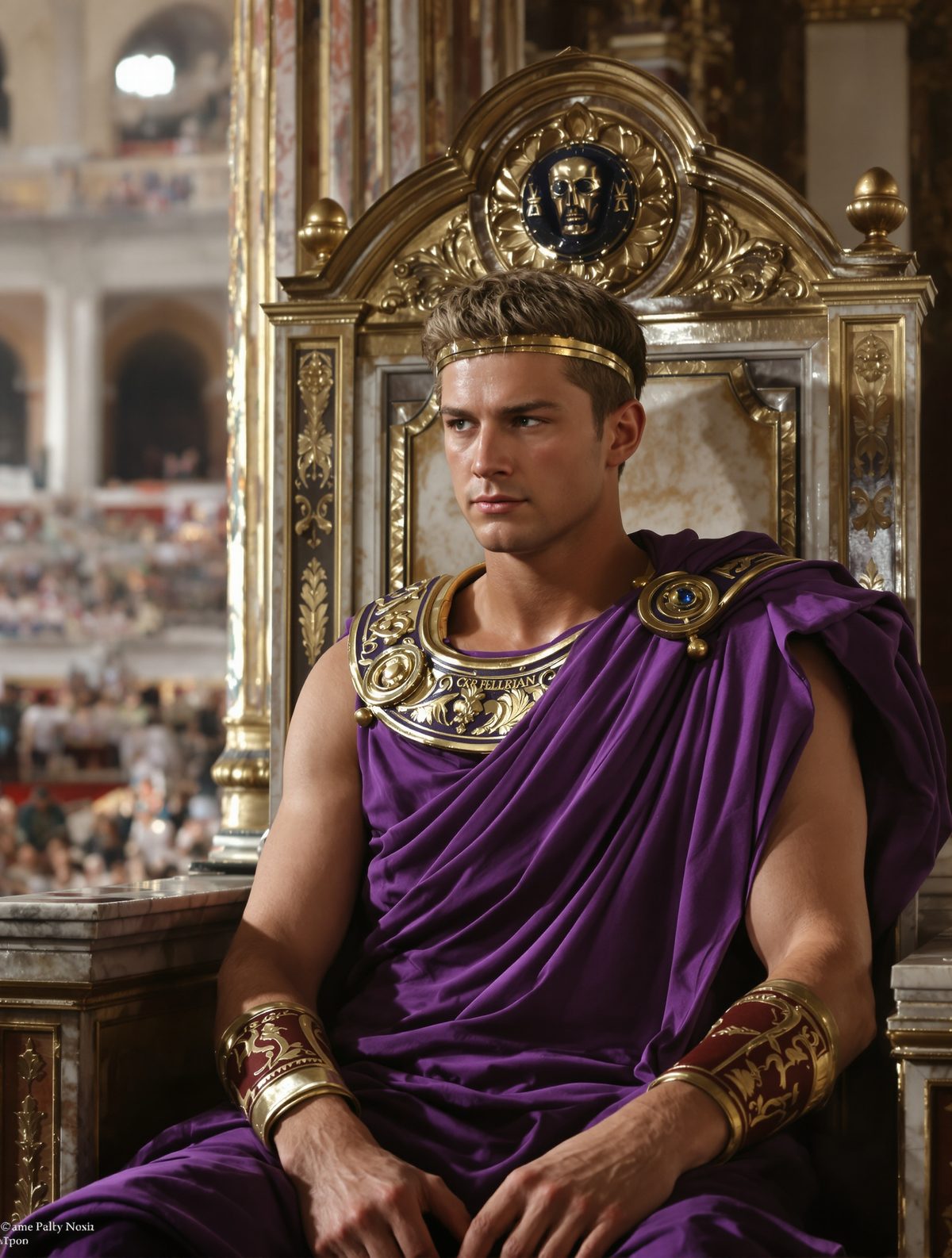
The sound of chisel against granite echoed through the royal workshop in Aksum as sweat dripped from the stonemason's weathered hands. For three agonizing days, Hakim had carved the most exquisite lettering of his career—each character a masterpiece of ancient Ge'ez script that spelled out his own death sentence. King Ezana of Aksum, one of Africa's most powerful rulers, stood watching as his most trusted craftsman etched the final words that would seal his fate: "Let this traitor's blood water the stones he carved, for even the earth must know of his betrayal."
This wasn't just punishment—it was psychological warfare elevated to an art form.
The Golden Age of Aksum's Stone Carvers
In 340 AD, the Kingdom of Aksum commanded respect from Rome to India. Nestled in what is now northern Ethiopia and Eritrea, this African superpower controlled the lucrative trade routes between the Roman Empire and Ancient India. Gold, ivory, and exotic spices flowed through Aksum's ports, filling the royal treasury and funding some of the ancient world's most spectacular architectural achievements.
At the heart of this prosperity stood King Ezana, the first Christian ruler of Aksum and a man whose political cunning matched his architectural ambitions. Under his reign, the kingdom's stonemasons achieved legendary status, creating towering obelisks that still pierce the Ethiopian sky today—some reaching heights of over 100 feet and weighing nearly 200 tons.
Among these master craftsmen, none was more revered than Hakim ibn Yusuf. For fifteen years, he had served as the royal stonemason, his hands shaping the granite monuments that proclaimed Aksum's glory to the world. The massive Obelisk of Aksum, one of the kingdom's most iconic structures, bore his signature craftsmanship in every precisely carved line.
But ambition, like stone dust, has a way of getting into a man's lungs and slowly choking him.
The Conspiracy That Shook an Empire
The plot began to unfold during the festival of Timkat in January 341 AD. While the kingdom celebrated the blessing of the waters and Ezana's recent conversion to Christianity sent shockwaves throughout the ancient world, a different kind of revolution was brewing in the shadows of the royal compound.
Hakim had grown resentful of what he saw as Ezana's betrayal of traditional beliefs. The king's embrace of Christianity meant the end of the ancient stone-carving traditions that honored the old gods—traditions that had made Hakim wealthy and powerful. Worse still, Ezana had begun importing Christian craftsmen from Byzantine territories, threatening the monopoly that local artisans had enjoyed for generations.
The conspiracy involved more than a dozen co-conspirators, including two minor nobles, several merchants, and even a palace guard. Their plan was audacious: during the next royal ceremony, they would collapse a section of scaffolding around a new monument, killing Ezana and making it appear as a tragic accident. Hakim's intimate knowledge of the royal construction projects made him the perfect inside man.
What the conspirators didn't account for was Ezana's network of spies—a sophisticated intelligence system that rivaled anything in Rome or Constantinople. The king's agents had been tracking suspicious movements around the palace for weeks, and when they finally struck, the entire conspiracy unraveled in a single night.
The King's Terrible Justice
Dawn broke on February 15th, 341 AD, with the arrest of all thirteen conspirators. While the minor players faced immediate execution, Ezana had something far more elaborate planned for his former master craftsman. In the ancient world, punishment often served as public theater, and Ezana understood the power of spectacle better than most.
Rather than simply ordering Hakim's death, the king summoned him to the royal workshop where the traitor had spent so many years creating monuments to Aksum's glory. There, surrounded by the tools of his trade and the half-finished projects that would now be completed by other hands, Ezana delivered his verdict.
Hakim would carve his own death sentence into a granite slab measuring six feet by four feet—large enough that the entire court could gather to read it. The inscription would detail not just his crime, but his punishment, the names of his co-conspirators, and a warning to future would-be rebels. Every letter had to be perfect, every line straight, every curve graceful. After all, this would be his final masterpiece.
The psychological torture was exquisite. Each character Hakim carved brought him closer to his own death, yet his craftsman's pride wouldn't allow him to do shoddy work. The king provided him with the finest tools and the highest quality granite—a twisted gesture of respect for the man's skills even as he condemned him to die.
Three Days of Living Death
Contemporary accounts from the court scribe Abraha describe the scene in haunting detail. Crowds gathered each day to watch Hakim work, some jeering, others standing in silent awe at the terrible beauty of what was unfolding. The stonemason's family was permitted to bring him food and water, but they were forbidden from speaking to him or offering comfort.
On the first day, Hakim carved the heading: "The Judgment of King Ezana Against the Traitor Hakim ibn Yusuf." His hands shook, and several times he had to stop to steady himself. The work that should have taken hours stretched into the entire day.
The second day brought the details of the conspiracy and the names of the co-conspirators, already executed. By now, word had spread throughout the kingdom, and merchants traveling the trade routes carried news of the king's terrible justice to distant lands. Some accounts suggest that even Roman merchants in the port city of Adulis spoke of little else.
On the third and final day, Hakim carved his own death sentence: "Let this traitor be bound to the stone he carved and left for the vultures, that all may see the fate of those who betray their king and their God." The final period was completed just as the sun reached its zenith—a detail that court observers interpreted as divine timing.
The Monument That Became Legend
True to his word, Ezana had Hakim chained to the completed stone slab in the central courtyard of the palace. The execution was slow and public, lasting two days before exposure and dehydration claimed the traitor's life. But the story didn't end with Hakim's death—it was just beginning.
The stone itself became one of the most famous monuments in the ancient world, not for its artistic beauty (though Hakim's final work was indeed exquisite), but for the chilling story it told. Visitors to the Aksumite court were invariably shown the "Traitor's Stone," and many left written accounts of their reactions to seeing it.
Archaeological evidence suggests that the stone remained in the palace courtyard for at least two centuries, serving as a permanent reminder of the price of betrayal. Fragments of what may be the original stone were discovered in excavations near Aksum in the 1960s, though the full inscription has never been recovered intact.
More intriguingly, the practice of forcing condemned craftsmen to create their own execution monuments spread to other kingdoms along the Red Sea trade routes. Similar stones have been found in ancient Nubia and even in some South Arabian kingdoms, suggesting that Ezana's psychological masterstroke became a template for royal justice across the region.
Echoes Across Time
The story of Hakim and his stone reveals something profound about the nature of power and punishment that resonates even today. In our modern world of instant communication and viral justice, we still see echoes of Ezana's psychological warfare. The public shaming rituals of social media, the forced confessions of authoritarian regimes, and the elaborate spectacles that surround high-profile legal proceedings all carry DNA from that granite slab in ancient Aksum.
But perhaps more importantly, Hakim's story illuminates a forgotten chapter of African history that challenges Western-centric narratives about the ancient world. Here was a sophisticated kingdom with complex political systems, international trade networks, and artistic achievements that rivaled anything in Rome or Constantinople. The psychological sophistication of Ezana's punishment speaks to a level of political theater that would have impressed Machiavelli.
Today, as we grapple with questions about justice, punishment, and the power of public spectacle, the traitor's stone of Aksum reminds us that these are not new dilemmas. They are as old as civilization itself, carved in granite by trembling hands under the watchful eye of absolute power.