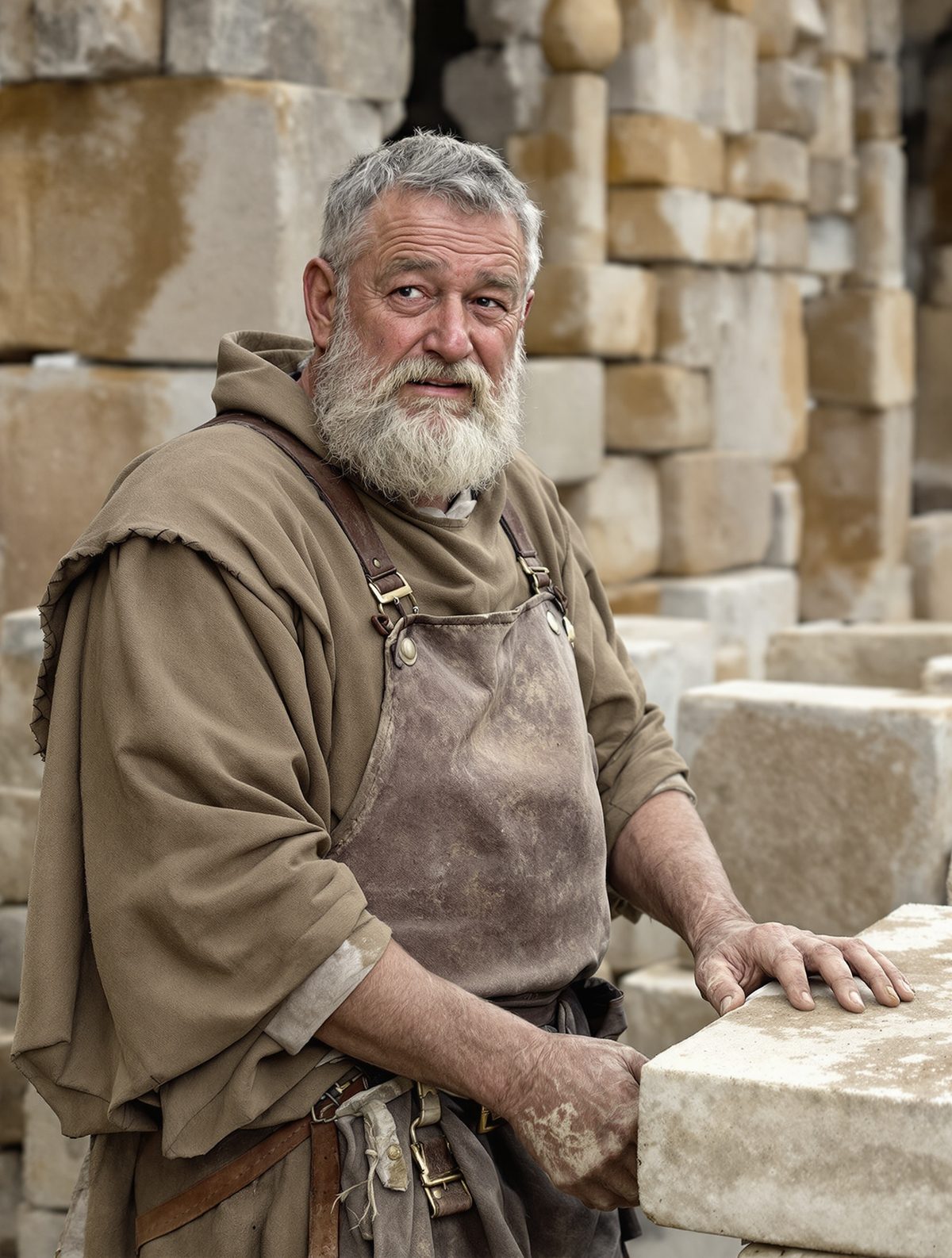
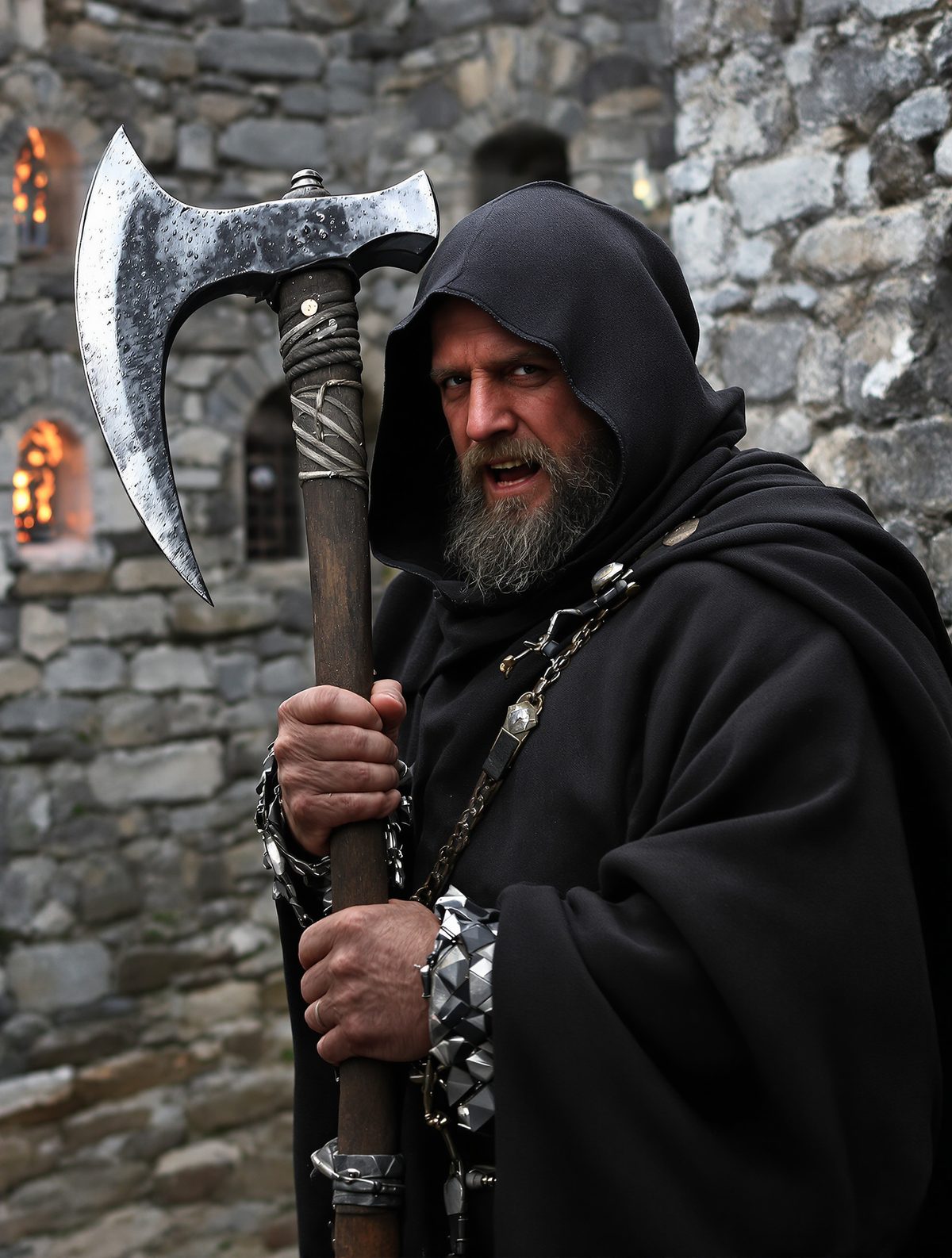
The morning sun cast long shadows across the execution ground outside Rome as Marcus Gavius examined his final creation. The condemned architect ran his weathered hands along the precisely calculated joints, checking each angle one last time. Unlike the crude wooden crosses that typically served Roman justice, this instrument of death was a masterpiece of engineering—mathematically perfect, structurally sound, and designed to kill with unprecedented efficiency. In just moments, Gavius would become both the creator and the test subject of his own deadly innovation.
What drove a brilliant Roman architect to spend his final months perfecting the very device that would end his life? The answer reveals one of history's most disturbing examples of professional pride transcending self-preservation—and a story that Roman historians buried so deep it nearly vanished from history entirely.
The Architect's Fall from Grace
Marcus Gavius Apicius had once been among Rome's most celebrated architects. By 22 AD, his designs graced the Forum Romanum, and wealthy patricians competed for his services. His revolutionary understanding of load distribution and structural engineering had made him wealthy beyond measure. But Gavius possessed a fatal flaw that would prove his undoing: an uncompromising belief that Roman engineering was stagnating under Emperor Tiberius's increasingly paranoid rule.
During a wine-soaked dinner party at the villa of Senator Lucius Caecilius, Gavius made comments that would seal his fate. According to fragments of court records discovered in the 1960s at Herculaneum, he declared that "even Rome's instruments of death lack proper engineering." He went further, suggesting that the empire's decline could be measured in the crude construction of its crucifixion crosses—structures so poorly designed that victims sometimes lingered for days, wasting valuable execution time and requiring additional guards.
These remarks, delivered within earshot of Tiberius's notorious informants, were quickly twisted into something far more damaging. By winter's end, Gavius found himself charged with maiestas—sedition against the state. The accusation was that his criticism of Roman crucifixion methods was actually veiled criticism of Roman justice itself. In Tiberius's Rome, such distinctions mattered little.
An Unprecedented Final Request
Condemned prisoners in Rome rarely had any say in their execution. But Marcus Gavius was no ordinary prisoner. When the sentence was handed down in March of 23 AD, he made a request so unusual that it reached the emperor himself: he wished to be executed on a cross of his own design, which he claimed would demonstrate Roman engineering superiority even in death.
The request intrigued Tiberius, who was known for his appreciation of both innovation and irony. According to the historian Suetonius, the emperor was "pleased by the notion that a traitor might glorify Rome even as Rome destroyed him." More practically, Roman officials were curious whether Gavius could actually improve upon an execution method that had served the empire for generations.
Gavius was granted an extraordinary sixty days to complete his project, working under heavy guard in a workshop near the Campus Martius. What he created during those two months would revolutionize—if briefly—Roman execution technology.
The Mathematics of Death
Ancient papyrus fragments discovered at Oxyrhynchus in 1915 contain what appear to be Gavius's own engineering notes, complete with detailed calculations and diagrams. His approach to crucifixion design was methodical and chillingly professional. Where traditional Roman crosses were often hastily constructed from whatever timber was available, Gavius's design incorporated precise measurements based on human anatomy and structural engineering principles.
The vertical post, or stipes, was positioned at exactly 87 degrees—not perfectly vertical, as was common, but tilted slightly backward to maximize gravitational stress on the victim's respiratory system. The crossbeam, or patibulum, was positioned not at the top of the post but approximately one-quarter down from the peak, creating what modern engineers would recognize as an optimal stress distribution pattern.
Most innovative of all was Gavius's foot support system. Traditional crucifixions often included a small wooden peg called a sedile that provided minimal support, sometimes extending the victim's suffering for days. Gavius eliminated this entirely, calculating that unsupported victims would succumb to asphyxiation within four to six hours—quick enough to be merciful, but slow enough to serve as effective public punishment.
His notes reveal an obsessive attention to detail that would have impressed his former architectural clients. Joint reinforcements were calculated to support exactly 200 Roman pounds—the weight of a large adult plus the additional stress of struggling. Wood grain was oriented to maximize strength while minimizing weight. Even the iron nails were redesigned, featuring a slight curve that would prevent victims from working themselves free through movement.
The Final Test
On the morning of May 15th, 23 AD, Marcus Gavius walked calmly to his execution, accompanied by a crowd that included fellow architects, curious senators, and morbid spectators drawn by news of the unusual event. Unlike typical Roman executions, which were often chaotic affairs, Gavius's death proceeded with the precision of an engineering demonstration.
Witnesses reported that the condemned architect continued making minor adjustments to his creation even as soldiers prepared to nail him to it. He repositioned the crossbeam slightly, tested the stability of the joints one final time, and even provided instructions to the executioners on proper nail placement to avoid damaging the wood unnecessarily.
The execution itself unfolded exactly as Gavius had calculated. Contemporary accounts describe his death as remarkably swift by crucifixion standards—he lost consciousness within three hours and died approximately ninety minutes later. The cross remained structurally perfect throughout the ordeal, showing no signs of stress or weakness even under the considerable forces generated by the victim's final struggles.
Perhaps most disturbing of all, witnesses reported that Gavius remained lucid enough in his final hour to observe approvingly that his design was performing as intended. His last recorded words, according to the centurion overseeing the execution, were "the angles hold perfectly."
Legacy of a Deadly Innovation
The immediate aftermath of Gavius's execution reveals the complex relationship between innovation and authority in imperial Rome. Several high-ranking officials, including Praetorian Prefect Sejanus, expressed interest in adopting the architect's improved design for future executions. The enhanced efficiency promised significant cost savings—fewer guards required, reduced time commitments, and more predictable scheduling.
However, Emperor Tiberius ultimately ordered all documentation of Gavius's design destroyed and forbade its implementation. His reasoning, preserved in a letter to the Senate, was that "Rome's enemies should not benefit from Roman innovation, even in death." More likely, the emperor recognized that publicizing improved execution methods might encourage other condemned prisoners to make similar requests, potentially turning state punishment into a showcase for individual achievement.
The single cross that Gavius created was dismantled immediately after his death, its components burned to prevent replication. Only his private notes survived, likely preserved by sympathetic colleagues and eventually scattered across the empire as various collections changed hands over the centuries.
The Price of Perfection
Marcus Gavius's story forces us to confront uncomfortable questions about the relationship between professional expertise and moral responsibility. Here was a brilliant engineer who, faced with his own mortality, chose to channel his final creative energies into perfecting an instrument of death—not out of cruelty or revenge, but from an apparently genuine desire to demonstrate Roman engineering superiority.
His case reminds us that technological innovation often emerges from the darkest chapters of human history. The same mathematical precision that created Rome's architectural marvels could be applied with equal effectiveness to the machinery of state violence. Gavius embodied the uncomfortable truth that expertise itself is morally neutral—it's the application of knowledge, not the knowledge itself, that carries ethical weight.
In our modern era of rapid technological advancement, Gavius's final project serves as a sobering reminder that the drive for technical perfection can sometimes override basic human considerations. His story challenges us to consider whether there are innovations so fundamentally destructive that they should never be pursued, regardless of their technical elegance or efficiency gains.
The Roman architect who crucified himself to test his own cross design left behind more than just an engineering curiosity—he created a parable about the seductive power of professional pride and the dangerous places it can lead when divorced from moral reflection.