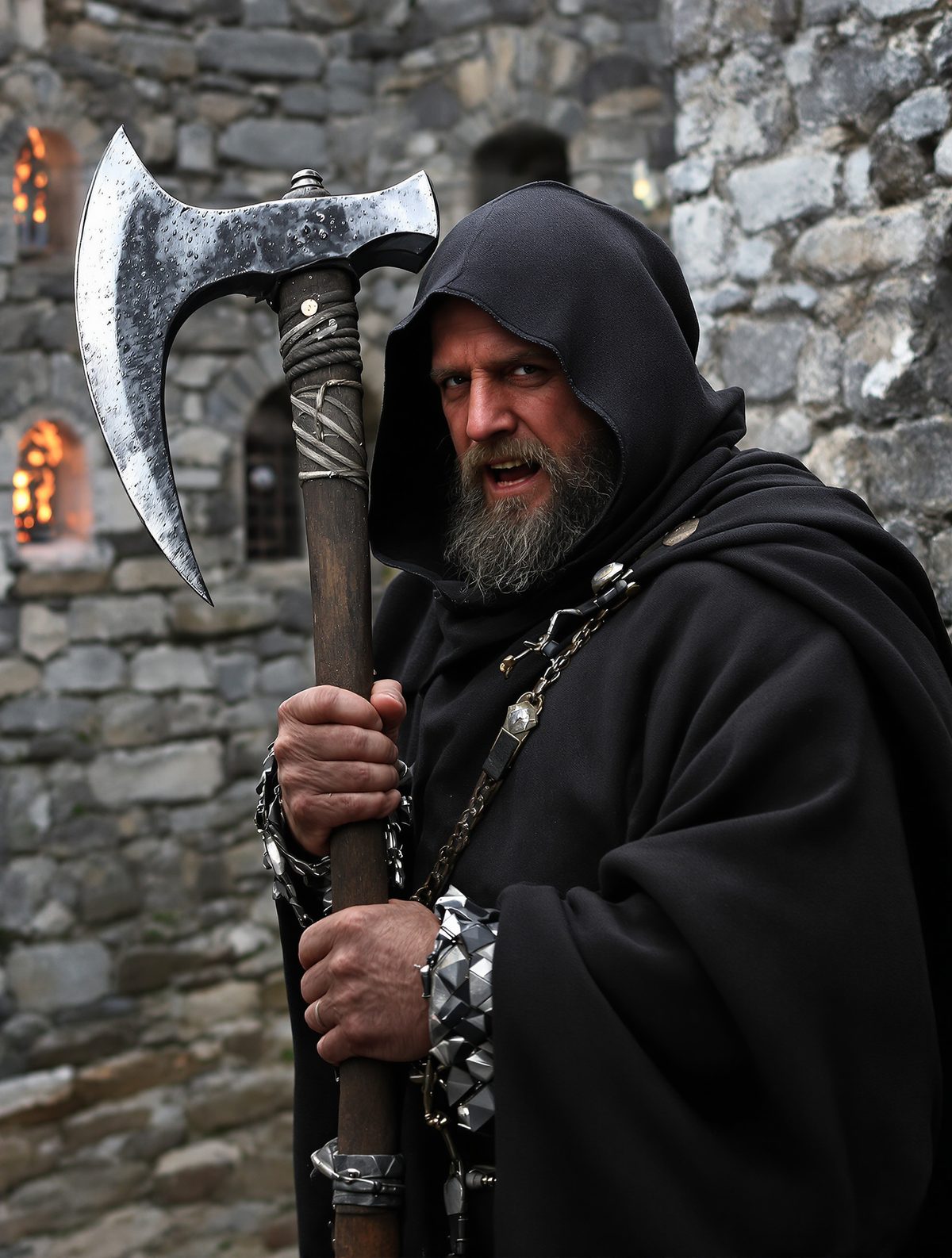
The sound of chisels striking stone echoed across the Thames on that frost-bitten morning in 1176, but Peter de Colechurch wasn't thinking about the cathedral-quality limestone blocks being shaped by his masons. He was clutching his side, feeling the dull ache where his left kidney had once been, and watching the impossible become reality. The first stone bridge to span the Thames at London was rising from the murky waters, built quite literally with his blood—and the sale of his own flesh.
What drove a master mason to sell his own organ to Arab physicians in an age when such surgery was tantamount to playing dice with death? The answer lies in one of history's most audacious architectural gambles, a story of medieval politics, religious greed, and the lengths one man would go to build something that would outlast empires.
When Wood Just Wouldn't Do
London in 1176 was a city literally built on shaky foundations. For nearly a century, wooden bridges had spanned the Thames, only to be swept away by floods, burned in fires, or simply rotted into the river. The latest disaster had come in 1163 when winter ice floes demolished yet another timber crossing, leaving Londoners stranded on either side of their own river for months.
King Henry II had finally had enough. He commissioned Peter de Colechurch—whose name literally meant "Peter of Cole's Church," after the small parish where he'd learned his craft—to build something permanent. Not just another wooden bridge that would last a decade, but a stone monument that would stand for centuries. The king's purse would cover the basic construction, but there was one problem that royal gold couldn't solve: the Church controlled the only quarries with stone suitable for underwater foundations.
The limestone beds of Kentish ragstone, quarried by Benedictine monks near Maidstone, produced blocks so dense and weather-resistant that they were considered petra sancta—sacred stone. The Church had spent generations perfecting the extraction and preparation of these blocks for their grandest cathedrals. Canterbury Cathedral's foundations rested on this stone. So did portions of the Tower of London. And the monks who controlled these quarries had no intention of selling their precious materials for anything as mundane as a bridge.
The Price of Sacred Stone
When Peter de Colechurch first approached Prior Benedict at Maidstone Abbey in the autumn of 1175, he expected negotiations. What he encountered was something closer to extortion wrapped in religious rhetoric. The Prior's demand wasn't just outrageous—it was deliberately impossible. For enough Kentish ragstone to build proper bridge foundations, the Church wanted 40,000 silver marks, roughly equivalent to fifteen million pounds in today's money. Even King Henry II's treasury couldn't absorb such a sum without bankrupting the realm.
But there was an alternative, the Prior suggested with the kind of smile that made hardened masons reach for their hammers. The Church had been in communication with physicians from Córdoba, the great center of learning in Muslim Spain. These médicos árabes were conducting revolutionary research into organ transplantation and were willing to pay handsomely for healthy organs from living donors. A kidney, particularly from a healthy man in his prime, could fetch enough silver to purchase stone for half a bridge.
The medical procedure itself wasn't entirely without precedent. Arab physicians had been performing kidney removals since the 10th century, and their techniques had advanced considerably. The survival rate for healthy patients had reached nearly sixty percent—odds that would seem terrifying today, but which represented cutting-edge medical achievement in 1175. For Peter de Colechurch, a man who'd spent his life calculating risks in stone and mortar, it was a gamble he could quantify.
The Surgeon's Blade and the Mason's Gamble
The operation took place on a November morning in 1175, in a monastery cell that had been converted into a makeshift surgical theater. The lead physician, a man named Ibn Rushd al-Tabib, had traveled from Córdoba with instruments that looked more like torture devices than medical tools. The procedure would be performed without anesthesia—though the monks provided a potent mixture of wine, poppy extract, and mandrake root that left Peter floating somewhere between consciousness and oblivion.
Contemporary accounts, preserved in the monastery's records, describe the operation lasting nearly four hours. The surgeons had to carefully navigate around vital blood vessels while removing the kidney intact—damage to the organ would render it worthless for their research. Peter survived, though he spent the next six weeks recovering in the monastery, his body learning to function with a single kidney while his mind obsessed over bridge calculations.
The payment arrived as promised: 20,000 silver marks in Córdoban dinars, enough to purchase the first shipment of sacred stone. But Peter's sacrifice had only bought him half a bridge. To complete his vision—a nineteen-arch span that would become known as Old London Bridge—he would need to make his remaining money stretch further than physics should allow.
Building on Blood and Brilliance
What Peter de Colechurch accomplished next represents one of medieval engineering's greatest triumphs. Working with a reduced budget and his own damaged body, he pioneered construction techniques that wouldn't be seen again until the Renaissance. Instead of building traditional pointed arches that required massive amounts of stone, he developed a hybrid design that used precise geometry to distribute weight more efficiently.
The bridge foundations were sunk using a revolutionary cofferdam technique—essentially building temporary wooden walls around sections of riverbed, pumping them dry, and laying stone foundations directly on the Thames's muddy bottom. Each foundation stone was individually blessed by monks (a spiritual insurance policy that cost extra but seemed prudent given Peter's literal investment in the project), then lowered into place using pulley systems that could handle blocks weighing over two tons.
The construction took thirty-three years to complete, far longer than anyone had anticipated. Peter de Colechurch never lived to see his bridge finished—he died in 1205, still twenty-four years before the final arch was completed. But his design proved so sound that Old London Bridge stood for over 600 years, becoming one of medieval Europe's most famous landmarks. The bridge was so wide and stable that it supported not just foot traffic and carts, but entire rows of shops and houses, creating London's first vertical neighborhood.
The Bridge That Changed History
Old London Bridge became far more than a river crossing—it transformed into the economic heart of medieval London. The shops built along its span generated enormous rents for the city, while the controlled crossing point allowed London to levy taxes on all river traffic. The bridge's strategic importance was so great that it earned its own motto, carved into the central archway: "London Bridge is built on sacrifice, and sacrifice makes it strong."
The bridge survived Viking attacks, the Great Fire of London (though the buildings on it didn't), and countless floods. It became the subject of songs, stories, and eventually the famous nursery rhyme "London Bridge Is Falling Down"—though historians now believe this rhyme actually referred to later, less sturdy bridges that replaced Peter's masterwork.
Perhaps most remarkably, when Old London Bridge was finally demolished in 1831 to make way for a more modern crossing, the foundations were found to be in perfect condition. The Kentish ragstone that had cost Peter de Colechurch his kidney was still solid enough to support the weight of centuries.
The Price of Permanence
Peter de Colechurch's story forces us to confront an uncomfortable question: what are we willing to sacrifice for permanence? In an age of disposable architecture and planned obsolescence, his literal investment of flesh and blood in a structure meant to outlast empires seems both admirable and horrifying.
The bridge he built with his kidney became the foundation of London's commercial supremacy, enabling the trade networks that would eventually span the globe. Every ship that passed under its arches, every merchant who crossed its stones, every pound of commerce it enabled—all of it traced back to a medieval mason's desperate gamble with Arab surgeons.
Today, as we struggle with infrastructure projects that consume billions yet crumble within decades, Peter's story offers a stark reminder of what it truly means to build for the future. Sometimes the most lasting achievements require not just money or skill, but the willingness to invest something irreplaceable of ourselves. The question isn't whether we have the technology to build monuments for the ages—it's whether we have the commitment to pay their true cost.