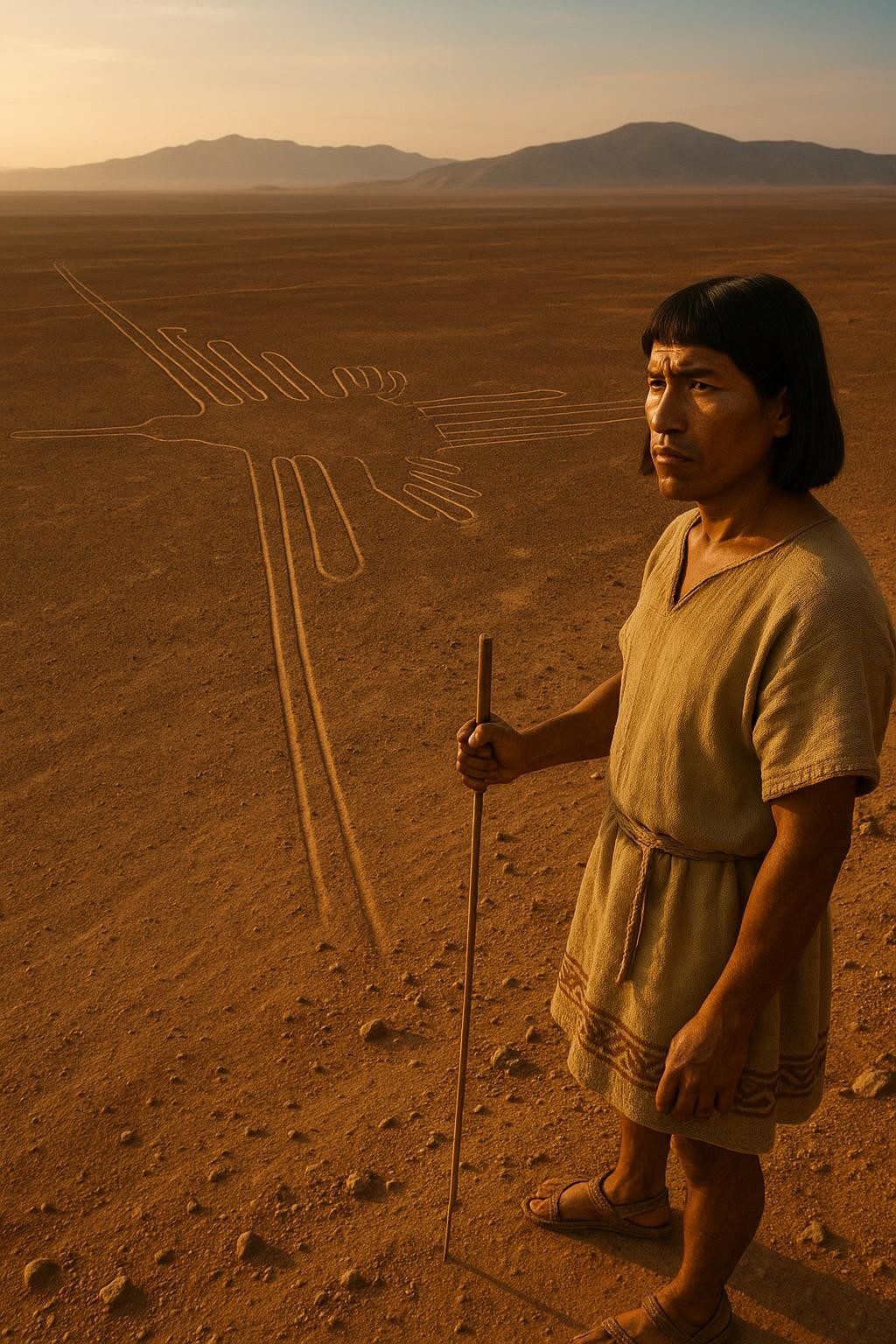
March 10, 1927. A small passenger plane buzzed over the arid desert of southern Peru, its passengers transfixed by a bizarre tapestry unfurling in the sands below. Beneath them, stretching across the dusty plain, were lines — straight, unerring, and seemingly endless. But these were not just lines; the desert floor revealed vast silhouettes, shapes emerging like whispers from the earth: a hummingbird poised in flight, a spider spinning its web, a monkey curling mischievously. From this aerial vantage, an ancient mystery took form, demanding questions without ready answers.
Sprawling across the Nazca Desert, these immense geoglyphs, now known as the Nazca Lines, have been marvels and puzzles since first seen from the sky. The lines are eerily precise, despite being crafted by a civilization without the benefits of flight or modern technology. The construction of these geoglyphs, believed to have begun roughly 2,500 years ago, challenges our assumptions about the engineering skills and intentions of the ancient peoples who lived in the region.
The desert itself, a vast wedge of parched land trapped between the Andes Mountains and the Pacific Ocean, is the unlikely setting for this marvel. These lines were etched into the earth by removing the sun-baked, rust-colored stones covering the surface, exposing the lighter earth beneath. Unlike other ancient wonders hidden beneath layers of history, the Nazca Lines lie bare, baked by the relentless sun, yet they remain remarkably preserved. This preservation owes much to the region's unique climate; the surrounding deserts rank among the driest on Earth, their arid breath erasing the passage of time.
Though the supreme artistry of the Nazca Lines suggests preternatural skill, the task of layout and construction could have been within reach of the pre-Columbian Nazca people. As far as scholars can deduce, the lines were drawn using simple tools: stakes and cords to create lines and figures, and a well-practiced eye for symmetry and scale. Yet, how these marks on the desert floor maintained such precise proportions and clarity from vantage points hidden in the sky remains a marvel.
The figures themselves add layers to the enigma. Flickering into view only from altitudes unreachable until the last century, they include not only birds and beasts but also geometric patterns, some spanning over 1,200 feet. Scholars have debated their purpose. Were they astronomical calendars, aligning with celestial events to orchestrate agricultural or ritual activities? Perhaps they were religious pathways, guiding worshippers in sacred processions? Or were they an elaborate form of communication with the deities above, or a map offering celestial correspondences? These questions bring only theories, as the Nazca people left no writings to clarify their intentions.
What is astonishing is the cultural context in which these lines were crafted. The Nazca civilization, blossoming on the South American continent between 500 BCE and 500 CE, thrived not only in artistry but also in hydraulic and agricultural innovations that supported their society in the harshest of environments. Yet, their depictions of fauna suggest an observation and admiration that transcended mere utility. Many of the animals outlined in the desert's skin, like tropical birds, frogs, and monkeys, hail from regions far from the stark landscape. They hint at trade routes and connections, cultural exchanges carried along unseen lines of communication between distant peoples.
Even today, the Nazca Lines weave a spell on those who study them, bearing witness to a culture's silent dialogue with the heavens. In their mystery, they encompass the universal human desire to leave a mark upon the world, a testament to wonder and ingenuity speaking across millennia. Each theory about their purpose enriches rather than diminishes their allure, casting light on the Nazca society's intellectual and spiritual pursuits.
Why they endure as so much more than just lines in the sand lies at the heart of their mystique. In an age where technology promises to unlock every mystery, the Nazca Lines resist categorization and simplicities. They remind us that the past holds riddles beyond technological understanding, stories written in stones rather than words. The Nazca Lines invite us to pause and respect the ancient capacity for creation that defies modern explanation.
The allure of the Nazca Lines is perpetual. The geoglyphs lie in wait, inscrutable sentinels promising tales untold to all who dare look closer. As we hover with them above their creators’ desert home, the lines whisper reminders of the limits of knowledge and the enduring power of the enigmatic. In their silence, they speak a truth: even across the ages, some stories are owned only by time, meant to inspire wonder, not answers. As long as such enigmas thread through our shared history, humanity will continue to seek the lines laid by ancient hands, charting mysteries across the ever-changing sands.