The early morning light filtered through the desert mist, casting long shadows across the rolling hills and ancient stones of Madaba, Jordan. A hush settled over the landscape, broken only by the faint chirping of birds awakening to the rising sun. In 1884, within this serene yet forgotten corner of the world, a team of laborers uncovered something extraordinary beneath the rubble of centuries. The dust of the past clung to the air as their tools struck stone, and with each stroke, the faint outlines of history began to emerge from the earth.
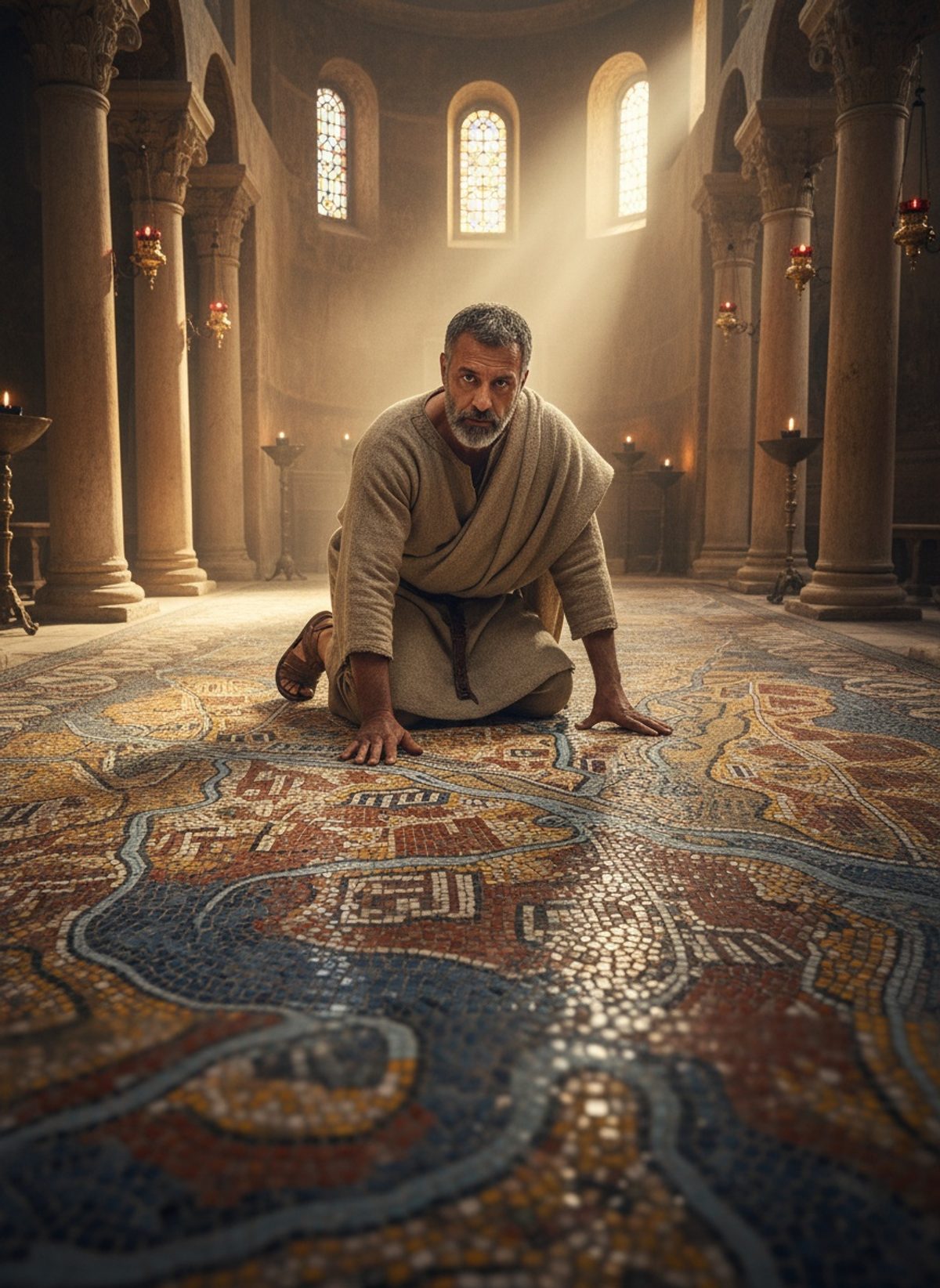
As the debris cleared, the sun-dappled mosaic slowly revealed itself — a magnificent depiction of the Middle East, rendered in more than two million colored stone tiles. This was not just any floor; it was an intricate map of biblical lands, painstakingly crafted in the sixth century during the Byzantine era. Every city, road, and river of the Holy Land was laid out with meticulous precision, creating a vivid tableau of a landscape that had captured the imaginations and souls of millions through the ages.
The now-famous discovery, nestled within a sixth-century church, was important not just for its artistic beauty but for the wealth of geographical information it contained. Hidden for over a millennium and a half, this mosaic offered a unique window into how the people of Late Antiquity viewed their world, and it served as a testament to the skill and knowledge of the cartographers and artisans of the Byzantine Empire. The map provided the earliest known representation of the city of Jerusalem with detailed structures, including the Church of the Holy Sepulchre, and it helped historians confirm and locate various other biblical sites mentioned in ancient texts.
Transcending its function as simple decoration, the Madaba Map was an invaluable historical document, recording a time when the Byzantine Empire presided over a diverse and expansive region. It was created during an era when the borders of faith, politics, and culture were fluid, reflecting a tapestry of human interaction that underpinned the mosaic. In this period, the Eastern Roman Empire was a formidable power, its influence stretching across the Mediterranean and beyond, leaving indelible imprints on every facet of life—from monumental architecture to the arts, and to the very stones that now lay beneath the Jordanian soil.
The map’s scale and precision astonished scholars who flocked from around the world to study its details. They poured over its patterns, examining how each tiny stone was expertly placed to convey the topography and settlements of a region that was as much myth as reality to many in the 19th century. The task of the original artisans had been formidable; not just to create something beautiful, but to etch into stone the significance of places that many believed held the answers to existential human questions.
In commissioning and executing this grand masterpiece, those ancient craftsmen imbued the stones with more than mere likeness; they wove into them narratives of belonging, pilgrimage, and faith. The discovery of the mosaic at Madaba became a bridge between epochs, connecting generations long gone with those who were stepping into the modern world, eager to reclaim and recontextualize the legacies of their predecessors.
The city of Madaba, once a thriving center of faith and pilgrimage, disappeared in the sands of time after a devastating earthquake in 749 CE. Yet its glory lived on in the collective memory, written not on parchment, but as if by divine intervention on those resilient tesserae. Excavators could now trace the work to a specific time, around 560 CE when the Byzantine Empire reached its zenith. The empire had harmonized a vast array of cultures, languages, and beliefs within its borders, exerting dominance from the Hagia Sophia in Constantinople to the pyramids along the Nile.
In an era when the printing of maps and books was centuries away, the Madaba Map was an interactive guide for inhabitants, travelers, and clerics. Pilgrims traveling through the Holy Land would have relied on such references to navigate their sacred quests, connecting physical destinations with their religious journeys. This artistic masterpiece was the GPS of its time, unmatched in intricacy until modern satellite imaging found similar precision.
The rediscovery of this lost artifact provided historians and archaeologists with a potent reminder of the enduring connections between place, history, and identity. It answered questions about ancient transportation routes and confirmed the established locations of sacred sites whose exact positions had faded into ambiguity over time. Importantly, it catalyzed a revival of interest in the Byzantine period, inspiring numerous excavations not just in Madaba but across the entire region, leading to further discoveries that habitually rewrote chapters of world history.
Yet, within this miracle of preservation lies an irony: the same ingenuity and dedication that produced such marvels are scripts no longer read, languages no longer spoken, cultural tapestries unraveled by the relentless march of time. What remains is the enduring story these stones have chosen to tell, a message from the artisans of the Byzantine era to those who inhabit the modern world—a testament to humanity's unending quest for understanding, enduring even beneath the ruins of forgotten civilizations.
The Madaba Map prompts us to contemplate the manner in which we document and remember our own journeys, urging us to value not only the stories that fill the pages of textbooks but also the stories beneath our feet, encased in stone, waiting quietly and patiently for rediscovery. It transforms a seemingly insignificant mosaic floor into a vibrant, living narrative, threading together past and present, and reminding all who gaze upon it of the profound and enduring significance of place in the human experience.