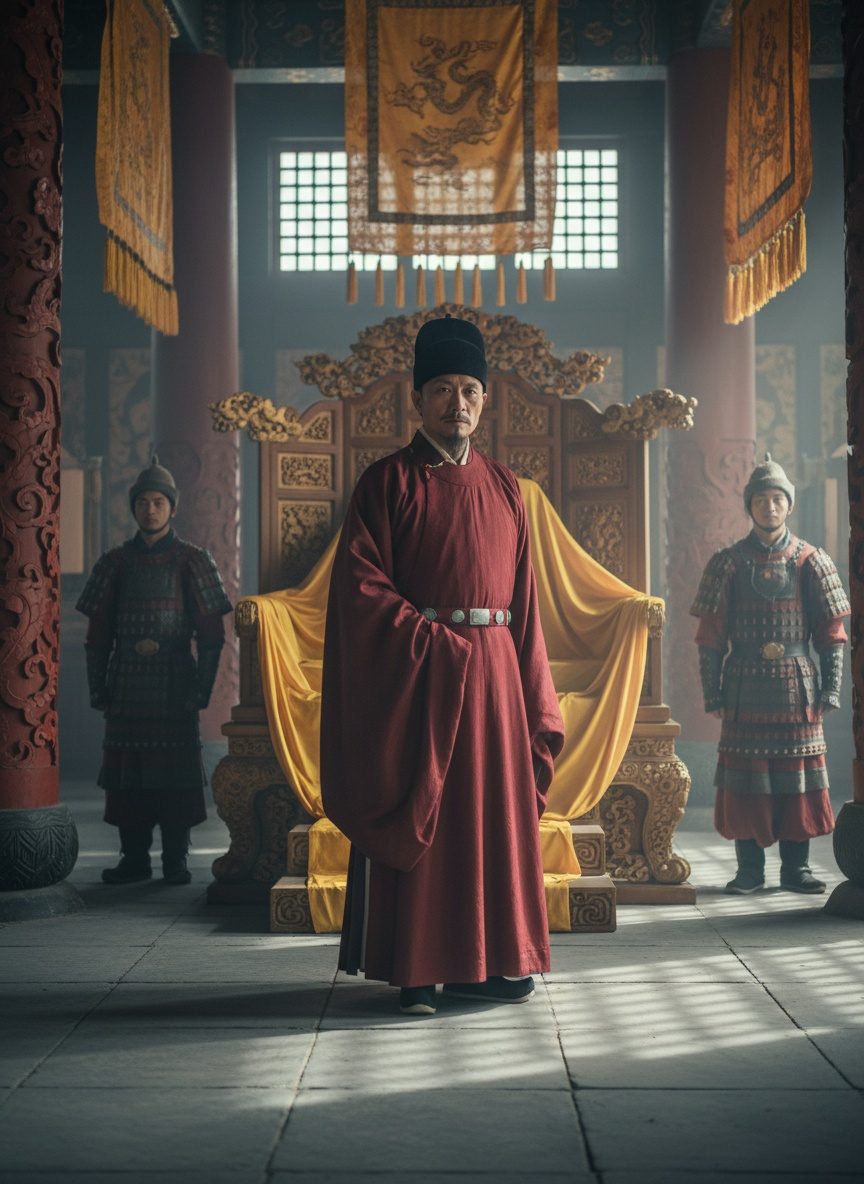
He was the scholar who wouldn't save his own life. Fang Xiaoru laid down his brush, sealing his fate and that of ten clans without hesitation.
The Scholar with Unwavering Integrity
In the hushed corridors of power during the Ming Dynasty, scholars were revered, their pens crafting the narrative of the empire. Fang Xiaoru, a respected Confucian scholar, stood at this pivotal intersection of intellect and authority. His reputation as a man of profound learning and unwavering principles preceded him, a beacon of moral compass amidst a tumultuous sea. Yet, the true test of his integrity would come not from within the halls of scholarship, but from the clamor of a usurper's court in 1402.
The throne of China had been seized by Zhu Di, the Prince of Yan, after a decade-long struggle known as the Jingnan Campaign. The rightful emperor, Jianwen, was overthrown, and Zhu Di crowned himself Emperor Yongle. Though victorious, his claim to the throne needed the validation that could only be provided by the imperial proclamation inscribed by a credible scholar. Fang Xiaoru was his target, a man whose words could legitimize a regime birthed in bloody conquest.
The scholarly tradition held an almost mystical power in legitimizing rule in medieval China. An official proclamation, a few carefully chosen ideograms on paper, could weave the narrative of Zhu Di's divine right to rule. It wasn’t just about words; it was about history being rewritten by the victor. However, for Fang Xiaoru, capitulating meant giving imperial legitimacy to an act he perceived as treason against the moral order he held sacred. Hence, when presented with the writing brush, Fang Xiaoru exercised his most potent weapon—refusal.
The Final Defiance
Fang Xiaoru's defiance was an act of bravery that defied the conventions of survival. In a world where dishonor could be erased by compliance, his insistence on upholding Confucian ideals represented an extraordinary moral courage. Zhu Di's court boiled with tensions, the newly minted regime anxious for acceptance. Fang Xiaoru's defiance was not just a denial of a request but a direct challenge to the usurper’s fragile authority.
Zhu Di’s frustration grew into fury, leading to a draconian ultimatum: comply, or face the extermination of ten clans. The 'extermination of nine clans' was a well-known punishment reserved for treasonous acts—a severe and merciless penalty exterminating all blood relatives. But for Fang Xiaoru, the punishment was extended to an unprecedented, nearly unthinkable level—ten clans, an additional dire threat designed to break him.
In most minds, the gravity of this threat would suffice to bend any resolve. But Fang Xiaoru's steadfastness drew from an inner reservoir deeper than fear. As the echo of the threat lingered in the air, he coolly rebuffed the emperor, saying, “Make it ten thousand clans, and my answer will be the same.” Those were the uncompromising words that would escort him, as well as his relatives and friends, to the harshest form of destiny imposed by an emperor. In choosing death over dishonor, he became an eternal symbol of filial devotion and loyalty.
The Lasting Echo of Courage
Setting aside the ripples of Fang Xiaoru's resistance, one must consider the profound impression his actions left on both contemporaries and historians. While Zhu Di secured his throne, Fang Xiaoru's sacrifice resonated throughout Chinese history as the epitome of courage and moral resilience. Fang Xiaoru's choice highlighted the stark contrast between ambition full of worldly gains and a life committed to higher moral and ethical standards, even at the cost of unimaginable personal sacrifice.
Zhu Di’s reign would indeed lead to numerous successes and expansions, with lasting impacts on the political and cultural landscape of China. Nonetheless, the story of Fang Xiaoru remains an uncomfortable whisper in the annals of Ming history, a reminder of the lengths to which power might go to secure legitimacy and the lone voices that dare to resist overwhelming odds.
Today, the tale serves as an enduring historical lesson—a reflection on the values of integrity over survival, the power of the written word, and the imperishable strength that can lie in just one unfaltering decision. Fang Xiaoru chose all he loved—loved them enough to deny his oppressor the legitimizing power of his pen, altering the course of his personal fate and etching his legacy upon the unyielding canvas of time.