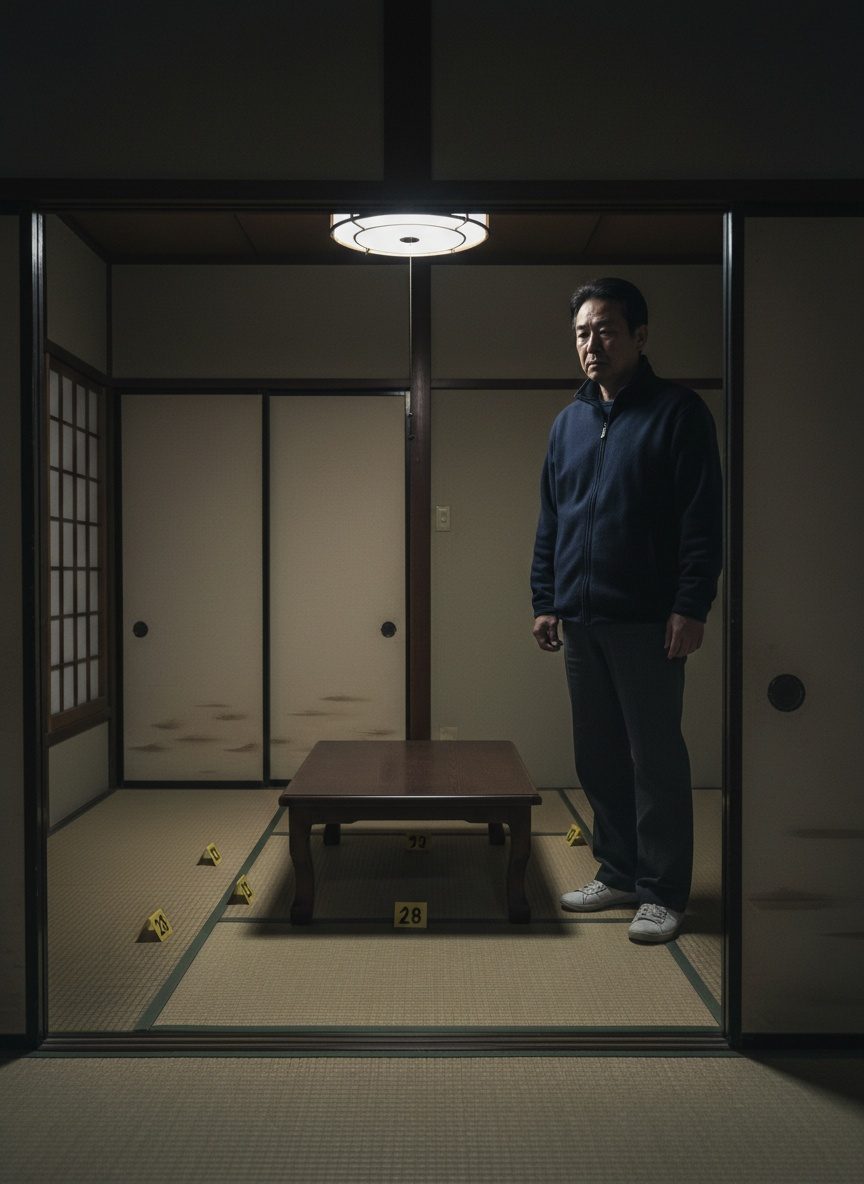
The murder scene remained unchanged for 26 years. Most people would have moved on, but some wounds never heal.
In November 1999, the bustling city of Nagoya, Japan, was rocked by a murder that would haunt not only a family but also the broader fabric of forensic science. Namiko Takaba, a young mother, fell victim to a brutal stabbing in the modest confines of her apartment. Her two-year-old son lay asleep amidst the horror, untouched physically but forever marked by that fateful night. It wasn't just another tragic story buried in time—it was a chapter that remained unfinished, the pen held by her grieving husband, Hiroshi Takaba.
The walls of the apartment could have told their own story. The tiny living room held the scene of tragedy, but it was not characterized by chaos. Instead, it was frozen, each detail meticulously preserved, from the fallen photograph frames to the bloodstain that whispered the violence of that night. Hiroshi Takaba made an unconventional decision in the aftermath of his wife's murder—a decision that defied conventional wisdom and societal pressure. He opted to leave the apartment unaltered, a silent monument to a life taken too soon, keeping the lease active and the rent paid. His hope was bound to the advancements of forensic science, which, at the time, had yet to evolve to the point where it could decode the bloodstains left by the unknown killer.
Why hold onto a place so brimming with pain? For Hiroshi, it was more than just a tribute; it was an act of faith. In the late 1990s, forensic capabilities, though groundbreaking, were not infallible. DNA evidence had begun to revolutionize criminal investigations worldwide, yet the technology needed to dissect and interpret complex blood patterns was still stretching its nascent wings. Hiroshi's belief was that one day, the science would catch up to the brutality of the crime, and justice, however delayed, would be served.
For two decades, the cost was not only financial. The rent payments alone accrued over $145,000—a staggering sum by any measure, especially for a single father raising a child under the constant shadow of loss. Hiroshi's friends and family were often baffled, urging him to relinquish the property. But for Hiroshi, the apartment was a tether to a future where answers might finally emerge from the past. The perseverance with which he clung to this hope was as palpable as the silence that echoed within those walls.
As years passed, the world outside evolved. The landscape of Nagoya changed, new technologies emerged, and the field of forensics pushed into realms once deemed science fiction. Yet the apartment remained unchanged—a stubborn time capsule waiting for its moment in the sun. With each scientific advance, Hiroshi's resolve solidified. By the early 2020s, new techniques in blood pattern analysis began to show promise. Methods that could extract viable DNA from previously unreadable traces were no longer a distant dream. The road was gradually laid towards unlocking the secrets that had stayed shrouded in mystery for a quarter of a century.
The room where Namiko met her end stood as a testimony to the undying nature of human resolve. It was a place where science and grief intertwined, locked in a dance that neither could lead nor end alone. Hiroshi's investment paid off in more ways than monetary savings could measure. In a world where closures are often delayed, his act provided both a personal sanctuary and a legal battlefield where truth awaited its time to surface.
This extraordinary tale poses more than just a question of justice—it challenges us to consider the resilience and faith we place in systems meant to protect and serve us. The apartment, once a scene of unspeakable horror, ultimately became a site of patient waiting, a symbol of both human frailty and strength. Its story presses us to reflect on the lengths to which we go for those we love, the trust we place in progress, and the relentless pursuit of answers even when the questions seem to outpace the solutions.
In the era that followed Hiroshi's decision, rooms and stories like this would force reevaluation of what we leave behind and the legacy of those who tread the thin line between memory and forgetting. In pacing those haunted rooms, we must ask ourselves: when science catches up with humanity, will it always tell the tales we yearned to hear? Or will it also teach us patience, resilience, and hope—the fundamental truths that find power in the shadows of the past?