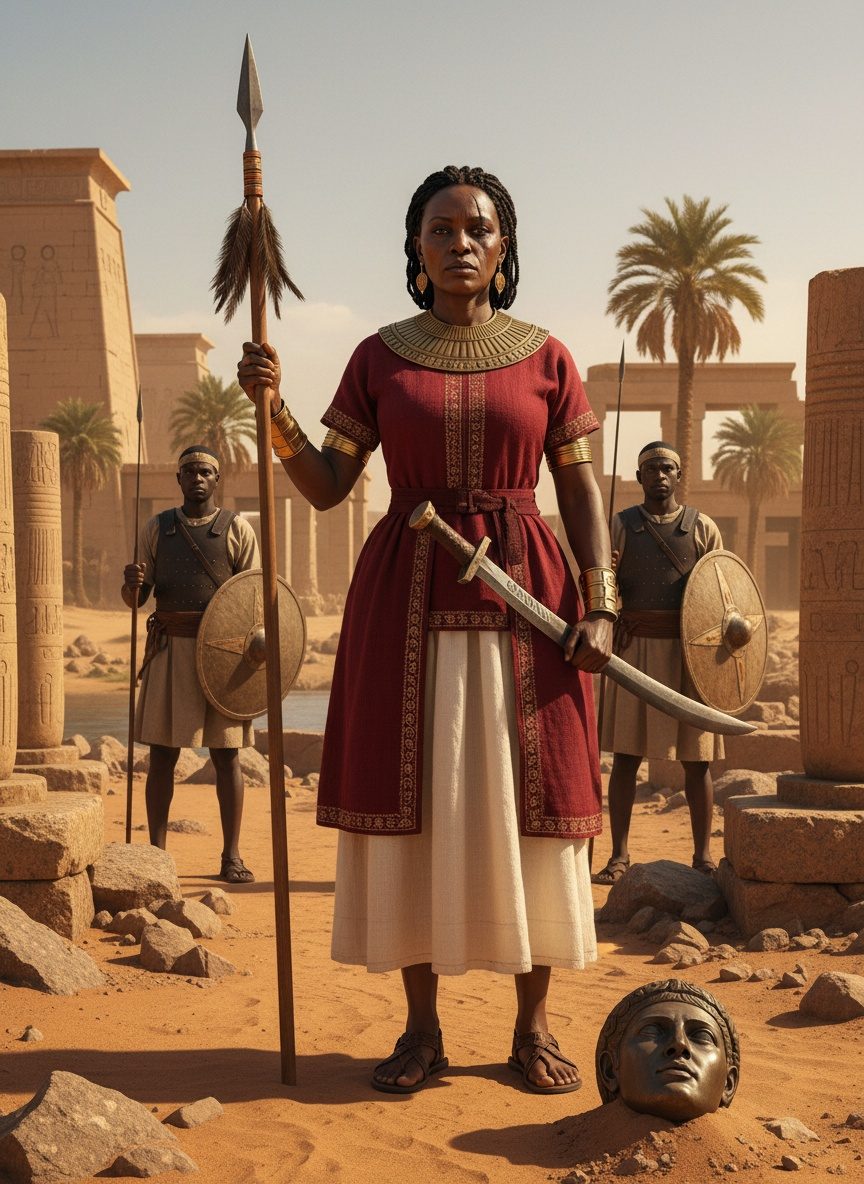
In the early afternoon haze of Alexandria, the streets simmered beneath the unforgiving sun. The vibrant shouts of the marketplace mingled with the scent of spices and sea salt from the nearby Mediterranean. Stall owners hawked their wares, sheep bleated softly, and merchants bartered, their voices a raucous symphony that spoke of life in one of the ancient world's most significant cities. Yet amidst the bustling energy, the pillars of marble and the grand libraries, tension hovered like an unspent storm. For in these very streets where commerce and knowledge had flourished, a moment of unspeakable violence loomed, threatening to extinguish the light that had drawn scholars to Alexandria from every corner of the globe.
The Scholar and Her City
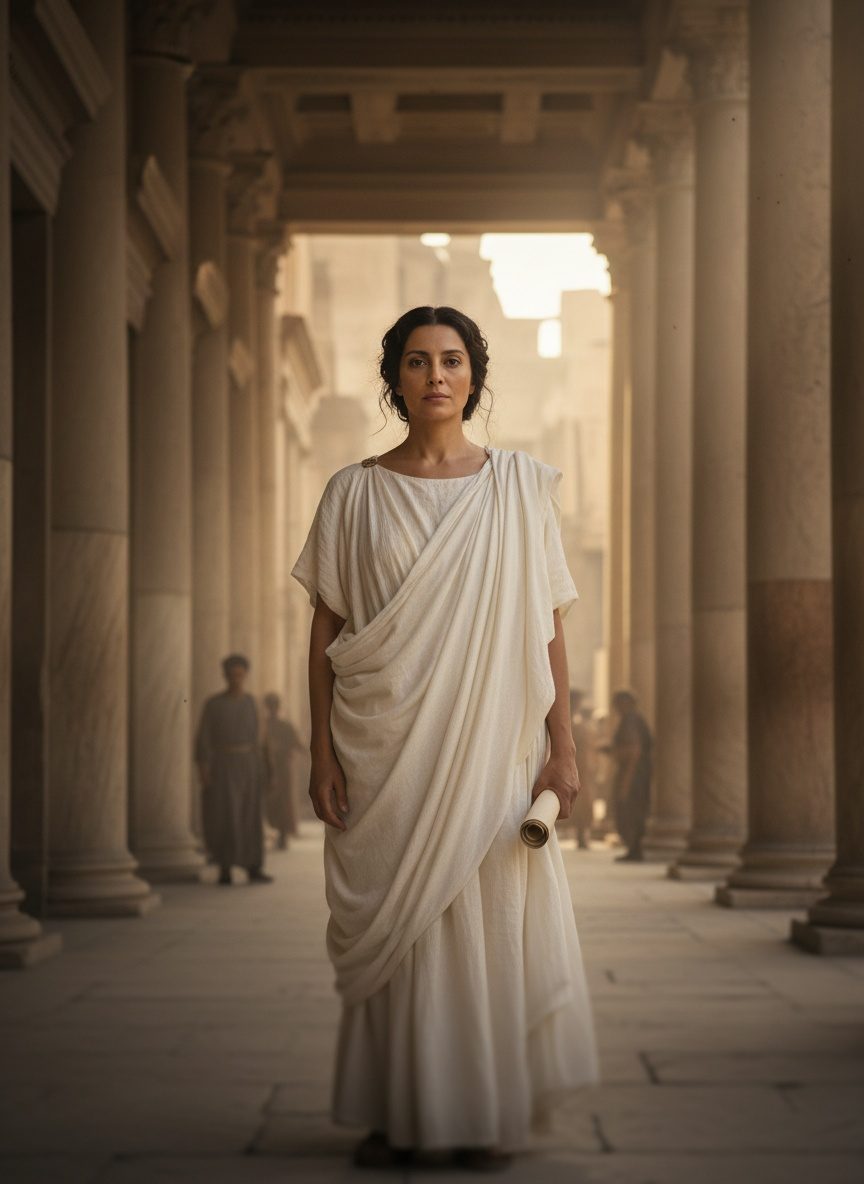
Hypatia of Alexandria walked these streets she knew so well, unfazed by the discord that had been simmering through the city. She was a beacon of wisdom at a time when knowledge itself was in turmoil, holding her pupils enthralled with her lectures on mathematics, philosophy, and astronomy. Hypatia’s reputation transcended boundaries; she was celebrated not only for her inherited intelligence, a gift from her father, Theon, a renowned mathematician himself, but for the very qualities that seemed scarce in an impetuous world—reason, gentleness, and tolerance.
In the spacious halls of the Museum of Alexandria, she taught, drawing eager minds from far and wide. Her home was the very nexus of learning, echoing the grand plans of the rulers who envisioned Alexandria as the intellectual heart of the Roman Empire. To think of the city without its famed library, without its confluence of ideas and culture, was as impossible as severing Hypatia from her teachings—a sentimentality soon to be tested.
The era was marred by religious turmoil. The shifting tides of power pulled at the seams of unity within Alexandria. The Pagan philosophy, which Hypatia championed, was increasingly at odds with the Christian majority. These tensions simmered to boiling point, as ancient traditions jostled against emergent beliefs, ready to spill over into violence. Hypatia embodied this clash—her teachings a kind of defiance, a refusal to forsake the pursuit of secular, scientific truth for the comfort of dogma.
Walking into Shadow
That fateful day in 415 AD was not marked by ominous portents, nor warnings hidden in the heavens' dome. Hypatia stepped into the city’s light as she always did, her purpose clear, her spirit unyielding. She had survived political upheaval and religious tide shifts before, and her teachings continued to thrive even as the air around her grew hostile and heavy with whispered threats. Yet this day was different, for the gathering storm was no longer content to grumble from afar.
The mob was a swirling maelomd of rage and ideology, fed by those who saw Hypatia not as a scholar, but as a symbol of the world they wished to extinguish. They bore down upon her with the ferocity of a cornered beast, desperate to lash out at the perceived source of their struggle. As darkness clouded their hearts, they hurled accusations of sorcery and heresy—a mere façade for a simpler truth: they feared the strength of an intellect that dared to shine where ignorance yearned to obscure the light.
Through these streets, where minds had once been molded by her gifted discourse, the tumult caught up with her. Hypatia, refusing to run, became the unwilling focus of their ire. The city’s heartbeat changed tempo as the mob closed in, dragging her from her chariot in a frenzy that saw logic and reason surrender to primal fury. The stones of the very buildings she had passed so many times before bore witness to her end, a sickening testament to the darker aspects of human passion unleashed.
The Ripples of a Tragedy
In the aftermath, Alexandria clutched its wounds in stunned silence. The assassination of its most esteemed scholar had left an indelible scar, a grim marker of a broader conflict between knowledge and ignorance, enlightenment and darkness. The very heart of the intellectual world had been torn asunder, and with it, one of the greatest thinkers of antiquity. For centuries, Hypatia had stood as a pillar of wisdom, her influence spreading far beyond her city’s borders; now, she was a martyr to her cause.
The shock of her murder reverberated through the ancient world. The libraries that had once echoed with the footsteps of curious scholars began to empty. The fusion of cultures—Hellenistic, Roman, and early Christian—that had been Alexandria’s essence was left fractured. In this crucible of civilization, it was not just the loss of a life that mattered, but the extinguishing of a legacy—a potent reminder of where zealotry and fear could lead.
Yet, Hypatia's flame did not wholly extinguish with her death. Her legacy endured, a quiet rebellion against time’s erasure. She became a symbol—not just of the scholarly pursuit of truth, but of the peril faced by those who dare to challenge the encroaching darkness. The tragedy of Hypatia is not merely a cautionary tale from a distant era, but a reminder that the struggle between understanding and ignorance, the secular and the doctrinaire, is eerily timeless. Her story, like that of so many seekers of truth, refuses to fade, compelling us to question our path and define the legacy we wish to leave behind.