Hollywood believed no one would watch The Blues Brothers. The box office proved them wrong.
The Gamble
In the year 1980, a hot summer buzz had erupted not for an epic space opera or a big-budget action flick, but for a modest film built on rhythm and soul. The Blues Brothers was birthed from the popular Saturday Night Live sketch, with Dan Aykroyd and John Belushi at the helm. Despite the comedic star power and a script as sharp as a horn section in a jazz band, the film faced significant skepticism from Hollywood insiders. To many, the film's roots in African American musical tradition seemed an improbable match for mainstream audiences nurtured on a diet of pop and rock.
The skeptics whispered — jive and blues were too niche, too Black for white audiences inundated with rock and new wave aplenty. The expectation was that the movie would attract a limited audience, cementing its place as a niche film in a cinema landscape still largely divided along racial lines. Theater owners across the nation, concerned with potential losses, restricted bookings. A short-sighted decision perhaps, but one grounded in years of viewing habits and box office reports. Little did they know that the music Ernie Isley described as having “roots that dug deep” would take center stage and prove the skeptics spectacularly wrong.
A Divine Cast
The genius of The Blues Brothers lay as much in its stellar cast as in its irreverent charm. Beyond the comedic duo of Aykroyd and Belushi in their iconic black suits and shades, the cast was a veritable roll call of soul and R&B royalty. James Brown, Aretha Franklin, Ray Charles, and Cab Calloway each infused the film with performances that transcended the cinematic to become moments of musical history. These appearances were not mere cameos — they were show-stopping performances that leapt off the screen and planted themselves firmly into the audience's memories.
James Brown brought the house down as the electrifying preacher in the Triple Rock Baptist Church, his frenetic energy both divine and pulsating. Aretha Franklin, defending her territory in the scene at the Soul Food Café, commanded respect with a rendition of "Think" that was nothing short of a climactic battle cry. Ray Charles, with his virtuosity, turned an ordinary music store into a temple of groove with a boisterous "Shake a Tail Feather", silencing any disbelief about the film's potential appeal.
These artists were not just music legends; their music was the heartbeat of a cultural movement. By inserting these performances into the mainstream, the film did more than entertain — it educated, inviting audiences to embrace a genre woven into the very American fabric.
Challenging the Cinema Status Quo
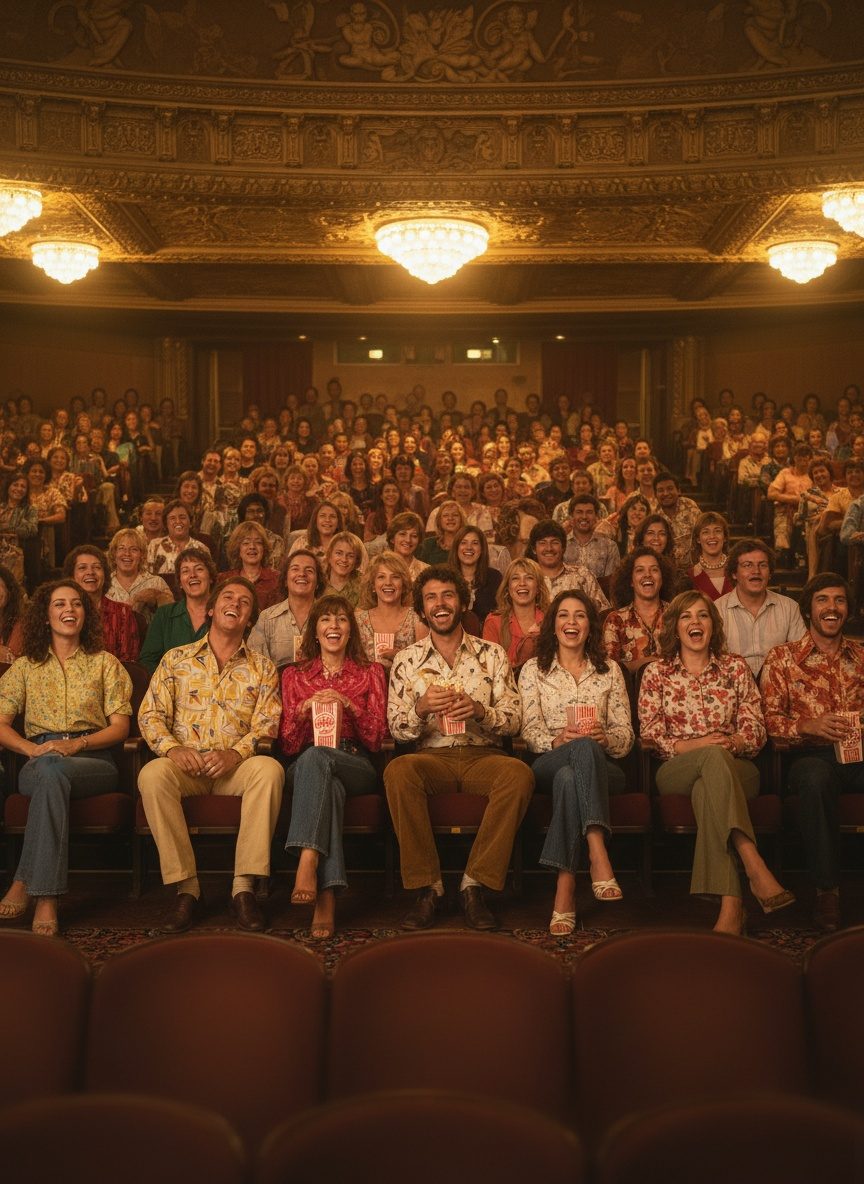
Despite the theater owners' reluctance to fully support the release, audiences responded differently, defying industry forecasts. Word of mouth became the lifeline of The Blues Brothers, propelled by its audience’s infectious enthusiasm as much as its basslines and blues riffs. In a time where cardboard cutout heroes were the norm, Jake and Elwood Blues stood out as endearing antiheroes driving their rusty former police car, the "Bluesmobile", across the screen with mission-from-God zeal.
The box office spoke loudly. It defied the gating notions of the era, elevating the film to one of the top ten highest-grossing movies of the year. This was an unexpected triumph considering its limited screenings, but a testament to the film's magnetic draw and the universal appeal of its music. Just as radio had once broken down racial barriers, so did the cinema when The Blues Brothers took center stage.
Beyond the Music
The success of The Blues Brothers is more than a story about a movie that got it right. It is a story about transcending expectations and defying borders in a divided cultural landscape. At a time when Hollywood hesitated to gamble on a film they perceived as too niche, the audiences demonstrated that art and music are bridges — connecting disparate races, cultures, and generations.
Perhaps even more crucially, the film was a celebration of a musical genre that served as the backbone for much of modern music yet all too often went unacknowledged by the mainstream. It forced people who might never have walked into a blues club to hear and see the raw, exhilarating power of the blues. It acknowledged the profound impact of Black musicians whose legacies shaped the soundtrack of America.
The Blues Brothers left behind more than a cultural footprint; it chipped away at the music industry’s color line. Long after the final notes of "Sweet Home Chicago" faded out, the film continued to highlight the power dynamics and limitations of the industry. The improbable success of Jake and Elwood Blues and their motley crew of musicians continues to remind us that unity and expression transcend the confines of traditional boundaries, turning audiences into believers, just like those inside the jam-packed theaters were some forty-three years ago.