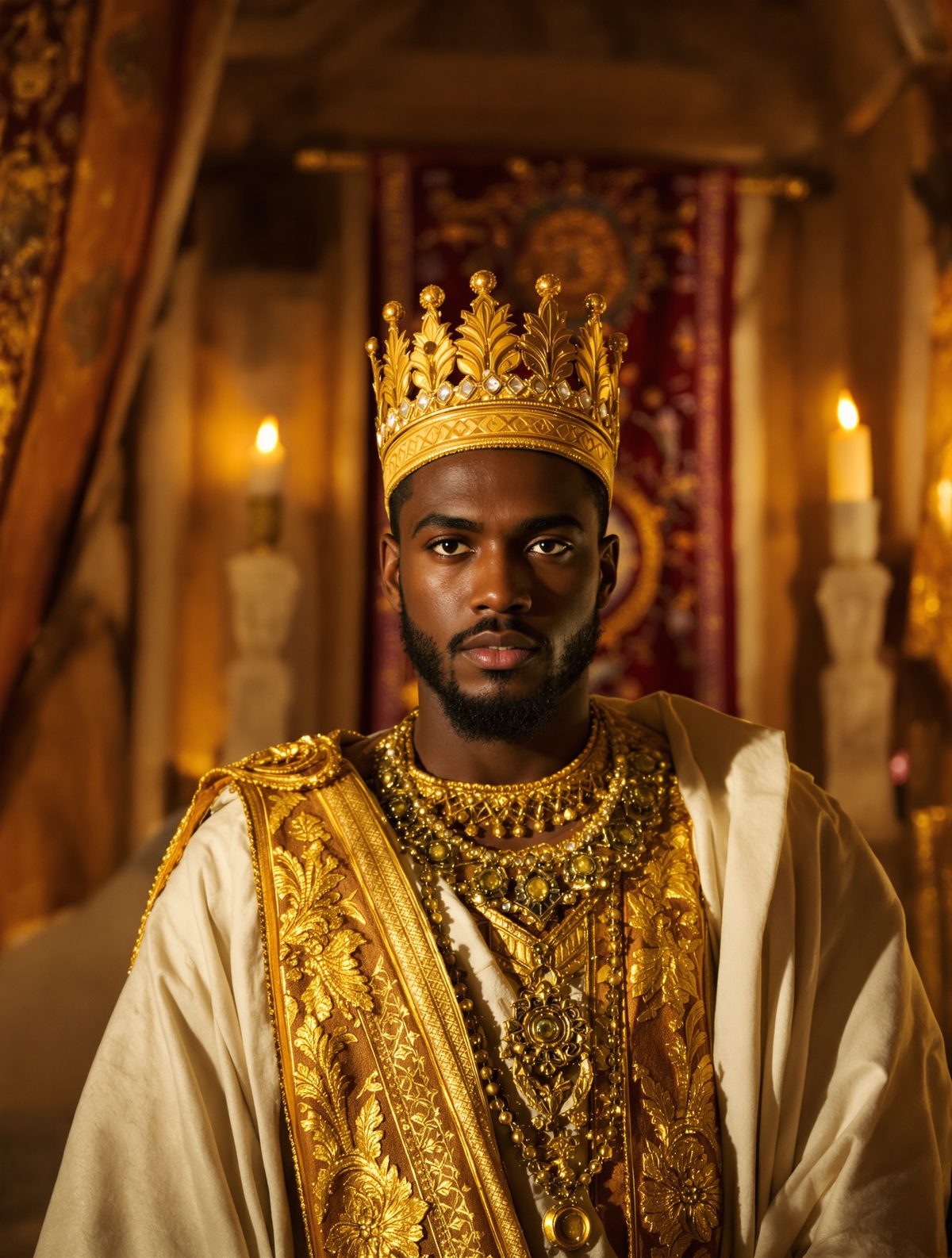
In the summer of 408 AD, the most powerful man in the Western Roman Empire walked deliberately into a trap that would cost him his life. Flavius Stilicho—half-Vandal barbarian, half-Roman citizen, and for thirteen years the iron shield protecting Rome from destruction—entered the cathedral at Ravenna knowing full well that soldiers waited inside to arrest him. His Germanic bodyguards begged to fight. His loyal troops offered to march on the capital. Instead, Stilicho ordered them to stand down, removed his sword, and surrendered to the very empire he had spent over a decade saving.
This wasn't the story of a traitor meeting justice. This was the tragic end of Rome's last great defender—a man whose "crime" was being too successful, too foreign, and too indispensable for his own good.
The Barbarian Who Became Rome's Shield
Stilicho's rise to power reads like something from a political thriller. Born around 359 AD to a Vandal cavalry officer and a Roman woman, he embodied the complex ethnic reality of the late empire, where "barbarian" blood was often the price of military excellence. Emperor Theodosius I spotted Stilicho's potential early, promoting him through the ranks and eventually marrying him to his own niece, Serena. When Theodosius died in 395 AD, he left his two young sons—Arcadius ruling the East from Constantinople, and ten-year-old Honorius governing the West—under Stilicho's protective wing.
What happened next would define the next thirteen years: Stilicho declared himself guardian of both emperors and protector of the entire Roman Empire, East and West. It was an audacious claim that immediately put him at odds with the Eastern court, who saw this half-barbarian general as a usurper wrapped in Roman purple.
But Stilicho had bigger problems than political intrigue. The Gothic king Alaric I was on the march with an army of 100,000 warriors, and the Western Empire's military was in shambles. Most Roman commanders would have retreated behind city walls and prayed. Stilicho did the opposite—he took the fight directly to the enemy.
The Master of Impossible Victories
On Easter Sunday, 402 AD, Stilicho achieved what many considered impossible: he caught Alaric's massive Gothic army completely off guard at Pollentia in northern Italy. While the Goths celebrated their holiday in camp, believing themselves safe from attack on the Christian holy day, Stilicho's forces struck like lightning. The battle was brutal and chaotic—Gothic warriors fought desperately to protect their families who traveled with the army, while Roman legions pressed their surprise advantage with methodical precision.
When the dust settled, Stilicho had not only defeated Alaric but captured his wife, children, and the treasure of his entire people. It was the kind of total victory that Roman poets would sing about for generations. But here's what makes Stilicho fascinating: instead of executing his captives or demanding crippling tribute, he negotiated. He returned Alaric's family and struck a deal that would keep the Gothic king as an uneasy ally rather than a perpetual enemy.
Two years later, when Alaric inevitably broke the peace and invaded again, Stilicho was ready. At the Battle of Verona in 403 AD, he delivered an even more crushing defeat, this time nearly capturing Alaric himself. The Gothic king barely escaped with a handful of followers, his grand army scattered to the winds. For the second time, Stilicho had saved Italy from barbarian conquest.
But perhaps Stilicho's most impressive feat wasn't a battlefield victory at all—it was what he did in 405-406 AD when a Germanic warlord named Radagaisus invaded Italy with an army that contemporary sources claimed numbered 400,000 warriors. Four hundred thousand. Even accounting for ancient exaggeration, this was likely the largest barbarian invasion force Rome had ever faced. While panic gripped Ravenna and Rome itself, Stilicho methodically assembled a coalition of Roman troops, Gothic federates, and Hunnic mercenaries. He then surrounded Radagaisus's massive force near Florence and starved them into submission without fighting a single major battle. The result? Radagaisus was executed, his army dissolved, and thousands of his warriors were enrolled in Roman service.
The Price of Being Indispensable
Here's the cruel irony of Stilicho's story: the better he performed, the more dangerous his position became. Every victory made him more indispensable to the empire—and more threatening to those who feared his power. The Roman court watched nervously as this half-barbarian general commanded absolute loyalty from the armies, negotiated with foreign kings as an equal, and essentially governed the Western Empire while young Honorius played with his pet chickens in Ravenna.
The whispers started early but grew louder with each triumph. Was Stilicho planning to place his own son on the throne? Was he secretly negotiating to hand over Roman territories to his barbarian allies? The fact that these accusations were almost certainly false didn't matter—in the paranoid world of late imperial politics, perception was reality.
The situation became impossible when Arcadius died in 408 AD, leaving his seven-year-old son as Eastern Emperor. Stilicho announced plans to travel to Constantinople to "protect" the boy emperor, just as he protected Honorius. To his enemies, this looked like a naked grab for control of the entire Roman Empire. A court faction led by the palace eunuch Olympius began poisoning Honorius's mind against his protector, painting Stilicho as a barbarian wolf in Roman clothing.
What they told Honorius wasn't subtle: Stilicho was plotting to murder him and place his own family on both thrones. The twenty-four-year-old emperor, who had spent his entire reign in Stilicho's shadow, finally saw a chance to rule in his own right. There was just one problem—he needed to eliminate the most powerful man in the empire without triggering a civil war.
The Trap in the Cathedral
The plan was as elegant as it was treacherous. In August 408 AD, while Stilicho was in Ravenna preparing for his eastern expedition, Olympius struck. He convinced Honorius that immediate action was necessary to prevent Stilicho's coup. Imperial messengers raced through the night to military commanders across the empire with a simple message: Stilicho was a traitor, and anyone who continued to support him would share his fate.
When news reached Stilicho that Honorius had declared him an enemy of the state, his supporters urged immediate action. His Germanic bodyguards were ready to fight their way to the emperor. Loyal generals offered to march on Ravenna with entire legions. The barbarian federates who had fought under his banner for years swore they would follow him against anyone—including Honorius himself.
Instead, Stilicho made a choice that defines his character more than any battlefield victory. He refused to plunge the empire into civil war, even to save his own life. When imperial soldiers surrounded the cathedral where he had taken sanctuary, demanding his surrender, Stilicho's bodyguards prepared for a final, desperate battle. The general who had crushed Gothic armies and saved Rome from destruction stopped them with a single word.
On August 22, 408 AD, Flavius Stilicho walked out of the cathedral and submitted to arrest. Hours later, he was dead, executed on charges of treason that everyone knew were false. His son Eucherius was hunted down and killed shortly after. His vast wealth was confiscated. His name was struck from official records.
The Empire's Fatal Mistake
Honorius thought he had finally escaped from Stilicho's shadow and could rule as a true emperor. Instead, he had just signed the Western Roman Empire's death warrant. Within months of Stilicho's execution, the carefully balanced system of barbarian alliances that had protected Rome for over a decade collapsed completely.
Alaric, who had respected Stilicho even as an enemy, had no such feelings toward Honorius. In 409 AD, he marched on Rome itself—not the administrative capital of Ravenna, but the eternal city, heart of the empire. This time, there was no Stilicho to stop him. Honorius's new generals proved spectacularly incompetent, and his attempts to buy off Alaric only convinced the Gothic king that Rome was weak and ripe for plunder.
On August 24, 410 AD—almost exactly two years after Stilicho's death—Alaric's Goths sacked Rome. For the first time in eight centuries, barbarian warriors looted the capital of the world. The psychological shock reverberated across the Mediterranean. If Rome could fall, what was safe? What was permanent? St. Augustine would write The City of God partly in response to this catastrophe, while across the empire, people wondered if they were witnessing the end of civilization itself.
Stilicho's execution didn't just remove Rome's best general—it sent a chilling message to every barbarian leader who had made deals with the empire. If Rome could murder its most loyal defender on trumped-up charges, what did Roman promises mean? The careful diplomatic network that Stilicho had built through years of negotiation, warfare, and strategic marriages crumbled overnight.
The Last Roman
Today, Stilicho's story reads like a warning about the danger of political paranoia and the price of competence in corrupt systems. He was, in many ways, the last great defender of Roman civilization—not because he was the last capable general, but because he was the last leader who could see beyond ethnic prejudice and political jealousy to focus on the empire's survival.
In our own time, when political loyalty is questioned and expertise is viewed with suspicion, Stilicho's fate feels remarkably contemporary. He fell victim to the same forces that have destroyed capable leaders throughout history: the fear that competence equals ambition, the suspicion that outsiders can never truly belong, and the tragic tendency to destroy the very people who might save us.
Perhaps most tragically, Stilicho's story shows us what Rome might have been. In his hands, the Western Empire wasn't a dying relic but a dynamic, multi-ethnic state that could adapt and survive. His vision of Rome—one where barbarian generals could serve alongside Roman citizens, where negotiation was as valuable as conquest, where strength came from inclusion rather than exclusion—might have extended the empire's life by centuries.
Instead, fear won. Prejudice triumphed. And within decades of Stilicho's death, the Western Roman Empire was gone, leaving only the bitter knowledge that it had murdered its own salvation in a cathedral in Ravenna.