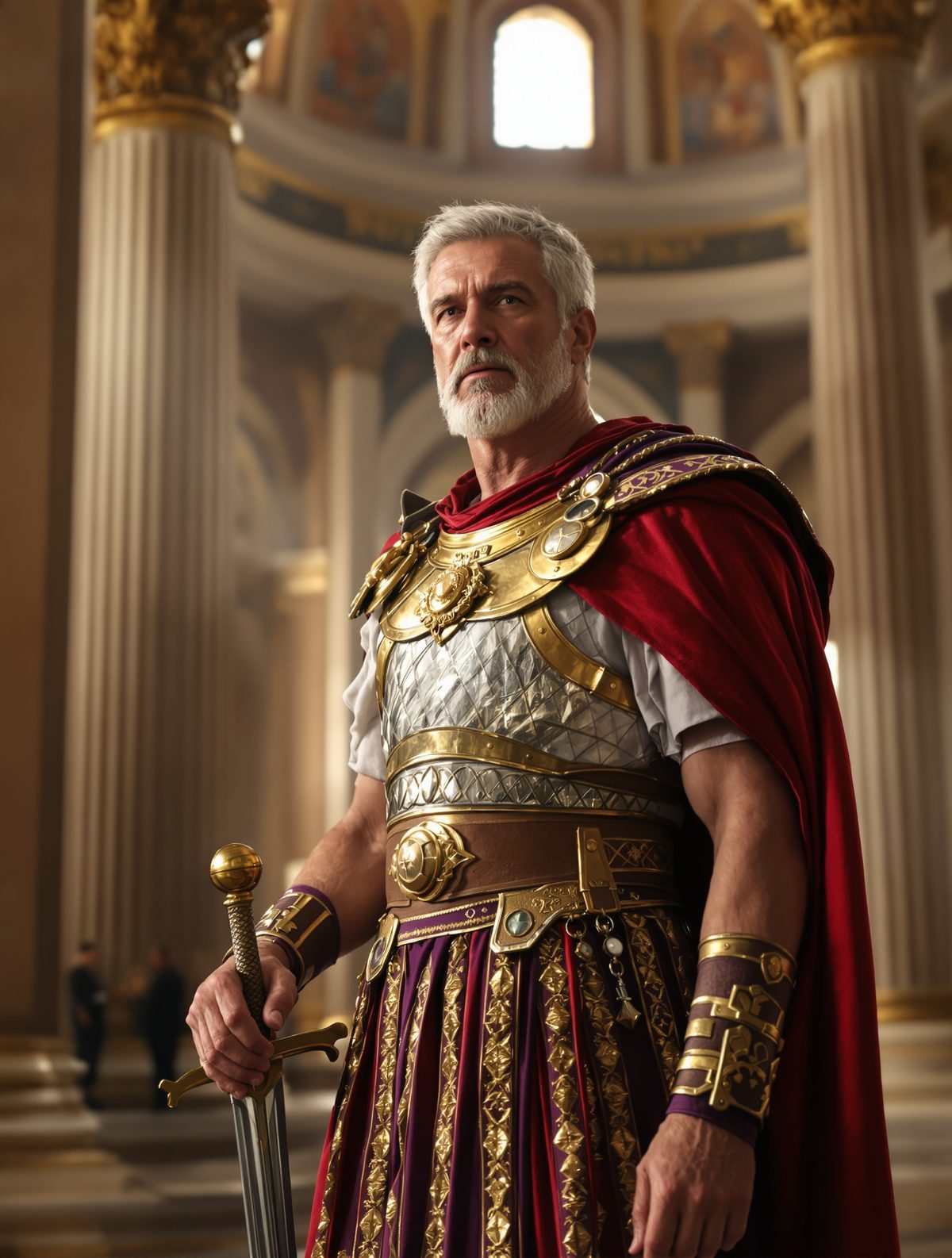
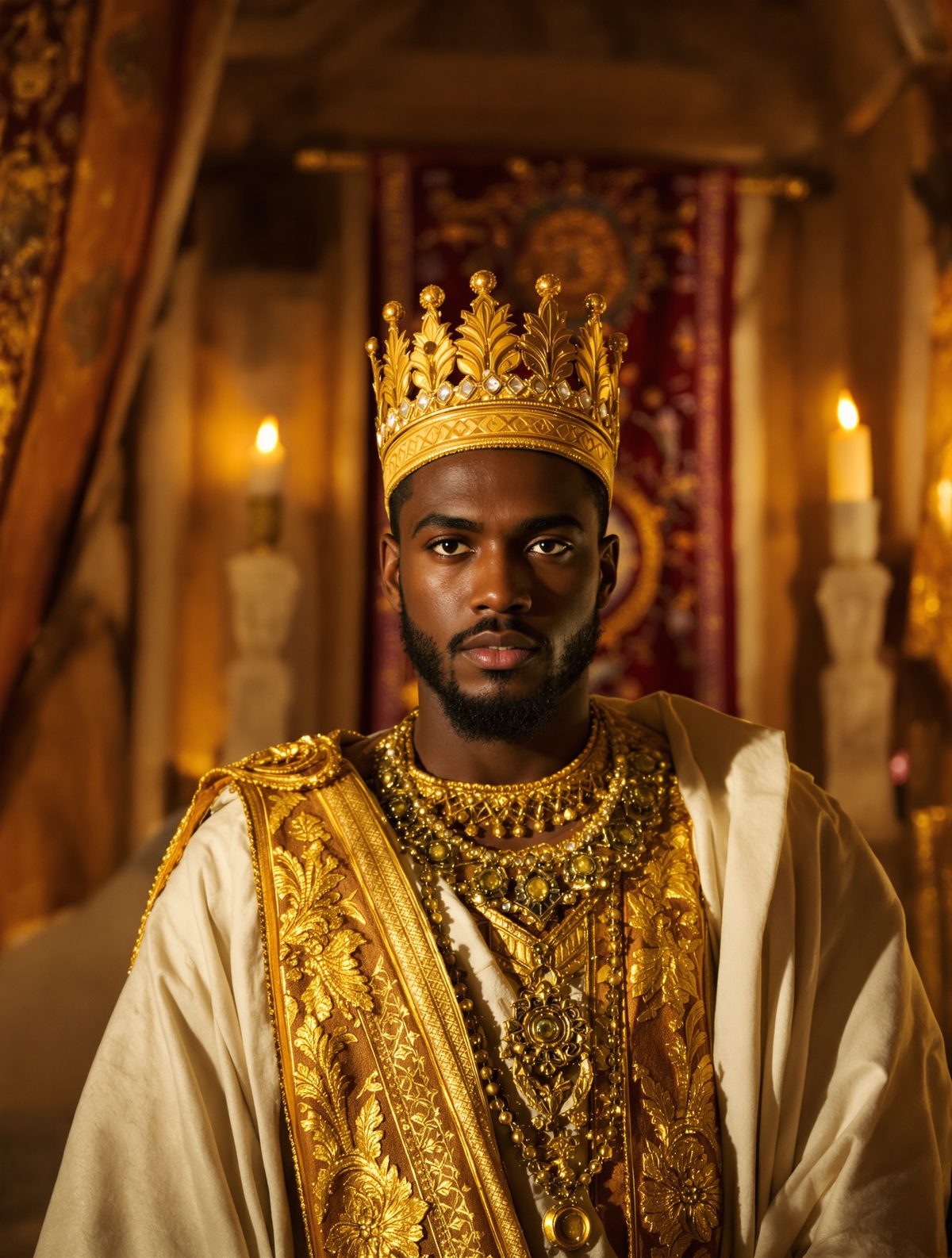
The morning mist still clung to the walls of Chang'an as Prince Li Shimin positioned himself behind the towering gates of Xuanwu. It was July 2nd, 626 AD, and the second son of Emperor Gaozu had just made a decision that would drench the Tang imperial palace in blood. As the sound of approaching hoofbeats echoed through the courtyard, Li Shimin drew his bow with steady hands. His target? His own eldest brother, Crown Prince Li Jiancheng, riding unsuspectingly toward what he believed would be a routine morning audience with their father.
What happened next in those fateful minutes would not only determine the fate of three royal brothers, but reshape the entire course of Chinese civilization. The man who would become Emperor Taizong—arguably China's greatest ruler—was about to begin his legendary reign with an act of calculated fratricide that still sends chills down historians' spines fourteen centuries later.
The Powder Keg Dynasty
To understand the shocking brutality of the Xuanwu Gate Incident, you need to know that the Tang Dynasty was born from chaos. Emperor Gaozu had seized power just nine years earlier, overthrowing the crumbling Sui Dynasty through a combination of military genius and ruthless pragmatism. But by 626 AD, his own house was divided against itself in the most dangerous way possible.
The root of the problem lay in an ancient Chinese dilemma: what happens when the designated heir isn't the most capable son? Crown Prince Li Jiancheng was the eldest and thus the rightful successor, but he was also seen by many as weak and overly influenced by his advisors. Prince Li Shimin, the second son, had proven himself the superior military commander, having led the armies that actually secured their father's throne. He had crushed rebellions, expanded the empire's borders, and earned the fierce loyalty of the military.
The youngest brother, Li Yuanji, had thrown his lot in with the crown prince, creating a two-against-one dynamic that left Li Shimin increasingly isolated. Palace intrigue reached a boiling point as both factions accumulated weapons, recruited loyal followers, and waited for the perfect moment to strike. Everyone knew a confrontation was coming—the only question was who would move first.
The Trap Springs Shut
Li Shimin didn't wait for fate to decide. In one of history's most audacious palace coups, he orchestrated an ambush that was breathtaking in its simplicity and shocking in its brutality. On that July morning, he sent word to his brothers requesting an urgent meeting with their father to discuss recent barbarian incursions on the northern frontier. It was a perfectly plausible pretext—exactly the kind of military matter that would require immediate imperial attention.
But as Crown Prince Li Jiancheng and Prince Li Yuanji approached the Xuanwu Gate—one of the northern entrances to the imperial palace complex—they rode straight into a killing zone. Li Shimin had positioned his most trusted warriors in concealment around the gate, turning the narrow passage into a death trap.
The moment his eldest brother came within range, Li Shimin stepped from behind the gate and drew his bow. The arrow flew straight and true, piercing Li Jiancheng through the heart. The crown prince tumbled from his horse, dead before he hit the ground. It was a shot that changed the course of an empire with a single pull of the bowstring.
Li Yuanji, seeing his brother fall, wheeled his horse around and spurred it toward escape. But Li Shimin's lieutenant, a warrior named Yuchi Gong, was ready. As the youngest prince fled through the palace grounds, Yuchi Gong pursued him relentlessly through the winding courtyards and gardens. The chase ended in a side street, where Yuchi Gong's blade found its mark. By most accounts, Li Yuanji's head was severed cleanly from his shoulders.
When Your Son Kills Your Sons
Imagine being Emperor Gaozu that morning. You're expecting a routine meeting about border defenses, and instead, a blood-soaked messenger arrives to inform you that one son has just murdered your other two sons. The emperor's reaction reveals just how precarious his position had become: he immediately named Li Shimin as his new crown prince.
This wasn't a decision born from grief or shock—it was pure political calculation. Gaozu understood that Li Shimin now controlled the palace guard, the imperial army, and had just demonstrated his willingness to kill anyone who stood in his way. The emperor had a stark choice: legitimize his surviving son's coup or potentially become its next victim.
What makes this even more chilling is that Li Shimin didn't stop with his brothers. In the hours following the ambush, his forces systematically hunted down and executed all ten of his nephews—the sons of Li Jiancheng and Li Yuanji. It was a thorough elimination of potential rivals that would have made Machiavelli nod in approval. No loose threads, no future claimants, no possibility of revenge.
The Blood-Stained Path to Greatness
Here's where the story takes a fascinating turn that challenges everything we think we know about morality and leadership. Within two months of the massacre, Emperor Gaozu abdicated in favor of his surviving son. Li Shimin ascended the throne as Emperor Taizong, and what followed was nothing short of miraculous.
The man who began his reign with fratricide proceeded to rule China for 23 years in what historians now call one of the greatest golden ages in human history. The "Reign of Zhenguan" saw unprecedented prosperity, territorial expansion, cultural flowering, and governmental innovation. Taizong created a merit-based bureaucracy, promoted religious tolerance, and established a legal code that would influence Chinese law for over a millennium.
Under his rule, the Tang capital of Chang'an became the world's largest city, home to over one million people from dozens of different cultures and nations. The Silk Road flourished, poetry and art reached new heights, and China's borders expanded from Korea to Central Asia. The emperor who started his reign by killing his own family ended up creating one of history's most stable and prosperous societies.
Perhaps most remarkably, Taizong became famous for his willingness to accept criticism and surround himself with advisors who would challenge his decisions. One of his most trusted counselors was Wei Zheng, a man who had previously served his murdered brother Li Jiancheng. Rather than executing this potential threat, Taizong elevated him to high office and encouraged him to speak truth to power.
The Emperor's Confession
In his later years, Taizong did something almost unprecedented for a Chinese emperor: he openly discussed his path to power, including the brutal events at Xuanwu Gate. According to court records, he once told his advisors, "At the beginning of my reign, I killed my brothers and forced my father to abdicate. This weighs heavily on my heart, but I believed it was necessary to prevent civil war and bring peace to the empire."
This confession reveals the complex psychology of a man who understood both the moral weight of his actions and their practical necessity. Taizong genuinely believed—and history largely supports him—that his coup prevented a devastating civil war that could have torn China apart for generations. His brothers' faction was actively plotting against him, and the empire needed strong, unified leadership to survive the challenges facing it.
The emperor also took concrete steps to honor his victims' memory. He ordered elaborate funeral ceremonies for his murdered brothers and nephews, and established temples where prayers could be offered for their souls. It was a fascinating combination of pragmatic brutality and genuine remorse that captures the contradictions inherent in absolute power.
The Moral Paradox That Still Haunts Us
The story of Emperor Taizong forces us to confront uncomfortable questions that remain relevant in our own time. Can a leader who commits terrible acts in pursuit of power later redeem themselves through wise governance? Does the end ever justify the means, even when those means include fratricide?
What's particularly striking is how Chinese historians have grappled with Taizong's legacy over the centuries. Traditional Confucian scholars, who placed enormous emphasis on family loyalty and filial piety, struggled to reconcile his crimes against his own brothers with his subsequent achievements as a ruler. Some condemned him as a kinslayer whose entire reign was illegitimate. Others argued that his later wisdom and benevolence proved that Heaven had endorsed his actions.
Modern historians tend to view Taizong as a complex figure who embodied both the best and worst aspects of absolute monarchy. He demonstrated that exceptional leadership ability and moral flexibility could coexist in the same person—sometimes with world-changing results.
Perhaps the most unsettling aspect of the Xuanwu Gate Incident is how successful it was. Li Shimin's calculated brutality achieved everything he hoped it would: it eliminated his rivals, secured his path to the throne, and prevented the civil war that likely would have devastated China. In the cold calculus of power politics, fratricide proved to be an effective strategy.
Today, as we watch political leaders around the world make moral compromises in pursuit of power, Emperor Taizong's bloody rise to greatness serves as both a warning and a challenge. It reminds us that history's most celebrated figures often built their legacies on foundations of violence and betrayal—and that sometimes, terrifyingly, it actually worked.