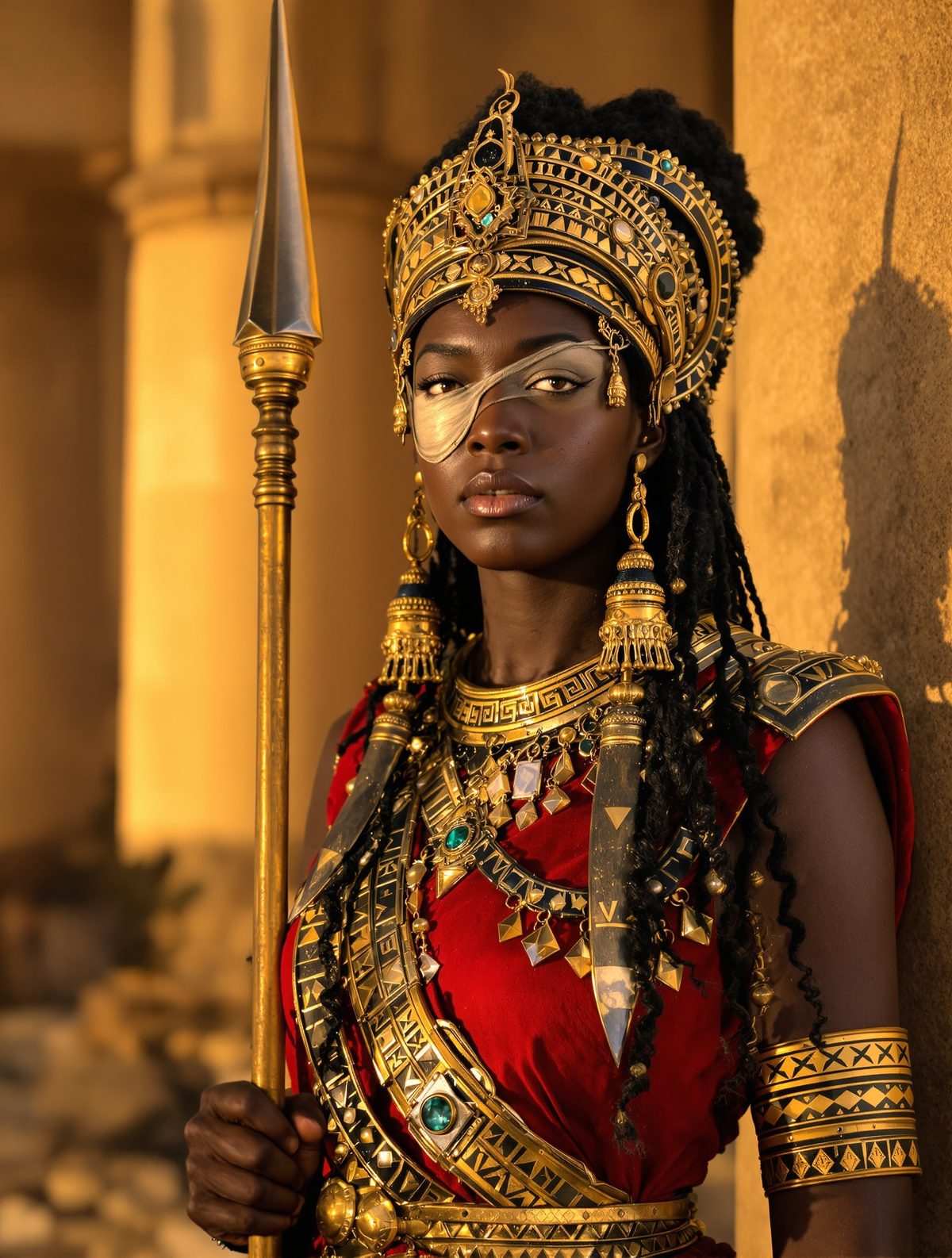
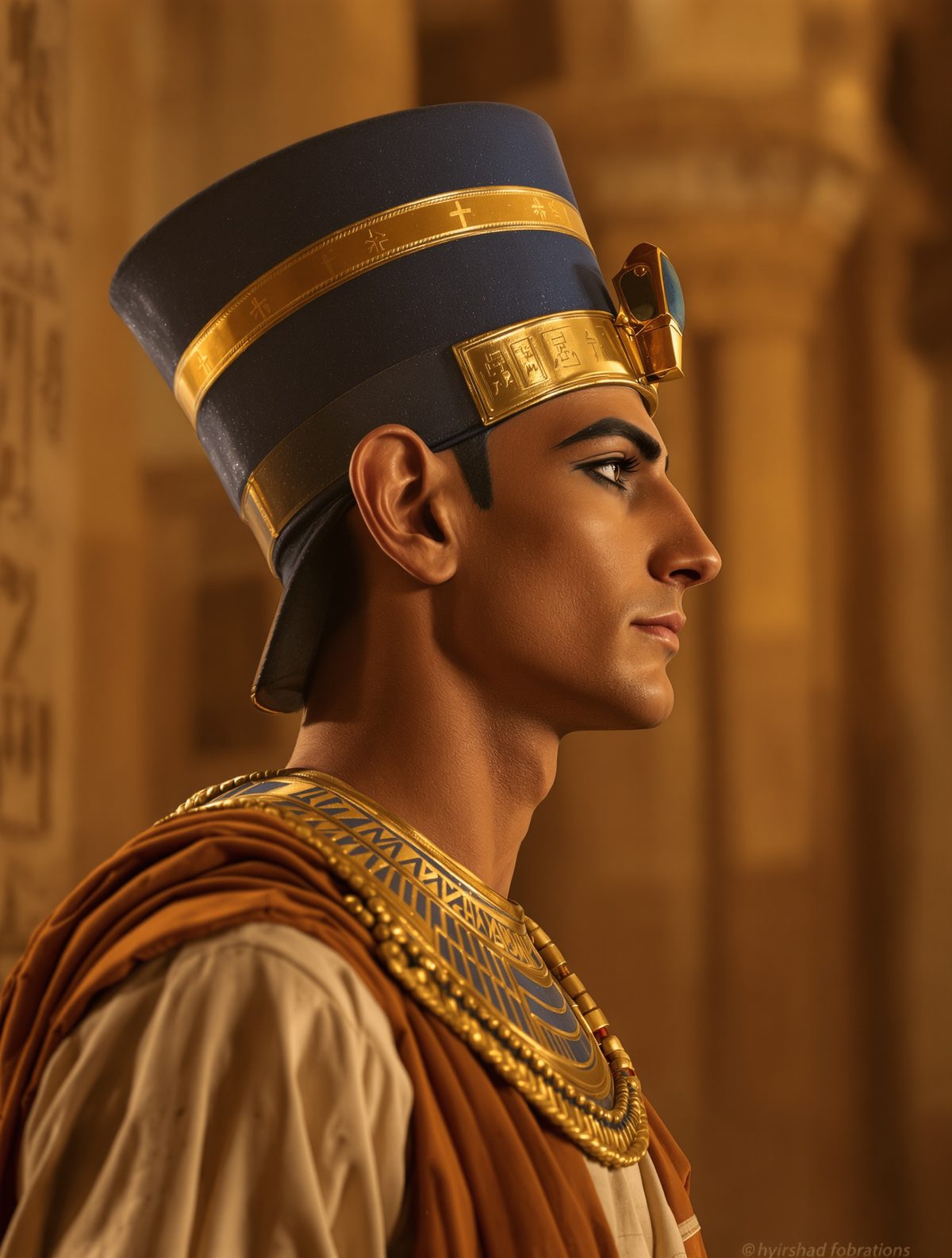
In the summer of 210 BC, the most powerful man in the world lay writhing in his silk-draped bed, screaming at enemies only he could see. Emperor Qin Shi Huang—the iron-fisted ruler who had unified China, built the Great Wall, and commanded an army of 8,000 terracotta warriors to guard his tomb—was dying from the very pills he believed would make him live forever.
For years, the emperor had swallowed mercury-laden elixirs daily, trusting his court alchemists who promised these shimmering concoctions would grant him immortality. Instead, the heavy metals coursing through his veins had slowly poisoned his brain, transforming the brilliant strategist who conquered six kingdoms into a paranoid madman who saw assassins lurking in every shadow.
This is the story of how China's first emperor—a man so obsessed with controlling death that he buried scholars alive and burned books—ultimately fell victim to his own desperate quest for eternal life.
The Emperor Who Conquered Everything Except Time
Born as Prince Ying Zheng in 259 BC, the future emperor ascended to the throne of the Qin state at just 13 years old. By age 38, he had accomplished what no ruler before him had managed: unifying the fractured Chinese kingdoms under a single banner. In 221 BC, he declared himself "Qin Shi Huang"—literally meaning "First Emperor of Qin"—and set about reshaping the ancient world.
His achievements were staggering. He standardized currency, writing systems, and even the width of cart axles across his vast empire. He connected and extended existing border walls into what would become known as the Great Wall of China, stretching over 3,000 miles. He built a network of roads and canals that revolutionized trade and communication. Most famously, he commissioned the breathtaking Terracotta Army—thousands of life-sized clay warriors, each with unique facial features, designed to protect him in the afterlife.
But for all his earthly conquests, Qin Shi Huang faced one enemy he couldn't defeat: mortality itself. As he reached middle age, the emperor who had bent nations to his will became increasingly obsessed with the one thing his vast power couldn't purchase—eternal life.
The Alchemists' Deadly Promise
Ancient Chinese alchemy wasn't just primitive chemistry—it was a sophisticated blend of natural philosophy, medicine, and what we might today call materials science. Court alchemists, known as fangshi, claimed they could transmute base metals into gold, create elixirs of immortality, and commune with the spirits of the deceased. For an emperor terrified of death, these promises proved irresistible.
The alchemists presented Qin Shi Huang with pills containing what they called "liquid silver"—mercury. In ancient Chinese thought, mercury was considered magical because of its unique properties. It was a metal that flowed like water, remaining liquid at room temperature and forming perfect silvery spheres when dropped. The alchemists argued that consuming mercury would make human flesh similarly imperishable.
What the ancient Chinese didn't understand was that mercury is one of the most toxic substances on Earth. Even tiny amounts can cause severe neurological damage, and chronic exposure leads to mercury poisoning—a condition that causes tremors, memory loss, irritability, and terrifying hallucinations. The very substance the emperor believed would preserve his life was slowly destroying his brain.
Records suggest Qin Shi Huang consumed these mercury pills daily for several years, likely starting around 215 BC. Court historians noted that the emperor became increasingly erratic, paranoid, and violent as time went on—classic symptoms of heavy metal poisoning that his doctors interpreted as signs of spiritual transformation.
Descent into Madness
As mercury accumulated in Qin Shi Huang's system, his behavior became increasingly bizarre and tyrannical. He ordered the burning of books that contradicted his worldview—an act of cultural destruction that eliminated countless ancient texts forever. When scholars protested, he had 460 of them buried alive in his capital city of Xianyang.
The emperor became obsessed with secrecy and security, convinced that assassins were everywhere. He constructed a massive palace complex with 270 interconnected buildings, sleeping in a different room each night to confuse potential killers. He traveled incognito, executing anyone who revealed his location. Court records describe him as increasingly suspicious of his own ministers, family members, and even his food tasters.
Perhaps most tellingly, Qin Shi Huang became fixated on finding the mythical Mount Penglai—a legendary island where immortals supposedly lived. He sent expeditions of thousands of young men and women to search the seas, promising great rewards to anyone who could bring back the secret of eternal life. One expedition leader, Xu Fu, took 3,000 people and simply never returned, possibly founding a colony in Japan rather than face the emperor's wrath empty-handed.
Modern medical experts examining historical accounts of the emperor's symptoms believe he was suffering from severe mercury poisoning. The tremors, paranoia, aggressive behavior, and hallucinations all align perfectly with chronic heavy metal toxicity. What his court interpreted as divine transformation was actually neurological deterioration.
The Final Journey
In 210 BC, despite his declining mental state, Qin Shi Huang embarked on his fifth and final imperial tour of the empire. By this point, the 49-year-old emperor was likely consuming massive doses of mercury pills, convinced that immortality was finally within reach. His alchemists had assured him that increased dosage would accelerate the transformation process.
The imperial procession was magnificent—hundreds of carriages, thousands of soldiers, and elaborate ceremonies in every city. But courtiers noted the emperor's increasingly erratic behavior. He would rage at invisible enemies, demand executions for imaginary slights, and spent hours talking to people who weren't there.
The end came suddenly while the emperor was staying in the palace at Shaqiu, in present-day Hebei Province. Court records describe Qin Shi Huang's final days as a nightmare of screaming, convulsions, and violent hallucinations. He reportedly attacked his own servants, convinced they were demons sent to steal his immortality. The man who had ruled the ancient world with absolute authority died alone, his mind shattered by the very substance he believed would make him a god.
The Cover-Up That Changed History
The emperor's death created an immediate crisis. Chief eunuch Zhao Gao and minister Li Si, fearing civil war if news of the emperor's death spread, decided on an elaborate deception. They loaded the emperor's body into a sealed carriage and continued the imperial procession as if nothing had happened, issuing orders in the dead emperor's name.
There was just one problem: it was summer, and the body began to decompose. To mask the smell, the conspirators loaded carts with rotting fish and ordered them to travel alongside the imperial carriage. For weeks, this macabre parade crossed China, with officials bowing to a corpse while trying not to gag from the stench.
The deception allowed Zhao Gao to manipulate the succession, installing the weak second son Huhai as emperor while eliminating the rightful heir. This palace coup contributed directly to the fall of the Qin Dynasty just four years later, ending the imperial line that Qin Shi Huang had believed would last for 10,000 generations.
The Emperor's Toxic Legacy
The tragic irony of Qin Shi Huang's death extends far beyond one man's folly. The emperor who achieved a form of immortality through his monuments and historical impact died because he couldn't accept that immortality was beyond his control. The Great Wall still stands, the Terracotta Army still guards his tomb, and his name still echoes through history—yet he died at 49, his brilliant mind destroyed by his own hubris.
Modern archaeologists have found evidence supporting the mercury poisoning theory. The emperor's tomb, which remains largely unexcavated, reportedly contains dangerous levels of mercury vapor—suggesting that even in death, he's surrounded by the substance that killed him. Ancient historians recorded that the tomb's ceiling was painted with mercury to represent flowing rivers, making the burial chamber a glittering, toxic monument to one man's impossible dream.
Perhaps the most haunting aspect of this story is how familiar it feels today. In an age where technology moguls pursue life extension research and cryonic preservation, Qin Shi Huang's obsession with conquering death resonates across millennia. His story serves as a reminder that the most dangerous enemy of great power is often the inability to accept its limits—and that the pursuit of immortality, whether through mercury pills or modern medicine, can sometimes rob us of the very life we're trying to preserve.