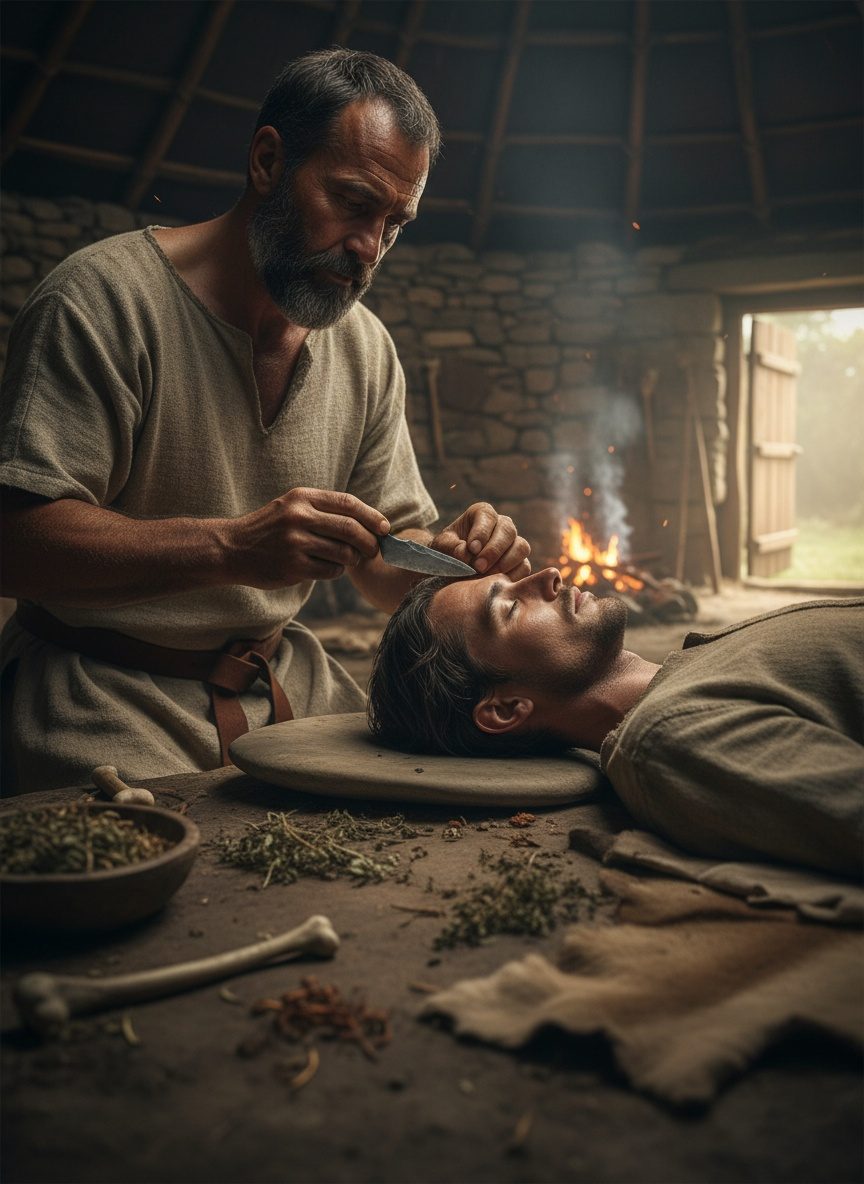
The air inside the temple was thick with incense and desperation. Around Hippocrates lay the frail forms of the sick, their murmurs drowned by earnest prayers to Asclepius, the god of healing. Cries for divine intervention echoed through the halls; offerings of honey, wine, and lamb blood lay at the feet of the statues. Yet no miracle came. The shadows of flickering oil lamps revealed ghostly faces, hollow with suffering. But it wasn’t the heavens Hippocrates looked to; it was the trembling body of a patient that drew his gaze and sparked his curiosity.
Turning Away from the Gods
In the bustling precincts of Kos, where pilgrims flocked in hopes of divine cures, Hippocrates stood as an anomaly. Born into a medical family, his early years were steeped in the rituals and beliefs of healing sanctuaries. Yet, as he watched the unending stream of mourners carrying their ailing loved ones, he felt a growing disillusionment. While others saw divine trial, he perceived patterns, beginnings, and ends; not divine retribution, but common ailments.
Rather than seek answers from above, Hippocrates chose to root his study in the tangible world. He observed the pallor of the skin, the sheen of sweat, the rhythm of breath. Each symptom told a story — a narrative of blood and phlegm, bile and black bile, which formed the cornerstone of the humoral theory he would later champion. It was a seismic shift, a revolutionary lens with which to view human suffering.
While the priests maintained that ailments resulted from capricious gods, Hippocrates posited that disease could be explained through natural causes. The idea that balance within the body, not appeasement of the gods, led to health represented a pivotal move away from superstition.
The Making of a Physician
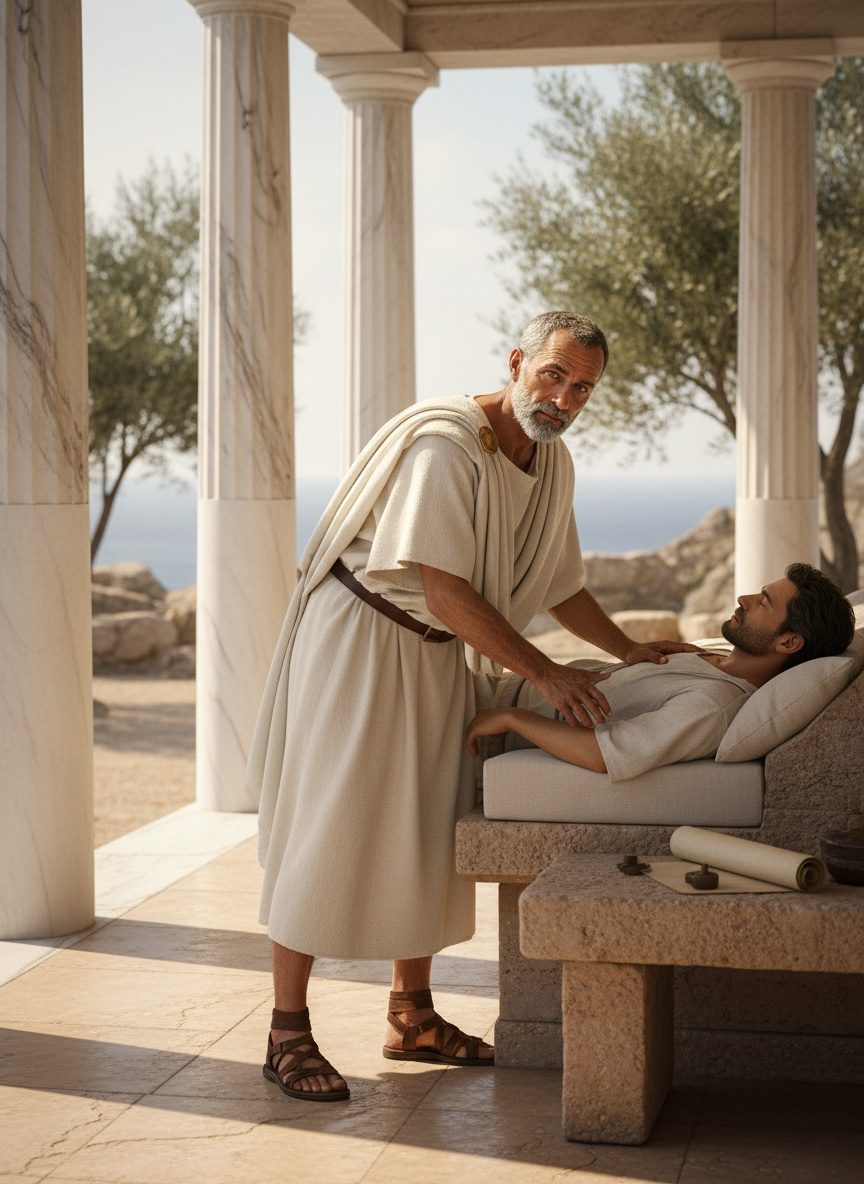
On the island of Kos, Hippocrates established one of the first medical schools. Here, free from the influence of religious doctrine, students were taught to value observation over myth. They shadowed their master, learning to diagnose maladies through their senses rather than divine oracles. They employed simple tools — hands to palpate, eyes to inspect, ears to listen.
Hippocrates urged his pupils to document their findings, a practice which led to the creation of the "Hippocratic Corpus". This collection of texts, though not solely authored by him, encapsulated a new medical philosophy. Detailed case studies chronicled the progression of fevers, consumption of the flesh, and the frenzy of the mind, untethered from divine context.
The "Hippocratic Oath", still echoed in modern medical ethics, emerged as part of this legacy. It was a promise to do no harm, to prioritize the patient above one's own gain — a stark contrast to the priests whose offerings often exceeded the value of their cures.
Anatomy of a Transformation
The radical shift Hippocrates proposed was not without its challenges. Traditionalists balked at the notion of breaking age-old connections with the divine. They saw his methods as hubris, an affront to the elder laws of human existence. Yet, with each successful diagnosis and treatment, doubt turned to grudging respect.
One pivotal change was understanding that environmental factors played significant roles in health. Hippocrates recognized that fresh air, clean water, and proper diet were critical — insights that, although foundational today, were revolutionary then. The idea that seasonal changes and geography could influence health laid the groundwork for epidemiology.
In cities where plague and sickness had long been unmitigated misfortunes, even the most skeptical began to see the merit in observation and reasoned analysis. Medicine, once the domain of the divine, was coming of age, grounded firmly in the reality of the flesh.
The Legacy of a Rational Healer
The teachings of Hippocrates spread beyond the shores of Greece, influencing the medical practices in Rome and beyond. His insistence on observation and reason created a wave that eventually saw superstition recede into the shadows of scientific inquiry. Not just within medicine, but across disciplines, the seeds of enlightenment were sown.
His legacy is not just one of medical practices but of intellectual courage. Hippocrates dared to look past the pedestal of the gods and into the complexities, and chaos, of human biology. This fearless quest for understanding carved a path that modern medicine follows to this day. It reminds us that answers often lie not in the heavens, but in the patient and persistent study of the world around us.
Hippocrates' venture was one of profound humanism — a belief that the mysteries of health were not punishment dealt by unseen hands but challenges that human reason could untangle. Amidst the chants of prayer and the aroma of incense, he listened, understood, and wrote, not for the glory of Olympus, but for the progress of mankind.