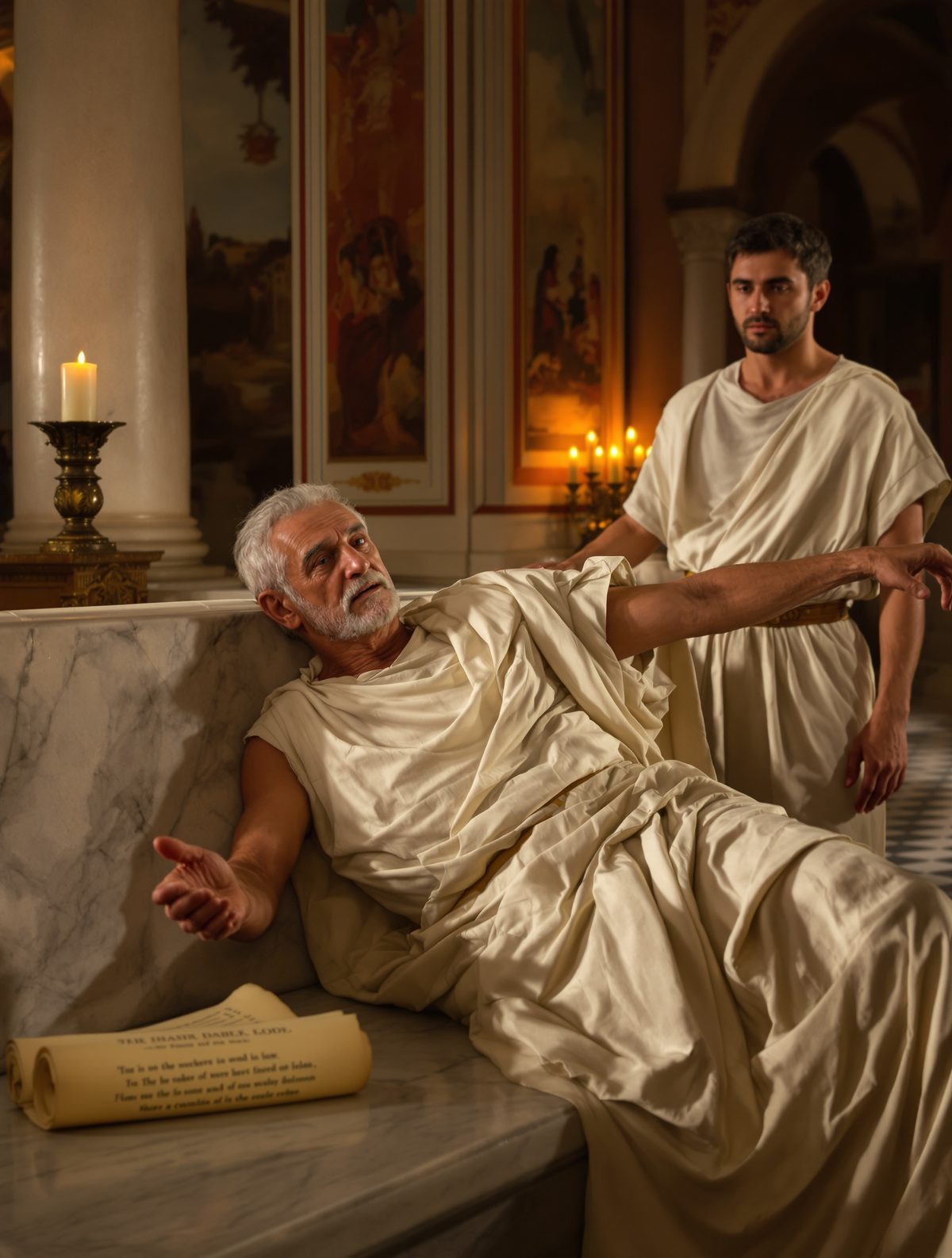
In the dim light of a confined cell, a man sat poised between life and death. As he chose to drink the poison that would seal his fate, silence enveloped the room except for the quiet murmur of his voice. It was 399 BC in ancient Athens, and Socrates, one of history's greatest philosophers, was ready to meet his end. While others might have seized the opportunity to escape—bribing guards and slipping into the darkness—Socrates saw a different path. Why did he choose the cup of hemlock instead of the promise of life? This is the story of the philosopher who stuck by his principles, even when faced with the ultimate penalty.
The Trial of a Philosopher
On a warm day in 399 BC, a crowd gathered in Athens to witness the trial of a man both revered and reviled. Socrates, known for his relentless questioning and thought-provoking dialogues, stood accused of corrupting the youth and impiety—specifically, not recognizing the gods of the state and introducing new deities. At the time, the judicial process in Athens relied on a jury of 501 citizens, chosen by lot. Even today, we grapple with the notion of justice, but back then, it was Socrates who had to contend with it in its harshest form.
Plato, Socrates' devoted student, captured the defense speech, known as the "Apology," wherein Socrates argued not with apologies but with reason and wit. He questioned how a single man could corrupt an entire city's youth and refuted the notion of him as a base atheist. But the jury was swayed by fear and tradition, voting 280 to 221 for a guilty verdict. The penalty was death. In those moments, as sentences were passed and expectations set, the seeds of an escape plan were sown by those who loved him best.
A Pathway to Freedom
Just a few steps away from his Athenian cell, the plans unfurled. Socrates' friends, devoted to their mentor, bribed the guards who had agreed to turn a blind eye when they came for him. A ship bound for Delos—a distant island and a bastion of safety—had been delayed. Time was on their side. Crito, his loyal companion, came with the news: "The way is clear for you, Socrates." Here lay freedom within grasp, cloaked in the darkness of the night.
Yet, confronted with the gleaming possibility of life, Socrates hesitated. For him, the escape was not a salvation but a compromise. By fleeing, he would betray the city that had nurtured him and flout the very laws he had respect for all his life. In an act that left many confounded, he turned his back on freedom, opting instead to illustrate his belief that justice surpassed a man's life.
The Hemlock and the Dialogue
The hours ebbed away like a slow tide. In the quiet of his prison, Socrates continued to discuss philosophy—the nature of the soul, the afterlife, and the concept of living a virtuous life. These weren't the final ramblings of a desperate man but the profound thoughts of one who had come to peace with his destiny. "The unexamined life is not worth living," he had famously said, and now he lived by those words to the very end.
With the approach of execution, the guards delivered the cup of hemlock—a poisonous concoction derived from the plant of the same name. It was a chilling moment, rich with symbolism and reality. His great friend Crito asked, with desperation in his voice, if there were any instructions he wished to leave behind. "Nothing," Socrates replied, "but what I am always telling you: attend properly to your own inner self."
The Lasting Legacy
After Socrates drank the poison, those around him noted how he remained composed, engaged in conversation until he felt the poison take its ultimate effect. His death, serene yet powerful, was itself a philosophic lesson: life was a journey governed by the principles we choose to uphold.
Socrates' death marked more than a personal tragedy; it was a pivotal moment in the history of thought. His willingness to accept the verdict, despite having the means to escape, became a profound statement on justice, ethics, and duty. His teachings spread through his disciples, including Plato and Xenophon, shaping the foundation of Western philosophy. Thousands of years later, Socrates still challenges us to consider whether laws are to be obeyed unconditionally or if there are higher rational and moral grounds upon which we stand.
Why It Matters Today
In an era swamped with dilemmas over truth, justice, and personal integrity, Socrates' choice resonates with new potency. His commitment to his principles over his life challenges us to consider the value of our own beliefs against the comforts of compromise and safety. Socrates chose the poison cup over escape because, for him, living unjustly was not living at all. In doing so, he left an indelible mark on history, reminding us that choices define character, and character, in turn, shapes destinies.
In that dark cell in Athens, Socrates became far more than one of history's greatest philosophers. He became a symbol—a reminder that courage is not always about action and escape but about standing firm in the face of the inevitable.