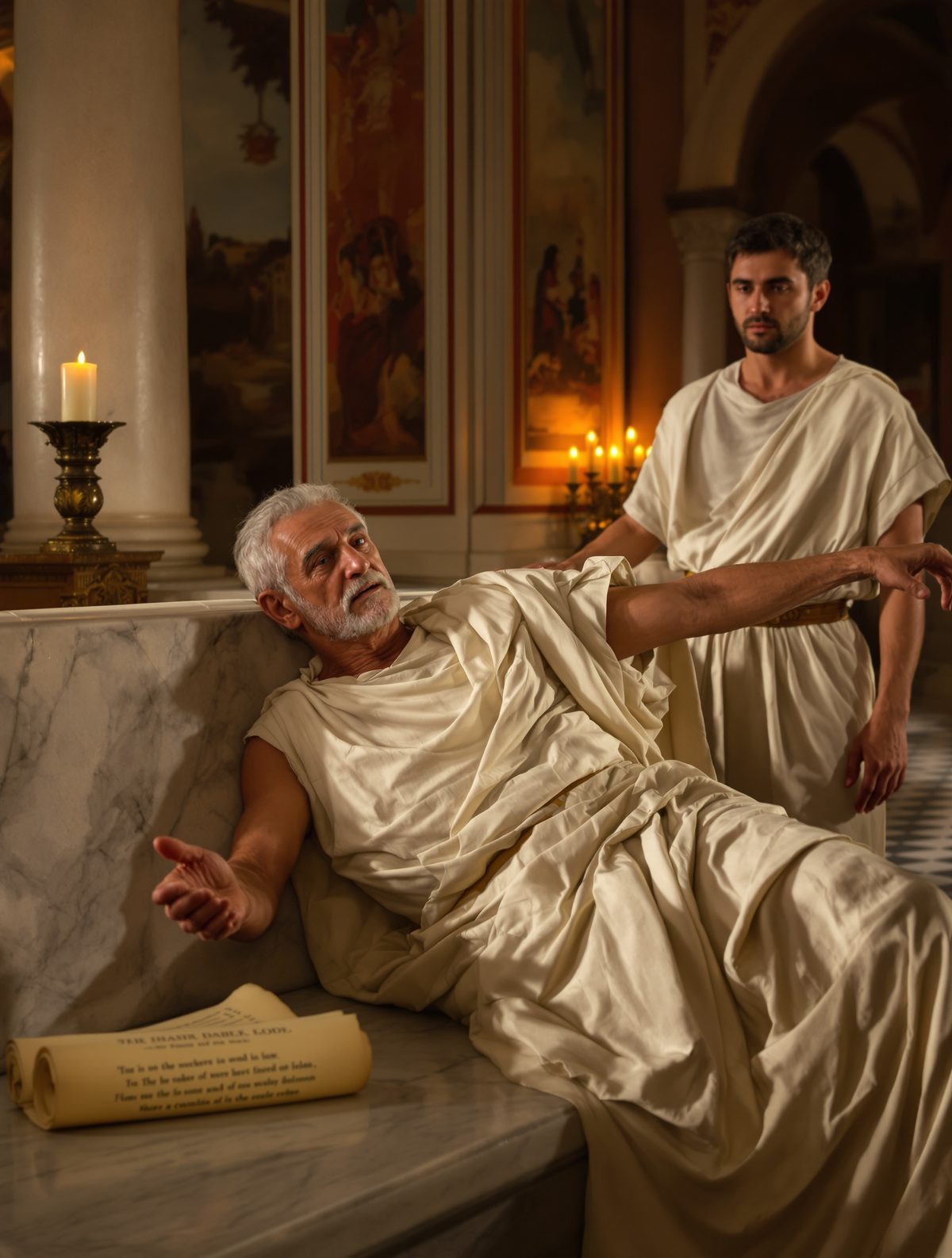
In the year 415 AD, the sun-baked streets of Alexandria were a tapestry of bustling activity and scholarly pursuit. Yet, amidst the chatter of merchants and the clamor of chariots, one figure commanded unparalleled respect — Hypatia, the greatest mind of her time. Even as a frenzied mob gathered to unleash a storm of wrath, her unwavering commitment to truth and education shone brighter than the blaze of torches illuminating the night. Her story is one of brilliance, defiance, and a tragic end at the hands of fanaticism.
The Shining Beacon of Alexandria
Imagine a city where the ancient world’s most profound knowledge converged — that's Alexandria, the jewel of intellectual achievement. Renowned for its Great Library, which housed hundreds of thousands of scrolls, Alexandria was a sanctuary for scholars. Among these brilliant minds stood Hypatia, a formidable philosopher, mathematician, and astronomer. Born around 360 AD to Theon, one of the last known mathematicians associated with the Library, Hypatia was destined for greatness.
Fluent in the ideas of Plato and steeped in the work of Ptolemy, she became a beacon of wisdom in a world transitioning from pagan beliefs to Christianity. She lectured in the synagogues, open to all who wished to learn. At a time when women were often relegated to the background, Hypatia’s intellectual prowess placed her at the heart of Alexandria’s academic life, where men and women alike revered her teachings.
Pagan Ideals in a Christian World
The early 5th century was a period of intense religious transition, and Alexandria was a melting pot of spiritual fervor. Christianity was on the rise, gradually erasing the vibrant tapestry of polytheism and classical philosophy that had long flourished. Yet Hypatia, a devoted proponent of secular knowledge, refused to bow to these tides of change.
Her firm stance as a pagan philosopher in a city rapidly succumbing to the edicts of religious leaders placed her directly at odds with Cyril, the powerful bishop of Alexandria. Cyril viewed Hypatia as a danger – a woman whose influence threatened to undermine the clerical authority and fan the flames of pagan rebellion.
As political tensions escalated, Hypatia’s friendship with Orestes, the Roman prefect of Alexandria, further complicated her position. Rather than be cowed by mounting hostilities, she continued to teach, her lectures marked by that rare ability to captivate and challenge her listeners. Her unwavering dedication to rational thought became not just an academic pursuit, but an act of defiance.
The Gathering Storm
Despite the wisdom she imparted, the seeds of envy and malice were sown among the Christian community. By 415 AD, tensions had reached a boiling point. The streets of Alexandria reverberated with whispers of conspiracy, as Cyril’s followers plotted their revenge.
In March, the fateful day arrived. As Hypatia traveled home, her chariot was beset by a zealous mob, incited by a group of Nitrian monks. Seized by the throng, she was dragged to a nearby church where the unthinkable unfolded. Her life was brutally extinguished. Stripped and flayed with ostraca — sharp fragments of pottery — Hypatia’s grisly murder sent shockwaves through the city, extinguishing the enlightenment she had spread.
The Legacy Silenced
Hypatia’s assassination was not merely a personal tragedy but a symbolic act against the impersonal yet powerful force of knowledge she embodied. Her death marked the beginning of the end for Alexandria's era as the epicenter of learned thought. The Great Library's scrolls would soon suffer a similar fate, their burning symbolizing the loss of countless treasures of ancient wisdom.
Interestingly, her legacy survived in the circles of her students and advocates. Synesius of Cyrene, one of her protégés, would later write of her brilliance and charm, refusing to let her memory fade. Today, Hypatia is celebrated as a martyr for the freedom of thought and the enduring struggle for academic ideals, symbolizing the battle against ignorance and the darker shades of religious fanaticism.
Why Hypatia’s Story Matters Today
The tale of Hypatia is not merely an ancient episode but a striking reflection of modern times. In an era where the flow of knowledge faces new gates and barriers, Hypatia’s story is a reminder of the price of wisdom, the fragility of intellectual freedom, and the courage necessary to protect it.
Her life sparks a timeless conversation about the role of women in academia and the venom of intolerance. It reminds us that the struggles she faced continue to echo in today’s world, where the coexistence of varying beliefs and rational thought remains as volatile as it was in ancient Alexandria.
As we navigate the complexities of modern society, Hypatia’s legacy urges us to safeguard the light of reason and embrace the diversity of ideas. Her undying spirit whispers through history, admonishing us never to let fear extinguish the flame of knowledge that she so fiercely kept alight, even as the mob closed in.