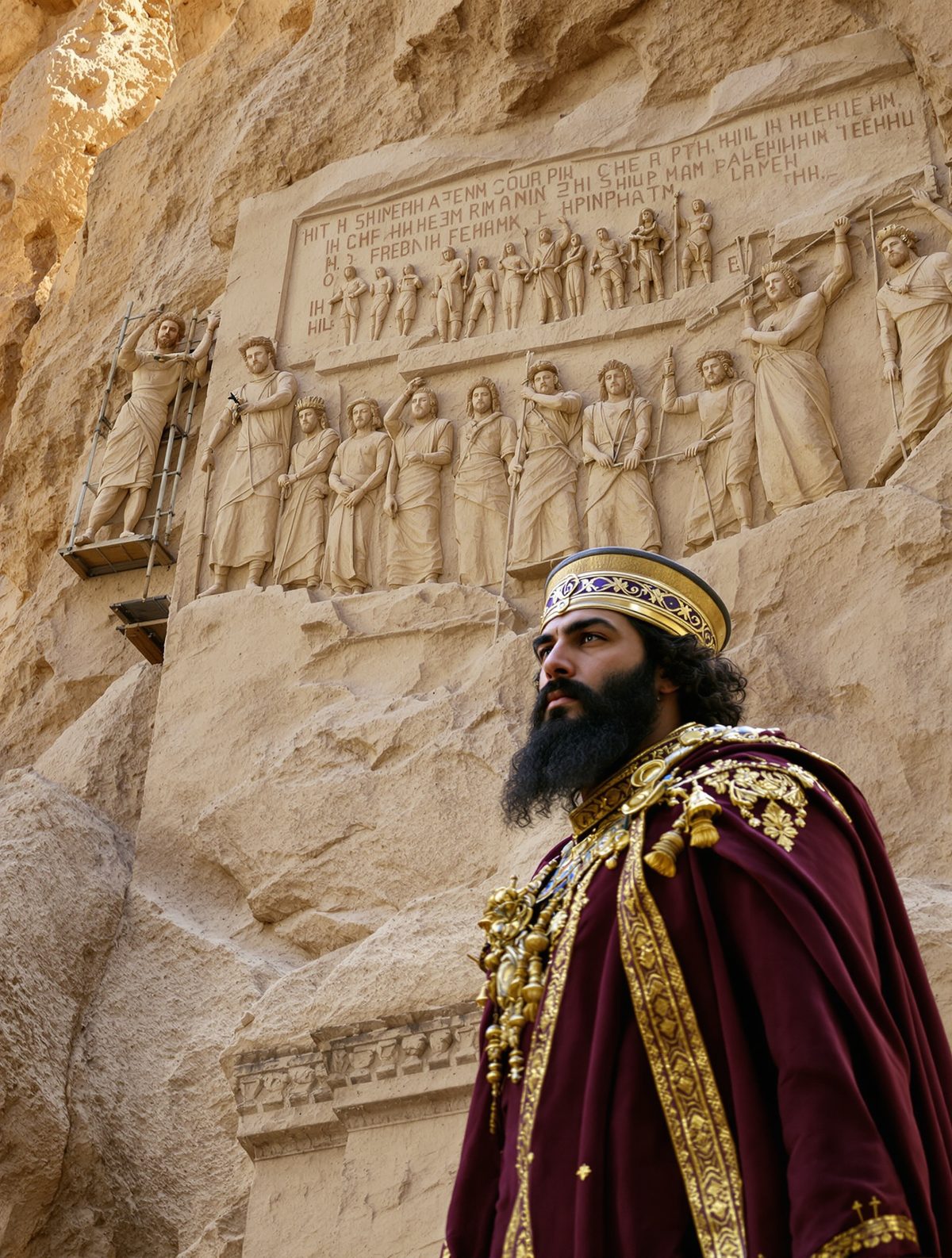
Imagine a ruler so adept at the game of thrones that he played it solo, substituting alliances for pawns and armies for rooks — the omnipotent chess master in a world teeming with aspiring kings. This was Tezozomoc of Azcapotzalco, a name written in bitter ink across Mesoamerican history. He wore the crown when the Aztec Empire took its nascent steps toward power. Yet, behind their rise lay a half-century of betrayal sculpted by Tezozomoc's hand. The echoes of his rule, indeed, whisper more about the nature of power than the glory of conquest.
The Serpent's Tongue: Ascending to Power
In the year 1363, the smoke from temple incense rose skyward as Tezozomoc ascended to the throne of Azcapotzalco at the tender age of thirteen. Situated in what is now the northwestern segment of modern Mexico City, Azcapotzalco was poised on a geopolitical seesaw. The Valley of Mexico was a quilt of warring city-states, each vying for land and rain-fed riches. At first, Tezozomoc's reign showed the hallmarks of diplomatic brilliance rather than militaristic aggression. His strategy was simple yet cunning: court friendship in public and nurture foes in private.
Among his earliest and most significant alliances was with the Tepanec and the fledgling Mexica, who would later become the renowned Aztecs. Yet, alliances in Tezozomoc's world were built on sand, and he deftly manipulated them to buffer Azcapotzalco against stronger adversaries like Texcoco. He bided his time, allowing his allies to grow complacent under the illusion of mutual trust.
Beneath the Mask: Sabotage and Subjugation
Tezozomoc's strength lay not just in warfare but in patient treachery. By 1395, he had sown distrust between Texcoco and the Acolhua territories using misinformation, ultimately leading to the Lethal Feud, a brutal conflict that weakened both parties profoundly. As these allies-turned-enemies bled their resources dry, Tezozomoc remained steadfast in the guise of neutrality.
The result was as he had foreseen: the battle-wearied Texcocans sought his military support, inadvertently allowing Tezozomoc the ideal pretext to unleash his formidable Tepanec warriors. Initially welcomed as liberators, his forces swiftly turned occupiers, subjugating the once proud Texcoco. It was a masterstroke, and Tezozomoc pocketed yet another vital piece of the valley while dressing his ambition as a cloak of friendship.
The Ambitious Learner: Tezozomoc's Sons
By the early 15th century, Tezozomoc's dominion was undisputed. But ruling an empire is a marathon, not a sprint, and he groomed his sons as future runners. Maxtla and Tayatzin, among his many progeny, were positioned strategically in parts of his empire. Yet, in a saga eerily reminiscent of Shakespearean tragedy, the unity between brothers was fragile.
Tayatzin, gifted with charisma and tactical acumen, was clearly Tezozomoc's favorite. However, unlike his father, Tayatzin nurtured a genuine friendship with the emerging Aztec powerhouse at Tenochtitlan. In contrast, Maxtla craved the throne with a passion eclipsed only by his ruthlessness. Tezozomoc watched his sons form competing factions, presenting each as his chosen heir, feeding an animosity that would only solidify his singular control.
The Turning Tides: A Legacy in Jeopardy
In the twilight of Tezozomoc's life, around 1426, dark clouds gathered on the horizon. The Mexica, allied with the disaffected remnants of Texcoco and other oppressed states, were nurturing ideas of resistance against Azcapotzalco. Perhaps aware of these machinations, Tezozomoc showed his hand, dispatching Maxtla to undermine Tayatzin's influence. His elder son's subsequent death was as mysterious as it was sudden, and many suspected Maxtla's involvement.
Tezozomoc's formidable rule, however, had reached a paradox. Upon his death, said to have been at nearly one hundred years of age, the fragile peace maintained through a tapestry of betrayals unraveled swiftly. Maxtla's ambition escalated tensions, leading to the pivotal formation of the Triple Alliance among Tenochtitlan, Texcoco, and Tlacopan. Together, they would dismantle Azcapotzalco's dominion with a vengeance befitting its founder's legacy of deceit.
A Resonance Through Time: Why Tezozomoc's Story Matters
The tale of Tezozomoc is more than just a dusty footnote in Mesoamerican history; it's a mirror reflecting the complexity of human ambition and the precariousness of power. His story compels us to question the integrity of alliances and the motives of leaders who, even today, might wear a friend’s smile while holding a dagger behind their back.
Tezozomoc’s life is a reminder that the most enduring legacies are not etched in stone or written in gold but recount the convoluted narratives of human relationships shaped by trust and betrayal. As the undercurrents of geopolitics ebb and flow, the strategies employed by Tezozomoc remain relevant today, as does the cautionary tale of those who wield deceit as a tool for dominance.
So next time someone speaks of great empires falling under the weight of their arrogance or betrayal, let Tezozomoc's specter haunt that discourse, shrouded in the shadows of history, yet eternally revealing the undying truth — power is nothing without the wisdom to wield it.