In 99 BC, as autumn winds swept across the imperial palace in Chang'an, China's most trusted court historian faced an impossible choice. Sima Qian stood before Emperor Wu, knowing that his next words would seal his fate. He could accept death with honor, or endure a punishment so shameful that most men would prefer the grave. What happened next would determine not only his legacy, but preserve the entire recorded history of ancient China.
The crime? Defending a defeated general when the emperor demanded silence. The punishment? Death or castration—a mutilation that would strip away his manhood, his social standing, and any hope of descendants to honor his memory. Most nobles chose the sword. Sima Qian chose the knife.
The Historian's Burden
Sima Qian hadn't set out to become a martyr for historical truth. Born around 145 BC into a family of court astronomers and record-keepers, he inherited more than just a position—he inherited an obsession. His father, Sima Tan, had spent decades collecting documents, interviewing witnesses, and meticulously recording the rise and fall of dynasties. On his deathbed in 110 BC, Sima Tan grasped his son's hand and made him swear a solemn oath: complete the grand historical project that would chronicle China's entire past.
"Do not forget what I have desired to expound and write," his father whispered. "Now I am about to die. You will become Grand Astrologer. When you become Grand Astrologer, do not forget what I have desired to discuss and write about."
The weight of this promise would prove heavier than Sima Qian could have imagined. His father's work wasn't just family business—it was a sacred duty to preserve the collective memory of Chinese civilization. From the legendary Yellow Emperor to the current Han Dynasty, someone needed to separate myth from reality, to give future generations an honest accounting of their past.
The General Who Started It All
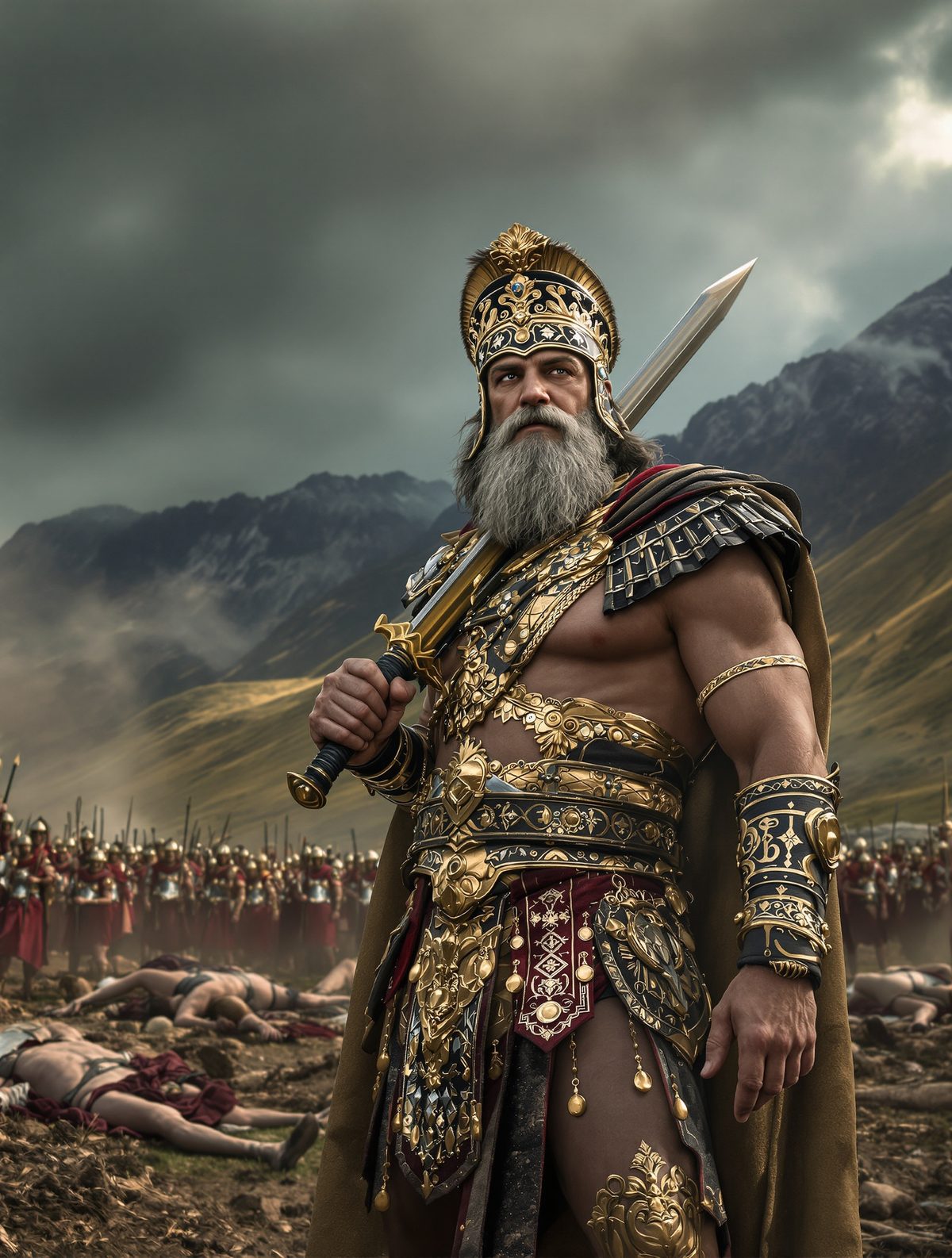
Li Ling was everything Emperor Wu admired in a military commander: brave, skilled, and utterly loyal. The grandson of a famous general, Li Ling had earned his reputation fighting the Xiongnu, the fearsome nomadic confederation that terrorized China's northern borders. When Wu decided to launch another campaign against these mounted warriors in 99 BC, Li Ling volunteered for what amounted to a suicide mission.
With just 5,000 infantry soldiers—no cavalry, no siege weapons—Li Ling marched deep into Xiongnu territory. For days, his small force held off armies ten times their size, fighting with desperate courage as they tried to retreat back to Chinese territory. They killed over 10,000 enemy warriors, but it wasn't enough. Surrounded, outnumbered, and running out of arrows, Li Ling made the unthinkable choice: he surrendered.
News of the surrender reached Emperor Wu like a thunderbolt. In the imperial court, where saving face mattered more than saving lives, surrender was worse than death. The emperor flew into a rage, demanding to know how his handpicked general could bring such shame upon the dynasty. One by one, court officials lined up to denounce Li Ling as a coward and a traitor.
Everyone except Sima Qian.
Speaking Truth to Power
When Emperor Wu's burning gaze fell upon his court historian, Sima Qian could have offered the expected platitudes about military honor and imperial glory. Instead, he chose honesty—a decision that would cost him everything.
"Li Ling fought desperately with few against many," Sima Qian declared before the stunned court. "He killed so many of the enemy that they could not count the number of their dead. Though unable to rescue himself in the end, this deed of his was enough to make his reputation in the world."
The throne room fell silent. In defending Li Ling's courage, Sima Qian had implicitly criticized the emperor's strategy of sending insufficient forces against impossible odds. Worse, he had dared to suggest that surrender might sometimes be more honorable than meaningless death.
Emperor Wu's face darkened. Here was his own historian, supposedly the keeper of imperial glory, defending a traitor and questioning imperial wisdom. The sentence was swift and merciless: death for treason against the emperor's authority.
But then came the choice that would define Sima Qian's legacy. Ancient Chinese law offered convicted nobles an alternative to execution—palace castration, known as gongxing. This surgical removal of the genitals was considered so shameful that it was reserved for the lowest criminals. A castrated man became a social outcast, forever barred from having descendants to honor his memory or tend his ancestral shrine.
The Ultimate Sacrifice
Most men of Sima Qian's social standing would have chosen death without hesitation. Confucian philosophy taught that preserving one's body intact was a sacred duty to one's ancestors. Physical mutilation was worse than death because it damaged not just the individual, but his entire family line.
But Sima Qian heard his father's dying words echoing in his memory. The great historical work remained unfinished. Centuries of Chinese civilization still lacked their definitive chronicler. If he chose honorable death, who would complete the Shiji—the "Records of the Grand Historian"?
In his own later writings, Sima Qian described the agonizing decision: "It is better to die than to live in dishonor. Yet death is the common lot of all men, which may be either weightier than Mount Tai or lighter than a feather. It all depends upon the way a person uses it."
He chose the knife. In 99 BC, palace surgeons performed the brutal procedure that would strip away his manhood but preserve his life. The physical agony was matched only by the social death that followed. Friends avoided him. Colleagues whispered behind his back. He had become one of the huanguan—the castrated servants who existed at the margins of court society.
From Humiliation to Immortality
What Sima Qian did next transformed personal disaster into historical triumph. Retreating from public life, he threw himself into his father's work with obsessive dedication. Day after day, year after year, he researched, interviewed, and wrote. The result was the Shiji—130 chapters covering 3,000 years of Chinese history, from mythical emperors to his own time.
This wasn't just a dry chronology of rulers and battles. Sima Qian created vivid biographical portraits, analyzed political patterns, and even included his own experiences—including the story of his punishment. He wrote about emperors and peasants, generals and merchants, creating the first comprehensive social history of China.
The work's honesty was revolutionary. Sima Qian didn't glorify every imperial decision or whitewash inconvenient truths. He criticized emperors, praised rebels when they deserved it, and even included the story of his own castration as a cautionary tale about the price of speaking truth to power.
Most remarkably, he revealed that his defense of Li Ling hadn't been entirely accurate. The general he thought he was defending had actually been someone else entirely—Li Guangli, the emperor's brother-in-law. Sima Qian had suffered castration for a case of mistaken identity, but he completed his great work anyway.
By the time of his death around 86 BC, Sima Qian had created what many scholars consider the greatest historical work in Chinese literature. The Shiji became the template for all subsequent Chinese historical writing, establishing methods and standards that influenced Asian historiography for over 2,000 years.
The Price of Truth
Sima Qian's story resonates today because it captures a timeless dilemma: What price are we willing to pay for truth? In an age of social media mobs and political polarization, his choice to endure ultimate humiliation rather than abandon his principles feels remarkably contemporary.
The historian who chose castration over death understood something profound about legacy. Physical courage—the kind that chooses death before dishonor—lasts only a moment. Moral courage—the kind that endures shame to serve a greater purpose—can echo through millennia.
Thanks to Sima Qian's sacrifice, we know the names of forgotten emperors, the strategies of ancient generals, and the daily lives of people who lived over 2,000 years ago. His Shiji preserved not just Chinese history, but the very concept that truth matters more than comfort, that accuracy matters more than approval.
Emperor Wu died in 87 BC, his military campaigns largely forgotten. Li Ling lived out his days in exile, a footnote to history. But Sima Qian—the castrated historian who chose shame over silence—achieved a different kind of immortality. Every time someone values truth over convenience, chooses principle over popularity, or sacrifices personal comfort for lasting purpose, they walk in the footsteps of the man who gave up everything to preserve the past for the future.