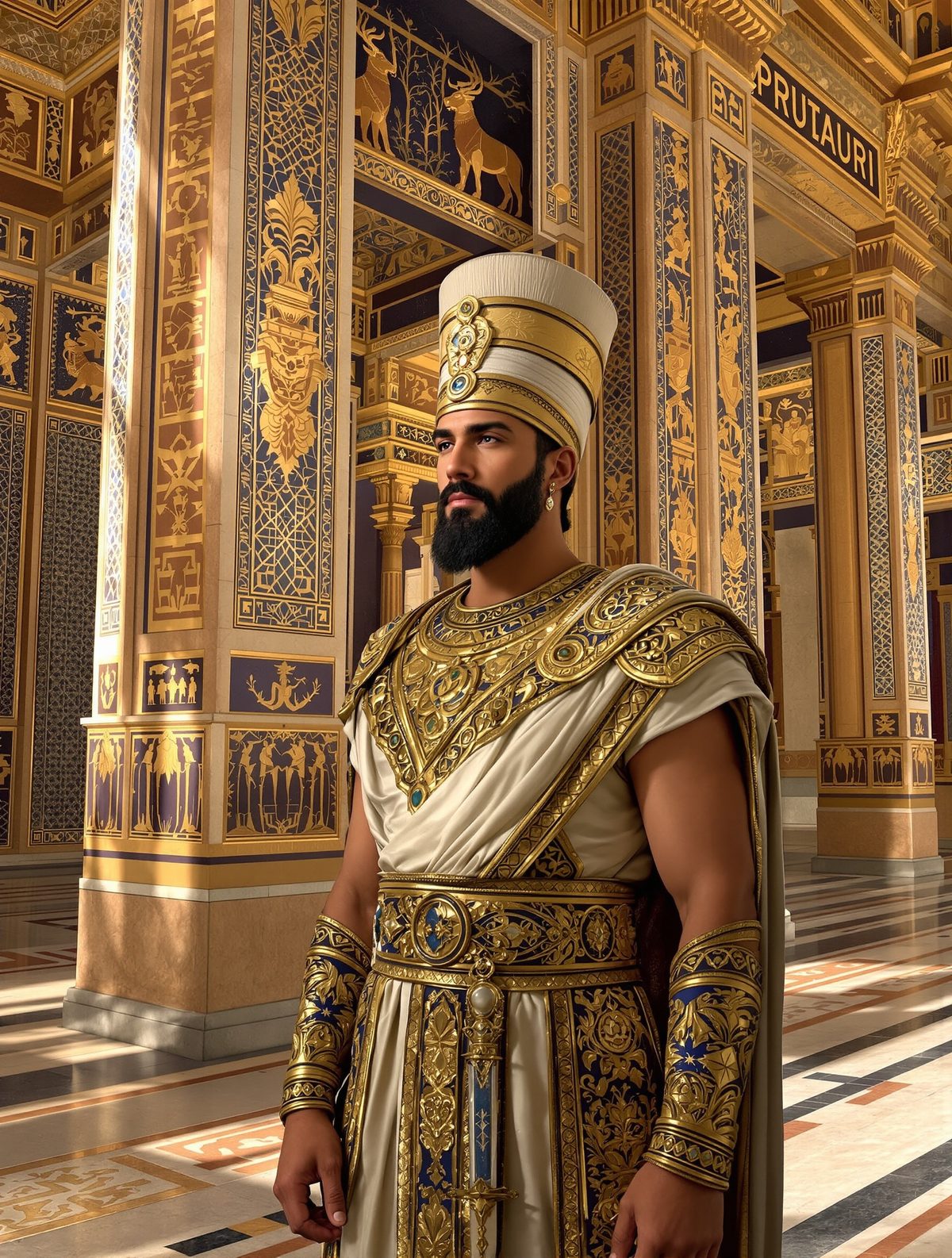
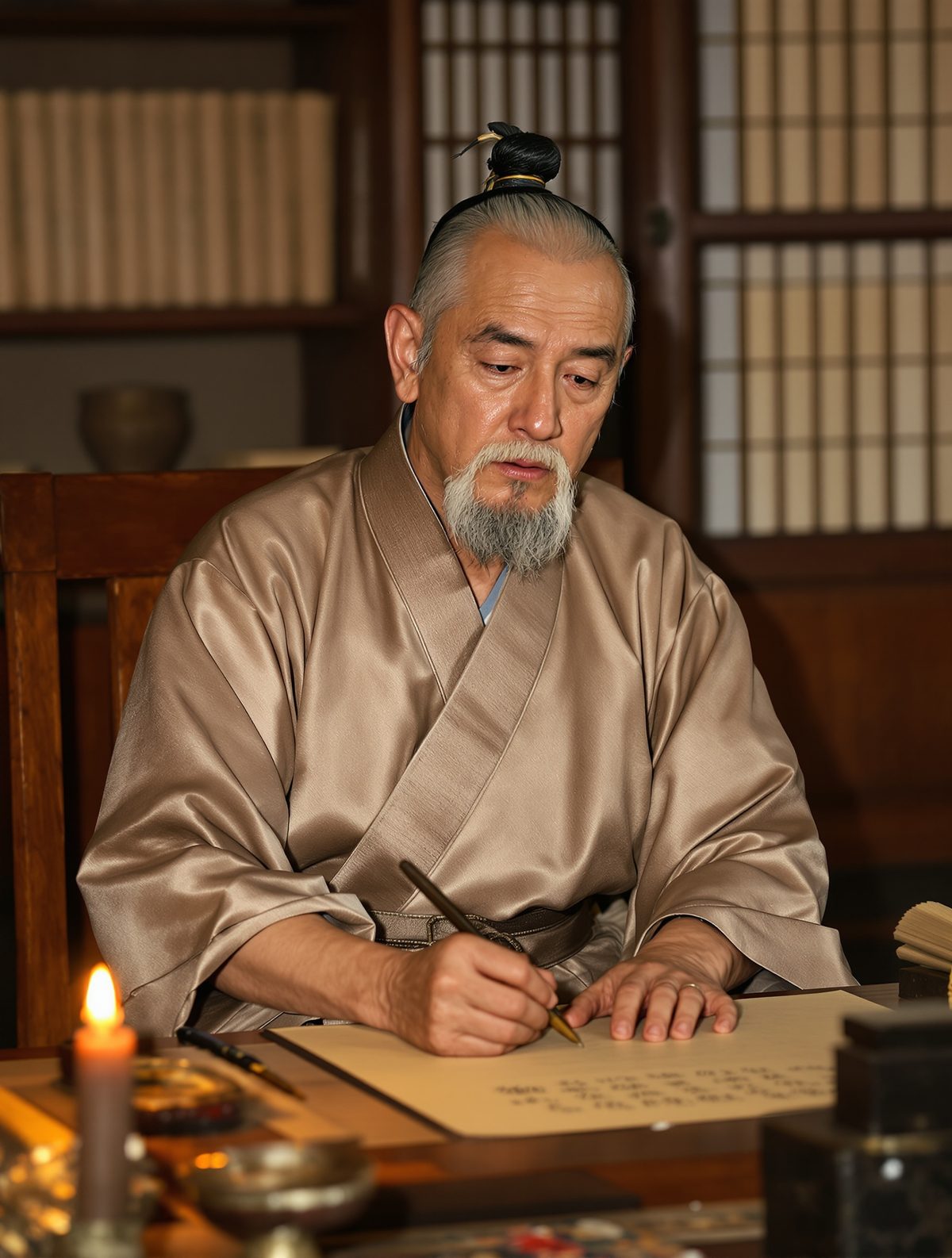
In the flickering light of oil lamps, a young woman's trembling hand guided a reed pen across papyrus. Each hieroglyph she carved could mean her death. Outside her chamber in the great palace of Memphis, guards loyal to ambitious court officials prowled the corridors. The pharaoh was dead, and with him, her protection. What she was writing would either save Egypt's throne—or destroy everything her ancestors had built over three millennia.
The woman was Ankhesenamun, widow of the boy-king Tutankhamun. The year was 1323 BC. And she was about to commit the most audacious act of treason in ancient Egyptian history.
A Child Bride's Golden Cage
To understand the desperation that drove Ankhesenamun to such extremes, we must first grasp the extraordinary circumstances of her life. Born around 1348 BC, she was the daughter of two of history's most controversial figures: the "heretic pharaoh" Akhenaten and the legendary beauty Nefertiti. Her birth name was Ankhesenpaaten, meaning "Living through the Aten"—a testament to her father's revolutionary religious beliefs that had nearly torn Egypt apart.
When Akhenaten's radical experiment collapsed after his death, the old religious order fought to restore traditional Egyptian gods. Ankhesenamun found herself a political pawn in this struggle. At roughly thirteen years old, she was married to her half-brother Tutankhamun—himself only nine—in a union designed to legitimize his claim to the throne and heal the religious schism tearing at Egypt's foundations.
For nearly a decade, Ankhesenamun lived as queen consort to a pharaoh who, despite his later fame, was largely a figurehead. The real power lay with court officials like the vizier Ay and the general Horemheb. Tutankhamun's tomb would later reveal touching evidence of their relationship: two mummified stillborn daughters, suggesting the royal couple desperately tried to produce an heir to secure their dynasty's future.
But in 1323 BC, disaster struck. Tutankhamun died suddenly at just nineteen years old. Recent CT scans of his mummy suggest he may have died from complications related to a broken leg, possibly from a chariot accident, though some historians still suspect assassination. Whatever the cause, his death left twenty-three-year-old Ankhesenamun in an impossible position.
The Vultures Circle
In ancient Egypt, power flowed through divine bloodlines, but it was wielded by those strong enough to seize it. With Tutankhamun dead and no male heir, the throne hung in precarious balance. The vultures began circling immediately.
The most dangerous was Ay, the aging vizier who had served under Akhenaten and guided Tutankhamun's reign from the shadows. Despite being well into his sixties, Ay harbored ambitions for the crown itself. Egyptian law and custom provided him with a path: marry the widowed queen and claim the throne through her royal bloodline. For Ankhesenamun, this prospect was nothing short of horrifying.
Ay was likely her grandfather—and possibly worse. Some historians suggest he may have orchestrated Tutankhamun's death to clear his own path to power. Whether or not this was true, Ankhesenamun would have known that marriage to Ay meant becoming a powerless figurehead while he ruled Egypt in her name. She had already spent ten years watching others make decisions for her kingdom. The prospect of decades more under Ay's thumb was unbearable.
But what alternatives did she have? Egyptian queens wielded considerable influence, but they rarely ruled alone. The priesthood, military, and court officials expected male leadership. Ankhesenamun was educated, intelligent, and bore the blood of pharaohs—but she was also isolated, surrounded by potential enemies, and running out of time. Ay wouldn't wait long to press his suit.
In this desperate hour, the young widow conceived a plan so audacious it defied three thousand years of Egyptian tradition.
The Letter That Could Topple an Empire
Ankhesenamun's solution was as brilliant as it was treasonous: she would invite Egypt's greatest enemy to save her throne. Sitting in her private chambers, she composed a letter to Šuppiluliuma I, the powerful king of the Hittites—the very people Egyptian armies had been fighting for generations across the contested lands of Syria and Canaan.
The letter, recorded in Hittite archives and discovered by archaeologists in the 20th century, is one of the most extraordinary documents to survive from the ancient world. In it, Ankhesenamun—identifying herself only as "the queen of Egypt"—made an unprecedented request:
"My husband has died and I have no son. People say that you have many sons. If you send me one of your sons, he could become my husband. I do not want to take one of my servants and make him my husband."
The implications were staggering. Ankhesenamun was proposing that a foreign prince—an enemy of Egypt—should marry her and become pharaoh. It was a proposition that violated every principle of Egyptian sovereignty and divine kingship. Pharaohs were gods on earth, descended from Ra himself. The idea of a Hittite ruling the Nile Valley was nothing short of sacrilege.
But from Ankhesenamun's perspective, it was also genius. A foreign prince would need her legitimacy to rule Egypt. Unlike Ay or other court officials, he would have to treat her as a true partner rather than a puppet. She would retain real power while gaining a protector strong enough to face down Egypt's entrenched elite.
A King's Suspicion and a Prince's Doom
When Šuppiluliuma received this extraordinary letter, his reaction was precisely what any reasonable person might expect: complete disbelief. This had to be a trap. Why would the Queen of Egypt, one of the world's most powerful nations, invite her enemy to take control? He sent his own envoy to Memphis with a blunt message: "You are trying to deceive me. If you really had no sons, you would not write to a foreign land."
Ankhesenamun's response, also preserved in Hittite records, reveals both her desperation and her political acumen. She wrote back with remarkable directness: "I have written to no other country. I have written only to you. People say you have many sons. Give me one of your sons and he will be my husband and king of Egypt."
Her frankness apparently convinced Šuppiluliuma. The Hittite king saw an unprecedented opportunity to gain control over Egypt without a costly war. He selected one of his sons, Prince Zannanza, and dispatched him south with a small retinue toward the Egyptian border.
Prince Zannanza never reached Memphis. Somewhere in the contested borderlands between the two empires, he was murdered. Whether the killers were Egyptian agents sent by Ay, bandits taking advantage of a small royal party, or assassins hired by other interested parties remains unknown. What is certain is that Ankhesenamun's audacious gamble had failed catastrophically.
The prince's death enraged Šuppiluliuma, who launched immediate military campaigns against Egyptian territories in Syria. More importantly for Ankhesenamun, it eliminated her last hope of escaping the fate closing in around her.
The Price of Defiance
With Prince Zannanza dead and no other options remaining, Ankhesenamun faced the inevitable. Historical records show that Ay did indeed marry her and claim the pharaoh's throne, ruling Egypt for four years until his own death in 1319 BC. But what happened to Ankhesenamun herself remains one of ancient Egypt's great mysteries.
She simply vanishes from the historical record after Ay's coronation. No tomb has been definitively identified as hers. No further inscriptions mention her name. Some historians suggest she may have been quietly eliminated once Ay no longer needed her royal bloodline to legitimize his rule. Others propose she may have been exiled or forced into obscurity in some remote temple.
What we do know is that her desperate gamble changed the course of history. The wars triggered by Prince Zannanza's murder weakened both empires and shifted the balance of power across the ancient Middle East. Ay's brief reign was followed by that of General Horemheb, who systematically erased the names and monuments of the Amarna period rulers—including Ankhesenamun herself.
Perhaps most tragically, Ankhesenamun's bold attempt to reshape Egyptian kingship died with her. Egypt would occasionally be ruled by powerful queens like Cleopatra, but never again would a woman attempt to fundamentally alter the kingdom's power structure by bringing in a foreign partner as an equal.
A Legacy Written in Silence
Ankhesenamun's story resonates across the millennia because it captures something timelessly human: the struggle of an intelligent, capable person trapped by circumstances beyond their control, willing to risk everything for freedom and power. Her letters to Šuppiluliuma reveal a political sophistication that challenges modern assumptions about women's roles in the ancient world.
In our own era of global politics and international alliances, her strategy seems less shocking than it might have to previous generations. Leaders regularly seek foreign partnerships to strengthen their domestic positions. What remains remarkable is her willingness to shatter every convention of her time in pursuit of a better alternative.
The silence that surrounds her final years speaks to how completely her enemies won—not just politically, but in controlling the narrative of her life. Yet the survival of her letters in Hittite archives means that her voice, desperate and defiant, still echoes across thirty-three centuries. In the end, perhaps that's the most fitting monument to a woman who refused to go quietly into history's shadows.