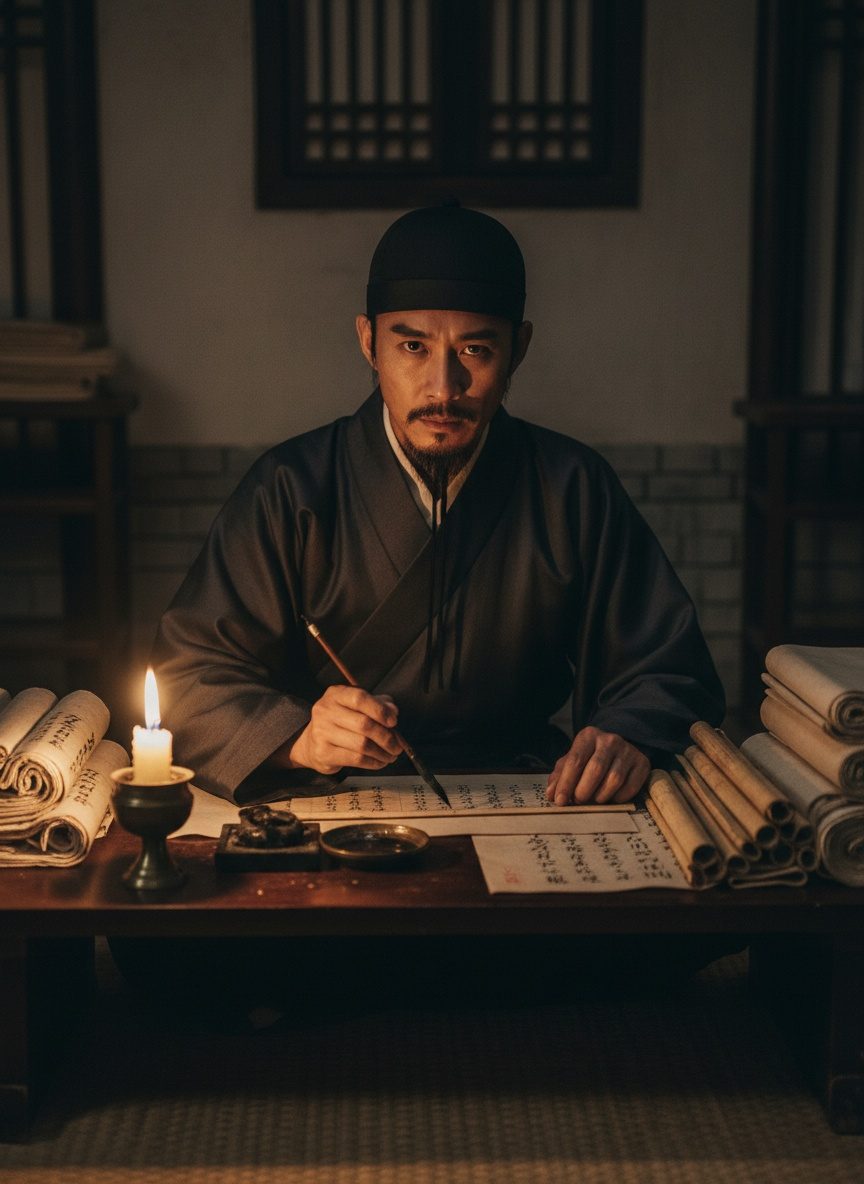
Sima Qian was an extraordinary historian. His was a story of humiliation and resilience.
The Historian's Undoing
The annals of history rarely spotlight the chroniclers themselves, but Sima Qian remains an exception. Born during the Han Dynasty around 145 BC, Sima was destined for a life of intellectual pursuit. As the son of a historian, he inherited a profound respect for the past. He poured over ancient texts, traveled across the empire, and collected tales from those who remembered. As a dedicated historian, his life's mission was to record the entirety of Chinese history – a monumental task, capturing the narrative of a civilization.
However, in 100 BC, his path took a dire turn. Caught in the whirlpool of court politics, Sima Qian defended Li Ling, a general who had surrendered to the Xiongnu, the fierce nomadic tribesmen of the steppes. The Han Emperor, angered by the general's perceived betrayal, would hear no defense. For his audacity, Sima Qian faced the emperor's wrath. His sentence was not death, but an ordeal that most would consider worse: castration.
Many faced with such a penalty would choose a dignified death to escape the disgrace. Yet, Sima Qian chose to endure, a decision rooted not in self-preservation but in the preservation of history. He accepted this profound humiliation not for personal redemption, but to ensure that his historical masterpiece, the "Records of the Grand Historian," would see completion. Sima’s choice was unconventional, but it was driven by a determination that transcended personal suffering. In the records he kept, he infused his own hardships into a narrative that would define how China's story was told, ensuring his own struggles would underscore the importance of the past.
Crafting the Chronicles
Confined within the palace walls of Chang'an, Sima Qian worked diligently. Despite his personal disgrace, his intellectual vigor was unstoppable. The "Records of the Grand Historian" was not a mere chronology; it was a masterful synthesis of history, philosophy, and literature. This formidable work encompassed over two millennia of China's history, divided into five sections and encapsulating the reigns of emperors, the lives of commoners, and the philosophies that shaped the realm.
Sima Qian's meticulous method of constructing "Records" drew not only from imperial archives but from oral testimonies, poems, and songs. Each biography and event in his opus was imbued with vibrant detail, painting pictures of legendary warriors, strategic battles, and enigmatic rulers. The narratives were filled with nuances that textbooks often overlook, such as regional tales that energized historical accounts and gave them a layer of authenticity. He did not merely write history; he breathed life into it.
The historian's work was groundbreaking for its narrative style, diverging from the dry records of the court to offer a tapestry rich with personal accounts and human emotion. Sima Qian used his position to preserve unpopular truths and dissident voices that risked being erased. Against the backdrop of political strictures, his writings maintained a critical edge, often reflecting his own skepticism and sense of injustice. This daring honesty ensured that through his pen, history was not just a record of triumph, but a canvas for painting the human condition.
Beyond Death and Disgrace
As the "Records of the Grand Historian" neared completion, Sima Qian had not just chronicled history; he had transformed it into a living entity. He compiled a forgotten world into volumes that would later empower historians, academics, and even emperors. Yet, what made his work truly exceptional was its refusal to idolize; it fearlessly wielded the truth, no matter how unsavory it may have been in the imperial courts.
It is important to remember that his writings provided a framework for what would become the Chinese historical standard. His methodology was the cornerstone for China's dynastic histories, influencing generations of historians after him. Despite the adversities and the ostracism he faced, even centuries later, the legacy of Sima Qian endures as a testament to the power of unyielding dedication to the truth.
The story of Sima Qian is more than one of sacrifice—it is an exploration of a man's resolve to outlast his life, to etch the truth into eternity against all odds. His chronicles teach us that history, when recorded impartially, can transcend its chronicler's fate. It was not the preservation of his own dignity that concerned Sima Qian, but rather the integrity and continuity of the story that belonged, in equal measures, to every soul who ever lived under the Chinese skies. Through the shadows of his own suffering, he illuminated the past for millennia to come.