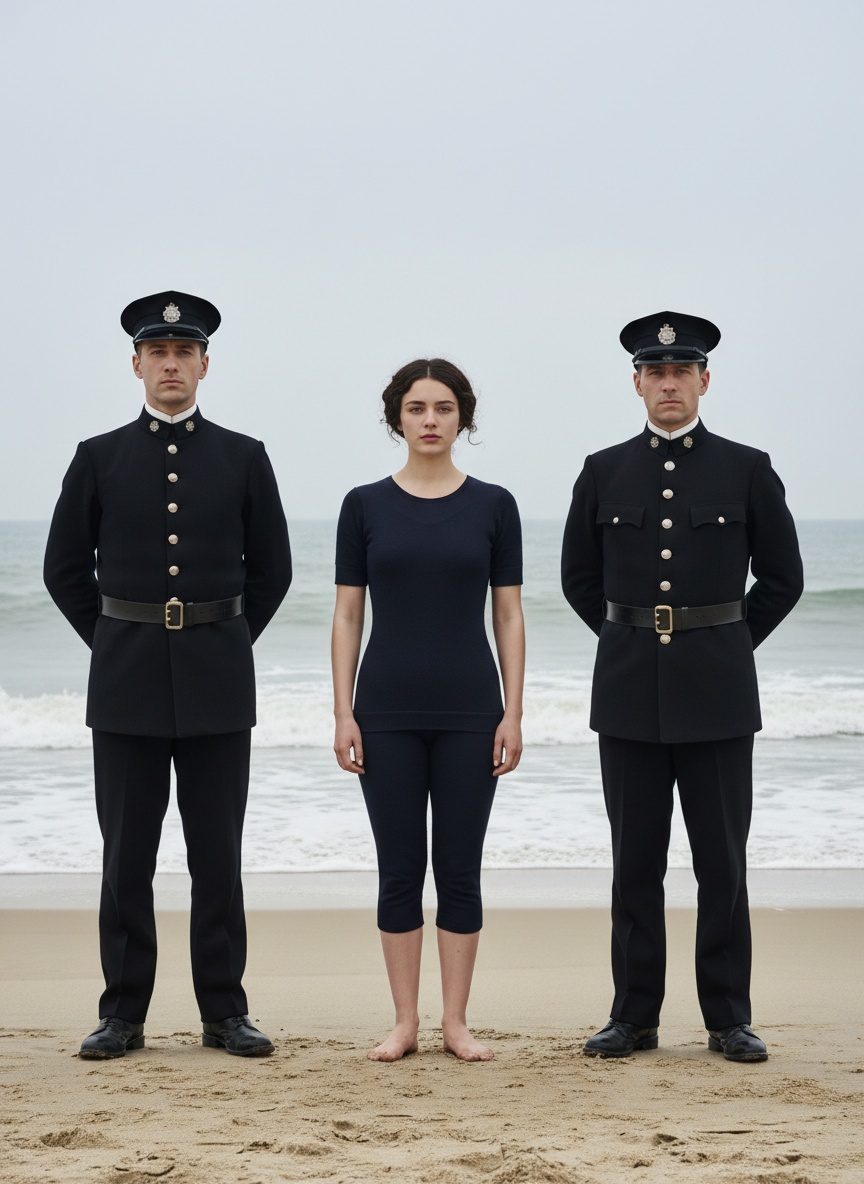
She was known for her grace and agility in the water. Annette Kellermann was an expert swimmer who defied convention at every stroke. She revolutionized the way women could engage with the world, starting with her swimsuit.
The Australian Mermaid of Edwardian America
Annette Kellermann was no ordinary woman even by today's standards. Born in Australia, she overcame childhood weakness by immersing herself in water, and what began as a necessity turned into an extraordinary passion. By the time she was a young adult, Annette could often be found gliding through the water like a creature born to it, her prowess earning her the nickname 'The Australian Mermaid'. Her feats included swimming across the Thames River in London and promoting the health benefits of swimming for women. Yet, Kellermann's story reveals an unexpected twist in Edwardian America, where society was not ready for a woman who swam like a fish and dressed like one too.
Breaking Waves and Breaking Norms
The summer of 1907 saw the tranquil Revere Beach in Boston become the stage for an unlikely confrontation between propriety and progress. Annette stepped onto the sand wearing a one-piece bathing suit that defied the cumbersome, modesty-preserving norms. In an era when women's swimwear often consisted of dresses worn with pantaloons and stockings, her sleek outfit was as radical as her swimming skills. It featured a tightly fitted bodice and a pair of shorts that allowed freedom of movement and speed in the water, emphasizing function over fashion.
However, the issue ran deeper than fabric and design. Annette Kellermann's choice of swimsuit was a public declaration of autonomy over her own body, something that jarred with the conservative mores of the time. Local law enforcement perceived her attire as indecent, and officers swiftly arrested her for challenging the established rules of feminine decency. Her arrest sparked a national debate, captivating the media and pitting progressive thinkers against traditionalists.
A Courtroom Battle with Rippling Effects
In the ensuing courtroom drama, Annette Kellermann stood not just for herself but for every woman who wished to break free from societal shackles. The spectacle riveted the nation, turning the courtroom into a battlefield where questions of morality, health, and women's freedom clashed with vigorous debate. Advocates for Annette argued that rigid social norms hampered women's ability to engage in health-promoting activities such as swimming.
The media frenzy surrounding the trial highlighted broader societal issues beyond the swimsuit itself. It questioned the authority that dictated women's public images and activities. The trial did not end entirely in Annette's favor, but it succeeded in loosening the corset of public perception, leading to a nuanced discussion about women's rights to their own bodies.
The Swimsuit That Made Waves
Despite unfavorable verdicts, the battle was not lost for Annette Kellermann or for women's liberation. The dialogue she ignited washed over American shores, influencing both fashion and the emerging women's movement. Her advocacy led to the gradual acceptance of more practical women's swimwear, helping to carve out a space for women in sports. As newspapers reported on the "scandal of the century," they inadvertently sowed the seeds of change.
Over time, the one-piece swimsuit, once a shocking symbol of indecency, evolved into a celebrated emblem of liberation and strength. Annette's vision and rebellion against the status quo had enduring resonance, inspiring countless women to embrace their bodies and their abilities unapologetically.
A Wave of Change: Why Annette's Story Matters
In her struggle for liberty and recognition, Annette Kellermann became an accidental pioneer. She demonstrated that sometimes, the simplest actions—like walking onto a beach or diving into a pool—can ignite a revolution. More than a flirtation with fashion, her act on that Boston beach broke conventions, questioning deeply ingrained ideas about gender roles and women's rights. Annette's gleaming one-piece was more than a swimsuit; it was a banner for a revolution that rippled outward, contributing to the eventual shift in how society views women and their autonomy.
In the broader narrative of history, Annette Kellermann’s defiance serves as a reminder of how significant societal change often begins with small acts of personal bravery. Her story is a testament to how one woman's courage to claim the freedom to swim unfettered could inspire generations to push against societal constraints, reclaiming freedom in all facets of life. Annette Kellermann didn't just change swimwear; she changed the world. Her quiet rebellion still resonates, urging us to examine the waters we swim in today.