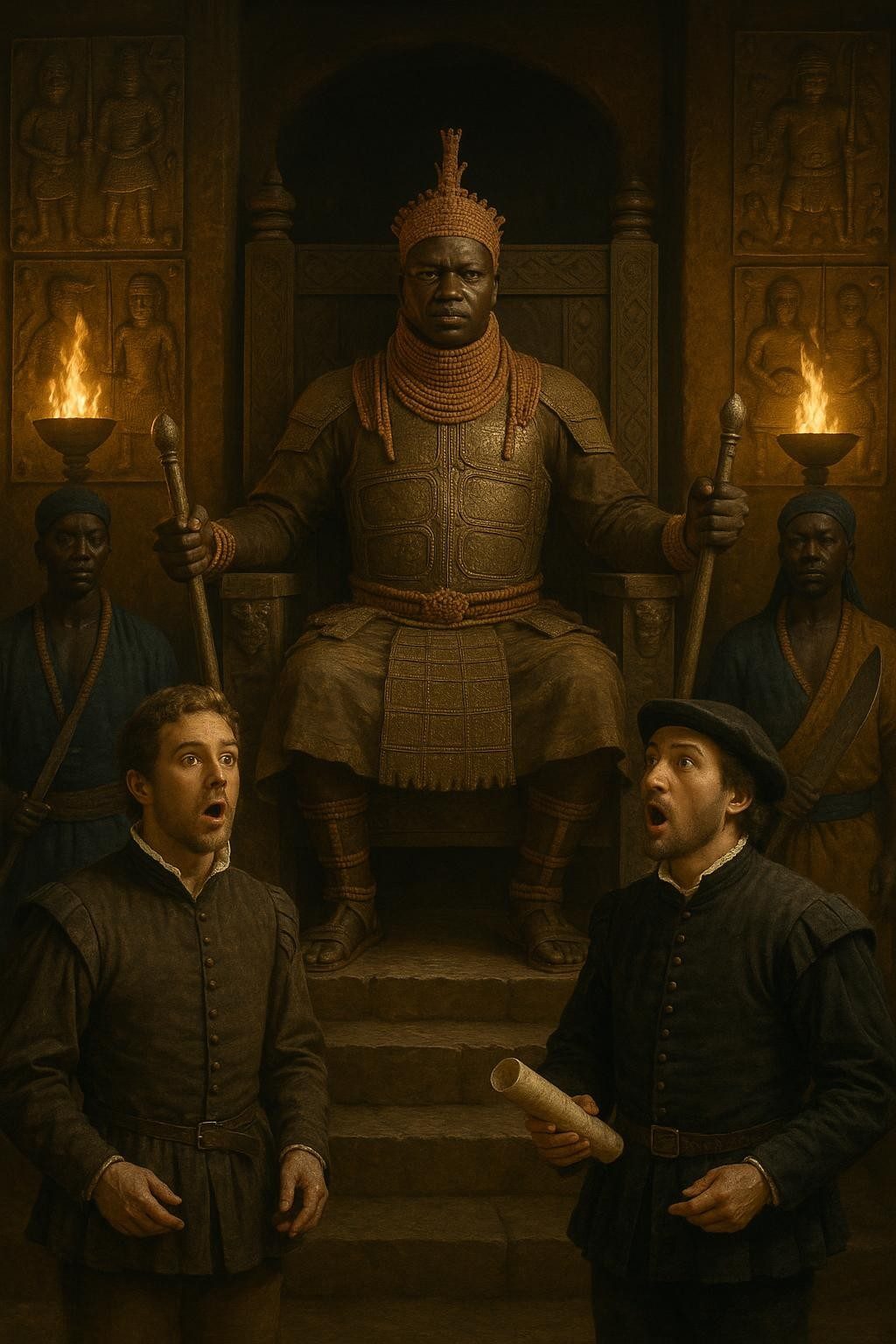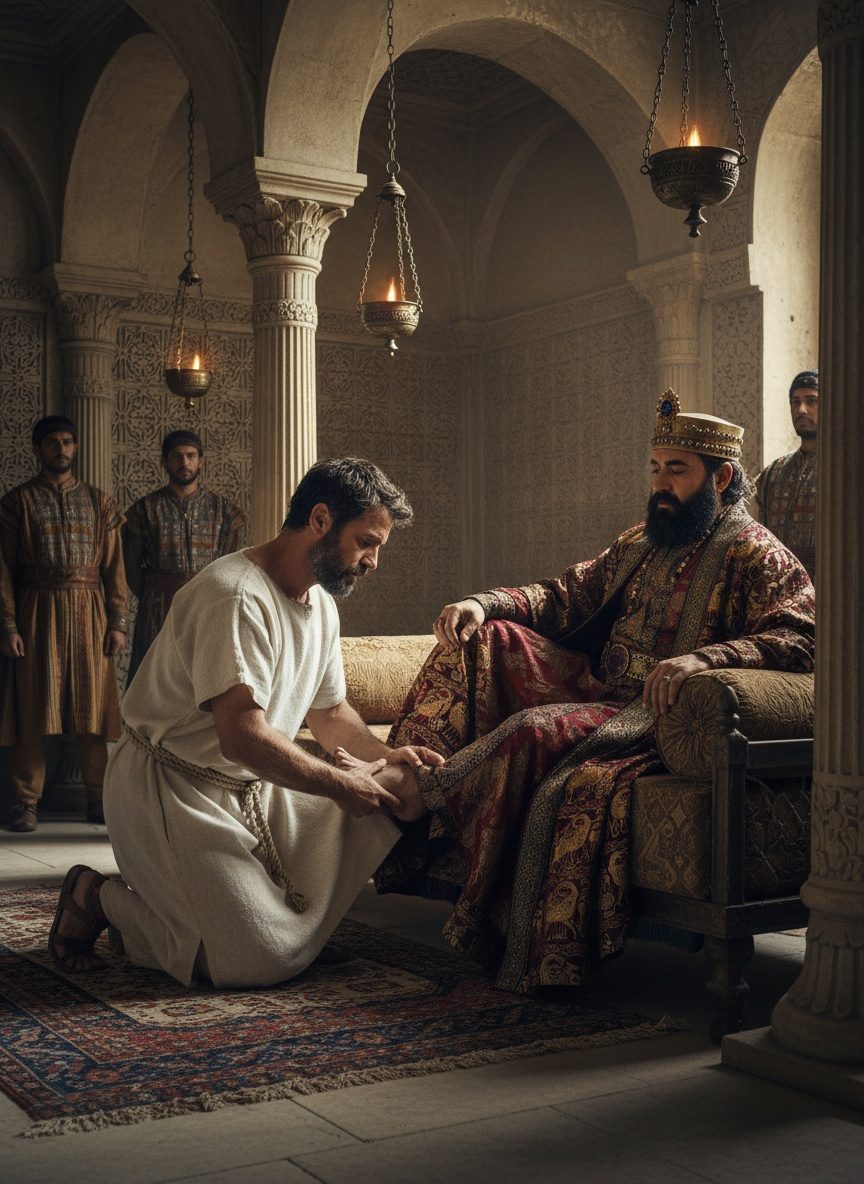
Picture medieval England, a world shrouded in mystery and confounding darkness to those who dared peer beyond the veil. It was a time dictated by the whims of kings and the profound silence of monastic life. In this age, knowledge was both a treasure and a forbidden fruit, guarded jealously by those who understood its power. But amidst the solemnity of this sceptered isle, one man's curiosity became a beacon of enlightenment, threading a tapestry woven from threads gathered across distant lands.
A Journey Beyond the Known World
In the year 1100, Adelard of Bath was born into this world, nestled among the rolling hills of Somerset. As a young man, he showed a fierce intellect and an insatiable appetite for learning that could not be contained by the confines of England's libraries. At a time when most knowledge was bound by the Latin tongue, and scientific inquiry was eclipsed by theology, Adelard's ambitions drew him to venture beyond his homeland.
Adelard embarked on a journey that spanned the exotic and storied lands of the Islamic world — a region at the zenith of its intellectual and cultural powers. His travels took him through the bustling markets of Antioch, the learned cities of Baghdad, Cordoba, and Toledo, where the air buzzed with the fervor of inquiry and debate. It was here, in lands adorned with minarets and echoing the calls to prayer, that Adelard discovered the immense treasures of medieval Islamic scholarship.
The Knowledge Carriers: Manuscripts of Change
Among his many discoveries were manuscripts that contained the mathematical wonders of the ancient world, preserved and expanded upon by Islamic scholars. Of particular note was a compendium known as Euclid's Elements, a text that laid the cornerstone for Western mathematics and geometry. Efforts to study and eventually translate these texts into Latin were nothing less than revolutionary.
Euclid's Elements, with its rigorous postulations and propositions, was a text revered by the scholars of the Islamic Golden Age. When Adelard returned to England in the late 1140s, he carried with him not just pages filled with symbols and diagrams, but the seeds of intellectual revolution. His translations illuminated the minds of European scholars, unlocking the path to scientific reasoning. This transmission of knowledge, effectively forbidden by geographical and linguistic barriers, had the potential to ignite the embers of the Renaissance.
Geometry, Astronomy, and Algebra: The Trio of Enlightenment
Adelard did not stop with Euclid. His voracious curiosity led him to translate pivotal texts on subjects that had been neglected in the echoing halls of English learning. His work on Arabian astronomy introduced concepts of celestial navigation and star charts that disrupted the geocentric worldview held by Western scholars. Furthermore, through his translations of texts on algebra, derived from the Arab mathematician Al-Khwarizmi, he offered Western academics a system of equations and calculations that became instrumental in the evolution of commerce and architecture.
These subjects were not mere academic exercises. Geometry informed the construction of cathedrals; astronomy charted the passage of time and the heavens; algebra formed the backbone of trade and mercantile expansion. The intellectual groundwork laid by Adelard's translations was staggeringly impactful, influencing figures from Leonardo da Vinci to Galileo Galilei centuries later.
Forbidden Knowledge: Fear and Enlightenment
Adelard's contributions to English scholarship were not without controversy. The medieval Church, wary of foreign influence and heretical ideas, had long restricted the access to knowledge from non-Christian sources. Despite this, Adelard stood firm as an apostle of reason, arguing that observation and inquiry should take precedence over blind acceptance of dogma. His groundbreaking assertion that "reason is the guide of all human pursuits" was a bold heretical notion in his time.
Yet, amid these challenges, Adelard's works began to take root. England, and indeed Europe, began to shift ever so slowly away from superstition and towards a scientific approach. Though it took centuries to fully blossom, the seeds of the Scientific Revolution can trace their lineage back to these times of translation and discovery in the 12th century.
The Legacy of an Unseen Translator
Adelard's life and work invite us to reflect on the enduring power of knowledge to transcend borders and challenges. By translating the cosmopolitan wisdom of the East into the languages of the West, he bridged cultures and preserved humanity's shared intellectual heritage. Today, in an era where information spreads as rapidly as wildfire, the significance of his foresight is all the more profound.
In 2023, as societies grapple with truth and misinformation, and as curiosity drives us toward new frontiers — be it technological or philosophical — the tale of Adelard of Bath prompts us to value open-mindedness and cultural exchange, to seek understanding beyond borders, and to remember that often, the most profound transformations begin with a single pioneer willing to ask 'why?' Indeed, Adelard of Bath remains an emblem of the transformative power of knowledge, the kind that is always worth listening to.