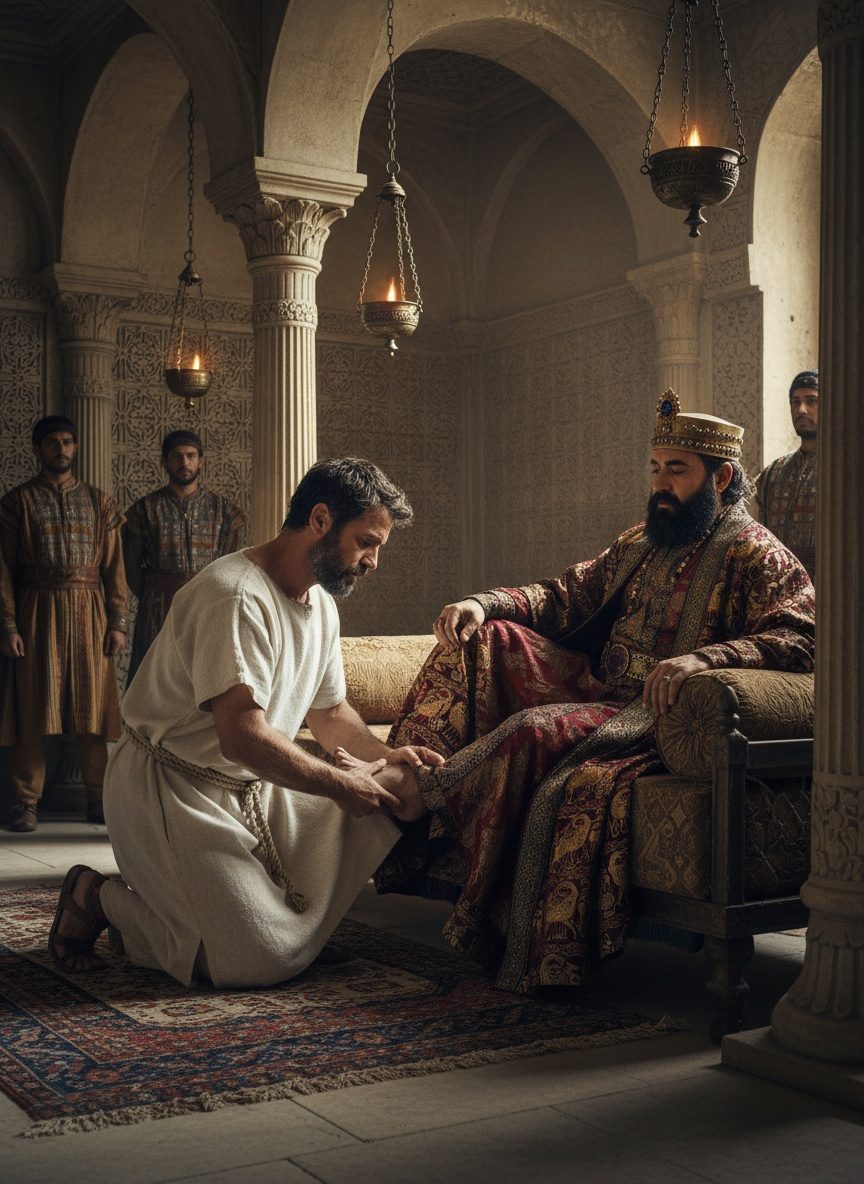
The year was 1486, and a gentle ocean breeze guided a fleet of Portuguese ships as they charted new waters, venturing into the so-called uncharted kingdoms of Africa. Captain João Afonso d'Aveiro squinted into the horizon, expecting the dusty chaos of a sprawling village along the West African coast. Instead, he laid his eyes on a city that defied his preconceptions — a realm rivaling the grandeur of European capitals. Before him sprawled the majestic Benin City, its vast boulevards and glittering palace of brass and ivory, heralding a civilization that Europeans thought could not exist outside their own continent.
Glimpses of Greatness: Entering Benin City
As the Portuguese sailors ventured further into the city, led by guides who navigated the broad streets beneath towering walls, their astonishment only grew. Stretching nearly 16 miles, the earthen walls around Benin City were an architectural marvel, rivaling the Great Wall of China in its day. D'Aveiro's journals describe the pulsing heart of the city bathed in the glow of a thousand craft workshops — an intricate network of brass casters, weavers, and ivory carvers. Onlookers stopped to stare at the seamen, their garments shimmering like the polished armor of knights.
It wasn't just the city's size that defied European expectations. Benin City was a masterclass in urban planning: the streets were laid out in a grid, stretching in perfect symmetry that made Lisbon's winding alleyways seem quaint by comparison. The city's inhabitants moved with purpose, embodying a society organized under laws as complex as any d'Aveiro had known in European courts. The captain, ever a man of letters, compared Benin City to the fabled Atlantis of Plato.
A Monarch Like No Other: Oba Ozolua
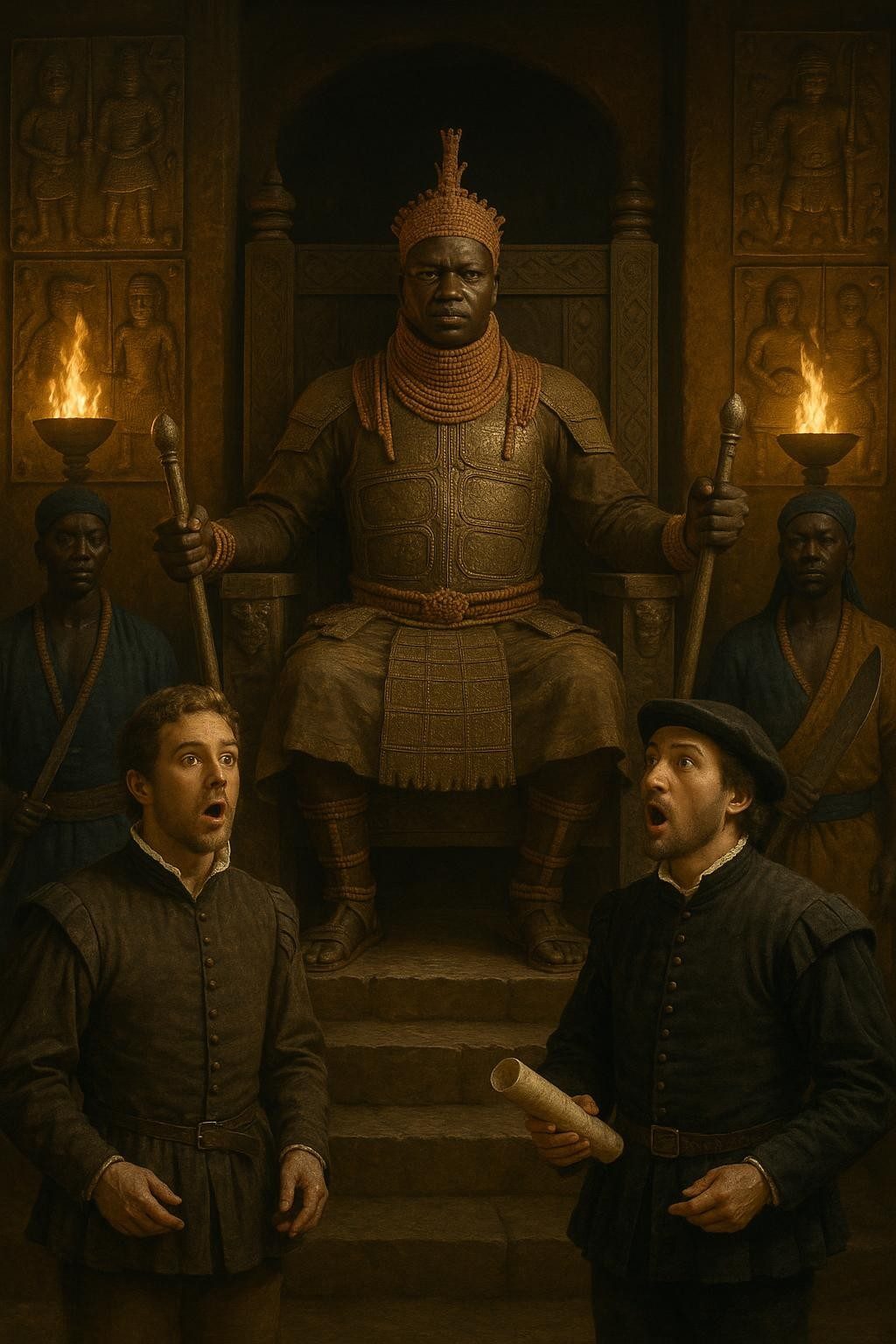
In the heart of the city stood the royal palace, a stunning testament to the power and sophistication of the Kingdom of Benin's leadership. Oba Ozolua, known as "Ozolua the Conqueror," met the Portuguese in a grand hall decorated with intricate carvings and gleaming plaques that told the story of his empire. The Oba, resplendent in robes of vivid color and seated upon a throne of ivory, was nothing short of regal.
Ozolua's reach extended far beyond his palace walls. Under his rule, the kingdom stretched its dominion through diplomacy and conquest, weaving a tapestry of influence reaching the Niger River and coastal cities more than 200 miles away. With his strategic foresight, Ozolua made alliances that allowed commerce and culture to flourish. The Portuguese, skilled traders themselves, quickly recognized a kingdom that could become a linchpin in their own commercial endeavors.
Beneath the Bronze: Cultural Brilliance
The Benin Empire's genius wasn't confined to political prowess; their artistic achievements were equally spectacular. Portuguese sailors were particularly entranced by the sophisticated bronzes that adorned the city. These masterpieces, the result of advanced metallurgical techniques, depicted scenes of courtly life, battles, and spiritual icons. Not merely decorative, these plaques were repositories of the kingdom’s history, chronicling the lineage of Obas who had presided over Benin's rise.
Unknown to the Portuguese at the time, these intricate artworks would become coveted artifacts throughout Europe in the centuries to come. The so-called Benin Bronzes, some weighing as much as 900 pounds, were a testament to the creative spirit of the Edo people. They encapsulated the narrative depth and spiritual depth that far exceeded anything akin in Europe at the time.
The Meeting of Worlds: Trade and Transmissions
The Portuguese and the Oba were soon engaged in a dance of diplomacy and trade. The Europeans offered cloth, ivory, and guns, establishing a template for a burgeoning Atlantic trade route. In exchange, Benin exported pepper, ivory, and palm oil, all commodities that were to become foundational in Europe's growing taste for exotic goods.
These interactions sparked a cultural transmission that extended beyond material goods. Scholars in Lisbon recorded tales of a kingdom where the boundary between myth and reality was intriguingly blurred. Benin emissaries, in turn, were introduced to the intricacies of maritime navigation and firearm technologies, blending this knowledge with Indigenous strategies and wisdom.
A Legacy Too Grand to Ignore
As sailors returned to Europe, their stories were met with skepticism and wonder. A kingdom on par with Europe? Many found such claims hard to believe. Yet in time, their testimonies would travel far and wide, altering perceptions of Africa and prompting a reevaluation of the continent's potential and role in the world.
Today, examining Benin through the lens of history serves to shatter persistent myths about Africa's history as one-dimensional or lacking intricacy. The legacy of Oba Ozolua and the Kingdom of Benin illustrates the vibrancy and sophistication of African civilizations that thrived independently of European intervention. Moreover, as discussions about the repatriation of artifacts rise to the fore, these bronzes and their history stand as potent reminders of a shared legacy — one that belongs not just to Africa, but to the world.