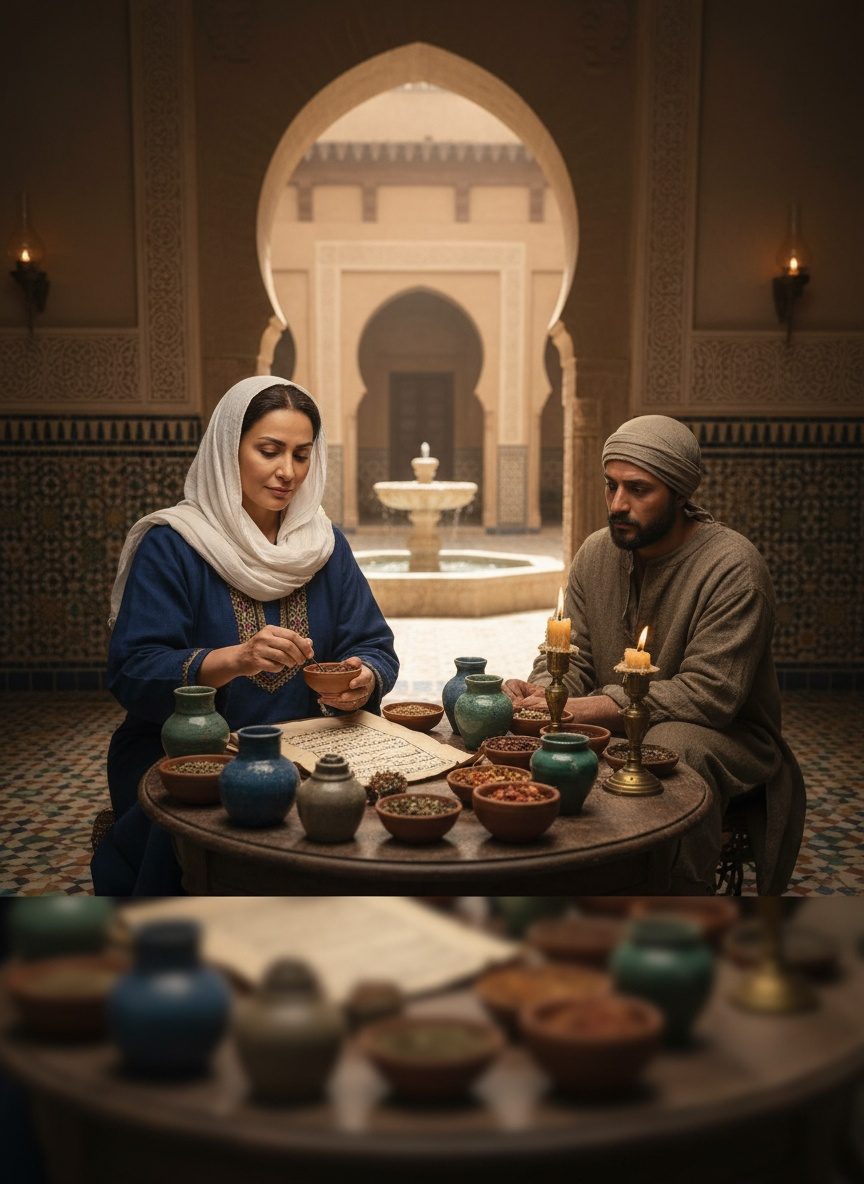
She healed in Baghdad, where few women dared to practice medicine. Yet she did it in broad daylight, as men watched and learned.
The Hidden Healer of Baghdad
By the mid-9th century, Baghdad stood as the jewel of the Islamic world, a city where scholars gathered and knowledge flourished. It was in this intellectual beacon that Sit al-Wuzara carved out her space, a remarkable feat for a woman at a time when medicine was overwhelmingly dominated by men. Known to us only as "the noble lady," her real identity may never be fully understood, but her impact on the lives she touched remains palpable—even as her name was stripped from the annals of history.
Sit al-Wuzara's practice was built on compassion and inclusivity, key tenets of her medical philosophy. While male physicians often treated the wealthy and influential, she tirelessly worked to help those without means. Her clinic received many who were left at the fringes—people in dire health, women and children, and others the mainstream medical community ignored. Accounts of her patients recount her gentle demeanor and the innovative techniques she employed. Some of these methods were so effective that male practitioners would document her cures, eager to incorporate them into their own practices. Yet these same writings mysteriously omit her name, leaving her contributions attributed to others or generalized as common knowledge.
Despite societal pressures, Sit al-Wuzara's abilities could not be ignored. Her knowledge extended into pharmacology, surgery, and therapeutic practices tailored to each patient. In a period characterized by traditional scholarly boundaries, her intuitive approach, focused on holistic well-being, often brought healing where others had failed.
Tracing Her Footsteps and Her Cures
The Islamic Golden Age was a period of staggering intellectual curiosity, marked by the flourishing of arts, science, and medicine. Medical advances from this era would eventually spill into Europe, catalyzing the Renaissance. Baghdad, at this time, wasn't just a center of trade but also a hub of learning where the House of Wisdom stood as a testament to scholarly pursuits. Within this vibrant city, Sit al-Wuzara flourished, a testament to the cultural and intellectual ferment around her.
Historical footnotes suggest the range of ailments she treated were vast, reflecting broad understanding and a willingness to innovate. Among her known cures were remedies that combined natural herbs with early surgical techniques. Various male physicians in Baghdad documented the success of these treatments, nodding to someone clearly versed in both theory and practice. However, their reluctance to properly credit her speaks volumes about the gender dynamics of the time.
Analyzing texts from the period, one cannot help but question the reasons behind her erasure. While some speculate misogyny was at play, it's also likely that the male establishment was unprepared to acknowledge a woman within their ranks. Yet Sit al-Wuzara persisted—an undercurrent of change challenging the norms one patient at a time.
Legacy of a Forgotten Name
Despite the erasure, fragments of Sit al-Wuzara's influence survive. As successive generations copied medical manuscripts, the effective treatments she pioneered were preserved, albeit anonymously. The very survival of some practices within Islamic and global medical traditions hints at her likely contribution to fields as diverse as pediatrics and gynecology, where male practitioners were often less informed.
Even contemporary scholars find difficulty piecing together the full scope of her work. Comparatively fewer writings about women of the era compound this issue, with the inevitable loss of documentation over time. Regardless, the persistence of her methods, passed down through the corridors of time, marks a silent testament to her wisdom.
By understanding Sit al-Wuzara's story, we glean insight into a world where barriers of gender and class were challenged long before modern movements. Her life underscores how contributions from all sects are essential for the enrichment of human knowledge. The narrative of Sit al-Wuzara, forgotten yet impactful, shows us that while names can be forgotten, their deeds often light the way for future generations.