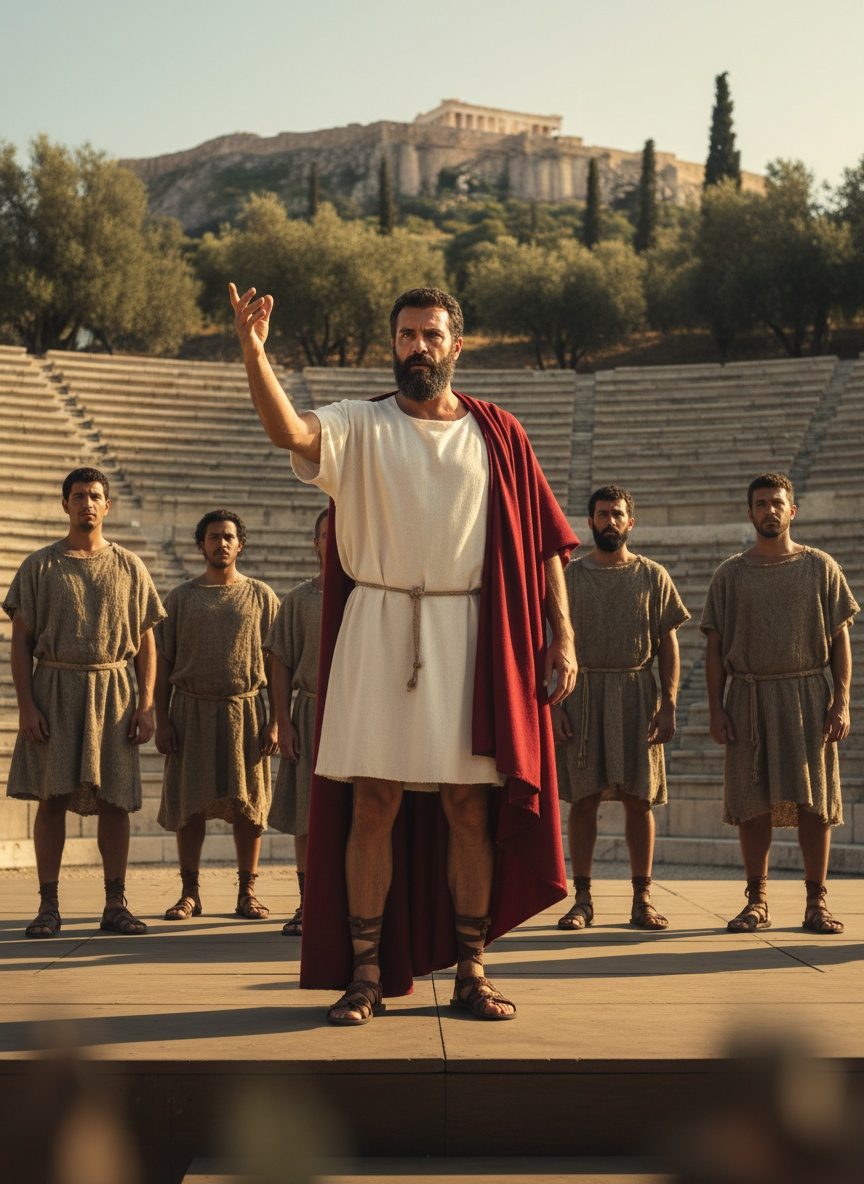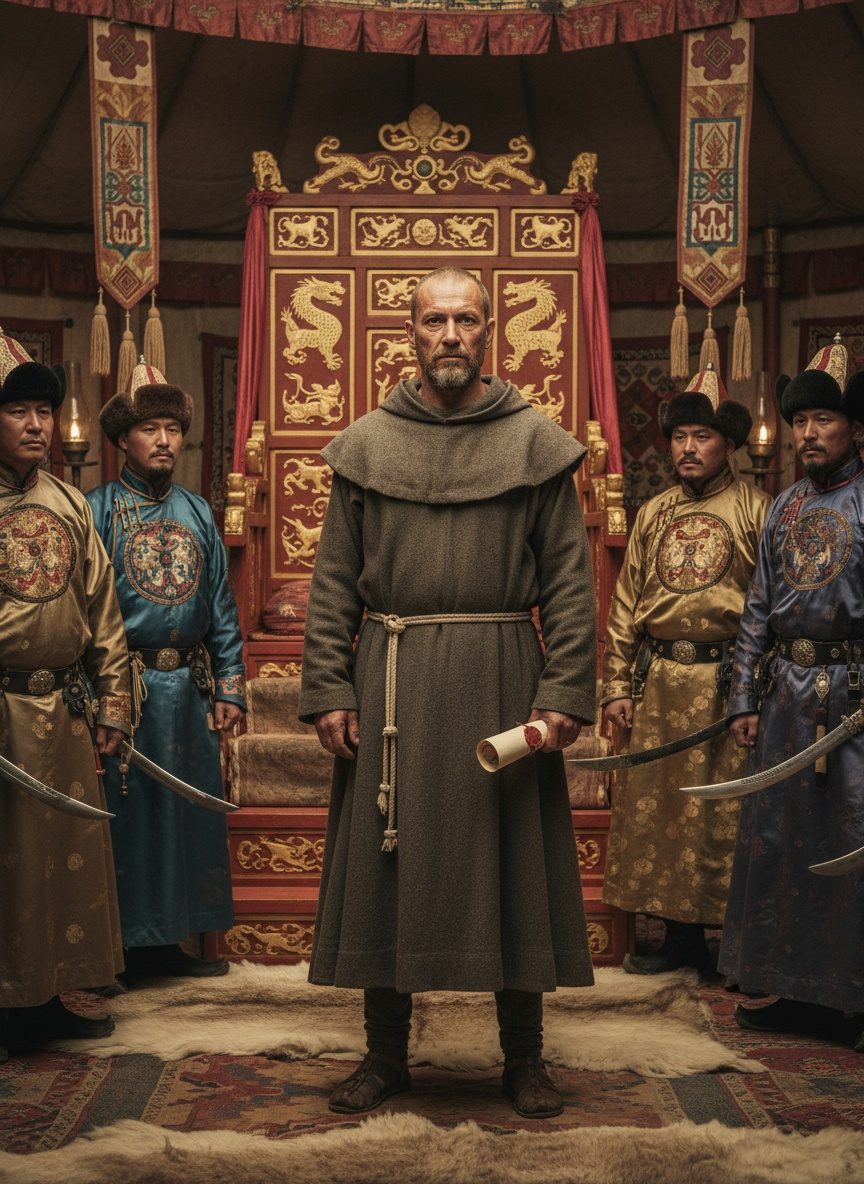
The chill bit into his bones as William of Rubruck stepped into the vast, echoing hall of the Khan’s court. Candlelight flickered on the drawn faces of the courtiers as he walked forward, each step a defiance of the anxiety tightening his throat. The eyes of the most powerful ruler on earth, the Great Khan of the Mongol Empire, were upon him, dissecting his every move, wondering what this lone European friar could possibly want in the heart of Karakorum.
The Lonely Pilgrimage
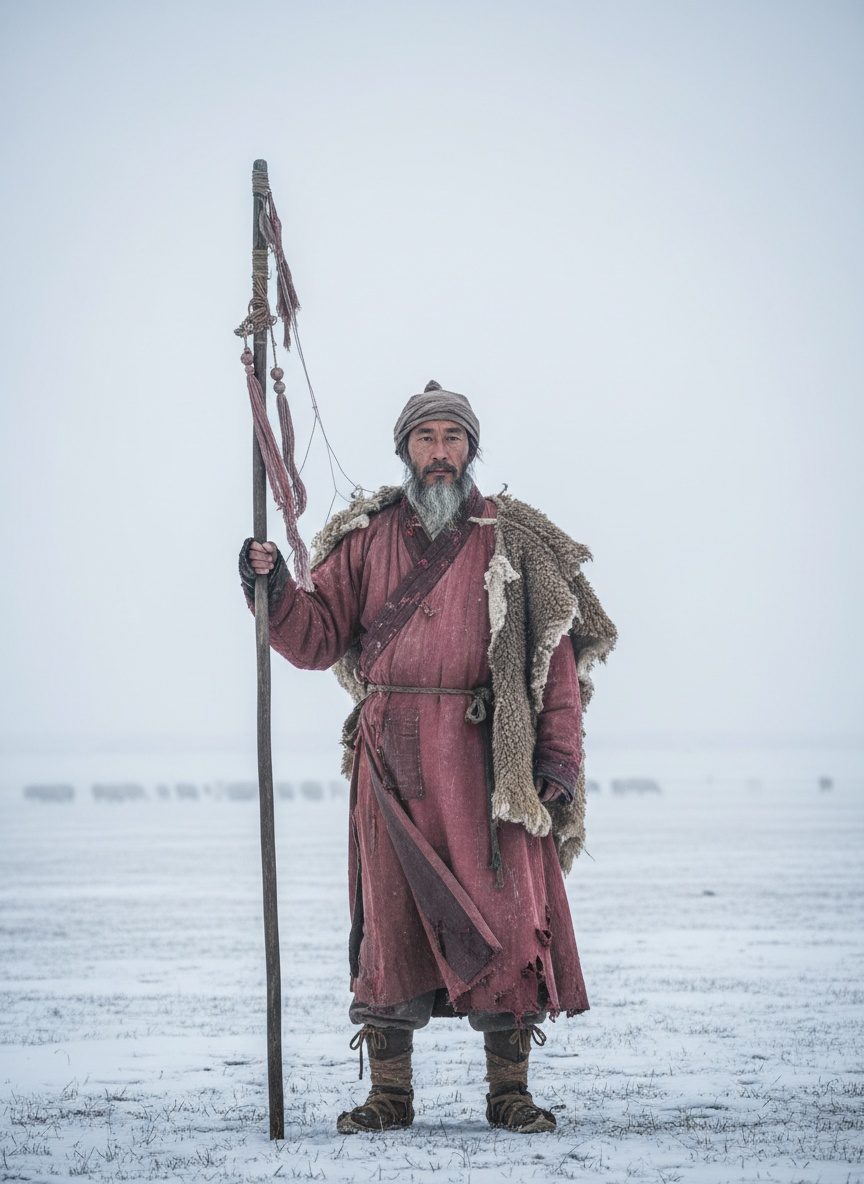
William of Rubruck's journey was one that defied the imagination of those safely ensconced in the castles of medieval Europe. A Flemish Franciscan sent by King Louis IX of France, William embarked on his mission not with an army or treasures, but armed with a single letter and the courage that comes from faith. Before him lay the boundless steppes of Central Asia, a sea of grass waving under vast skies, dotted with nomadic tribes capable of unimaginable violence or unparalleled hospitality.
The route was perilous, threading through lands ruled by the heirs of Genghis Khan, each territory a blend of cultures, each with its own language and traditions. William observed with the eyes of both a curious scholar and a wary traveler. He noted the peculiarities of the Mongolian diet, their ceremonies, and the graceful, eerie chords of their throat singing that reverberated across the plains at dusk. The very language he had to learn from scratch, for while Latin rang in the monasteries of Europe, here it was the harsh consonants and fluid syllables of Mongolian that dictated survival.
As he approached the bustling yet barren capital of Karakorum, every village and encampment offered a glimpse into the structured chaos of Mongol governance—a system built on speed and loyalty as much as on brutality and fear. It was into this world, with its intricate balance of power and precarious peace, that William carried his message, a missive from one of Europe's most devout kings to the brutal center of a foreign empire.
Confronting Power
The court of the Great Khan was a microcosm of the empire, a place where silks from the East jangled alongside rough pelts from the frigid North. From the majestic throne, the Khan regarded William with a steady gaze, a man whose own rule stretched across more of the earth’s surface than any ruler before him. Here was a lord of lords, an emperor among emperors, who commanded the loyalty of an empire that outpaced the sun.
William introduced himself, reciting the words of the letter from King Louis IX with the calm demeanor of one who knows he has stepped beyond fear. He spoke plainly of Christ’s teachings, of peace, and the hope that the Mongols might cease their conquests. It was a bold sentiment, especially in a court where a single misstep, a misunderstood word, could mean the difference between life and death.
What followed was a delicate dance of diplomacy. The Mongols, curious about the Christian world, engaged William openly, querying the details of European courts and beliefs as much as sharing their own traditions. The friar was granted the freedom to debate with Buddhist monks, Muslims, and Nestorian Christians, finding himself in a whirlwind of discourse that shaped his understanding of the world's vast polyphony of faiths.
Yet, beneath the surface, there was tension. The Mongols’ acceptance of messages of peace was more a fascination than a sign of credence. Their Empire was not known for peace but for the sweeping arcs of their conquests. To them, power was god-given, won not in halls of debate, but on the battlefield.
Echoes of the Encounter
Despite the odds, William walked out of the Khan's court alive. The courage that had accompanied him across mountains and through deserts had seen him through the halls of one of history's most intimidating courts. He returned to Europe with tales of the East, dispensing first-hand observations that challenged and expanded the world's understanding of the Mongol Empire.
The significance of William's journey lay not in dramatic changes in diplomatic relationships or large-scale conversions, but in the threads of knowledge spun between two disparate worlds. His account, chronicled with meticulous detail, enriched the medieval European consciousness, offering them a mirror to a world that was as vast as it was varied and as complex as it was interconnected. Through the lens of a single mission, he provided a glimpse into a mosaic of cultures that were as vibrant as they were enigmatic.
His tale underscores the power of the individual in history—a lone traveler whose courage and open-minded curiosity challenged the vastness of distance and difference. In his footsteps, we are reminded of the dialogue that transcends borders, the peace found not in conquest, but in understanding, and the enduring power of a voice that chooses truth over fear.