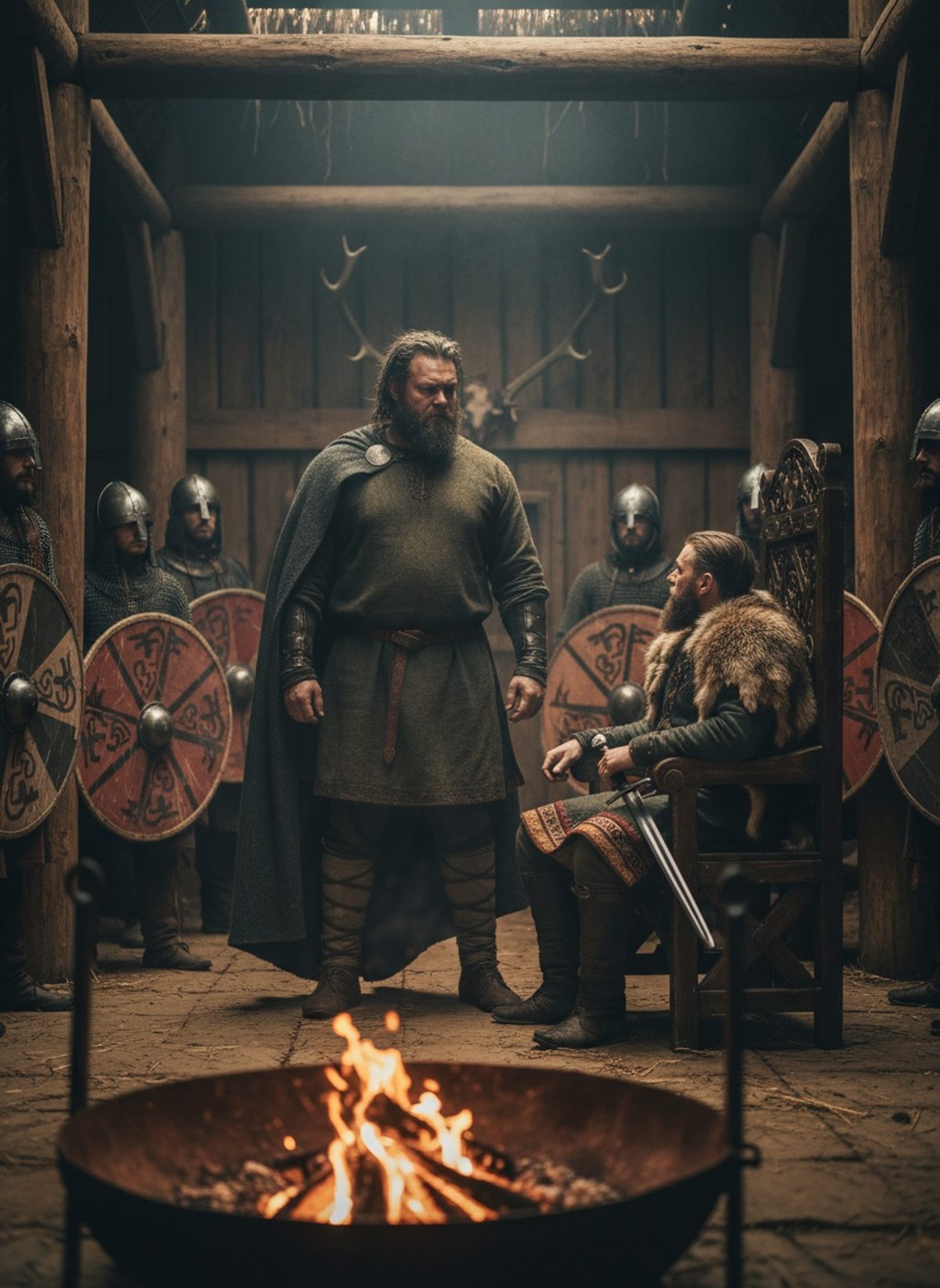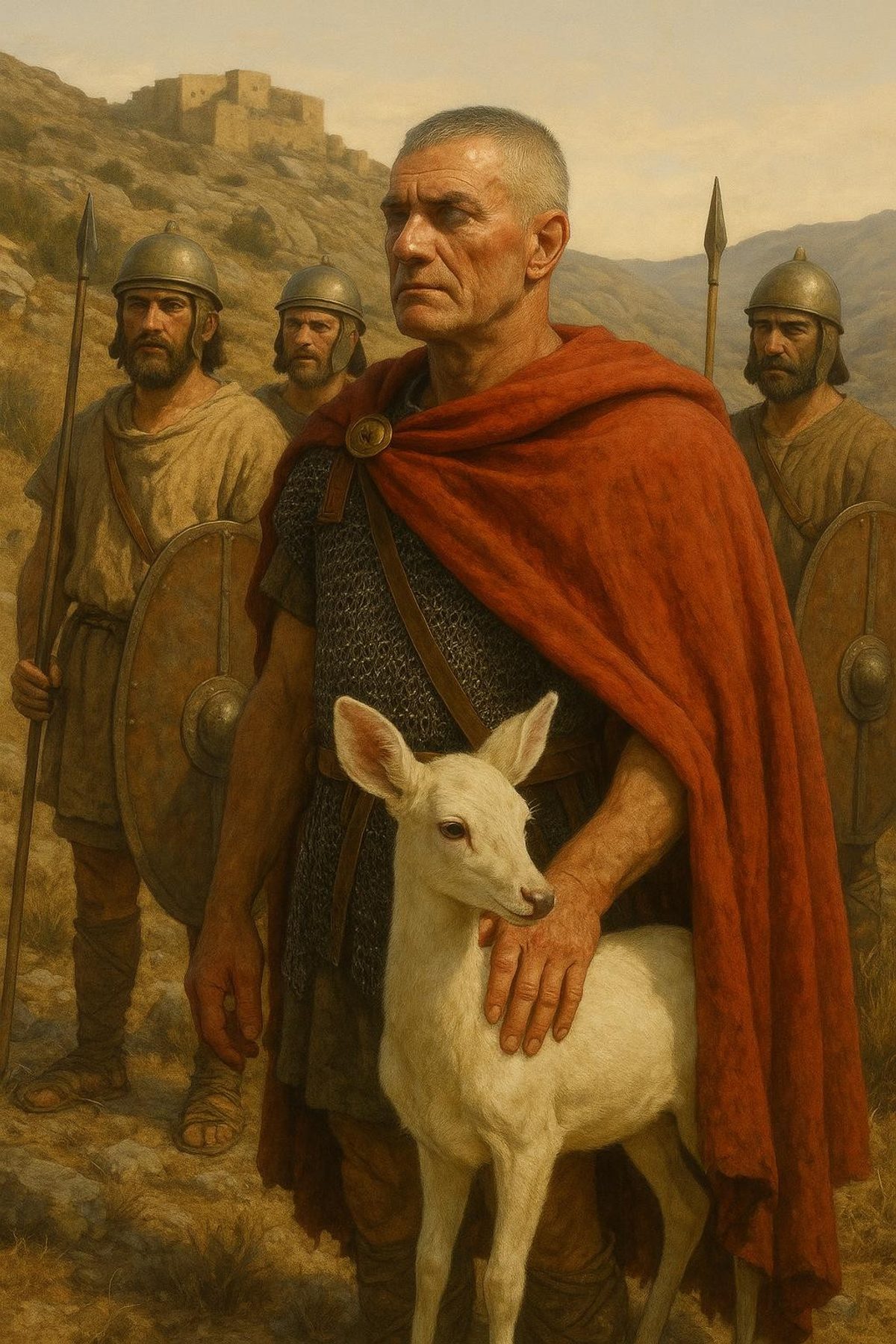
The forest floor crackled underfoot as the soldiers moved in disciplined ranks, their armor clinking softly like the whisper of distant thunder. At their helm rode a one-eyed general, Quintus Sertorius, with a serene expression that betrayed none of the tumultuous siege he faced. Nestled beside him, a snow-white fawn trotted gracefully, as if oblivious to the enterprise of war surrounding her. The men’s eyes flicked between this peculiar creature and their leader, the fawn an embodiment of hope that had nearly driven Rome itself to its knees.
The Outlaw General's Unique Talisman
As the embers of Rome's internal conflict smoldered chaotically, Sertorius emerged not as a pawn in the established game but as a revolutionary determined to rewrite the rules. In 80 BC, branded an outlaw, he fled to the rugged terrains of Hispania. There, amid the highland tribes and scattered Roman settlements, Sertorius forged a new path, rallying locals and dissenters alike. His charisma lay not only in his military acumen but in his ability to transcend ordinary belief systems, crafting narratives as powerful as his strategic prowess.
Quintus Sertorius held more than tactical intelligence in his arsenal. His secret lay in a young fawn, as white as the winter powder dusting the Pyrenees summit. Legend has it that this delicate animal was a gift from a local tribesman, who affirmed it possessed divine capacities. Sertorius took this narrative and wove it into a compelling tale: the fawn was his connection to Diana, the goddess of the hunt, a divine intermediary relaying celestial guidance directly to him. In a world where omens and portents often dictated the course of life and war, such tales carried weight. The fawn prancing by Sertorius’ side became an embodiment of justice and destiny, a beacon in a land snarled with strife.
Believability emerged as his unconventional weapon. Soldiers under Sertorius' command revered the creature, trusting its presence meant protection and divine favor. An army composed of conquered hearts rather than mere conscripts could indeed rattle the foundations of an empire. As the fawn went forth, so did confidence, dignity, and some might say, invincibility, among the ranks that followed Sertorius into what seemed like an improbable conquest.
Defying Rome from the Frontier
Hispania, a fiercely independent expanse, offered both sanctuary and challenge to those who dared to tame it. Sertorius understood the heartbeat of the land and married the Roman legions' discipline with the guerrilla tactics of the native tribes. He recognized that each skirmish in the hills was not just a battle against the republic’s armies but also against the very idea of Roman supremacy.
The era was a tumultuous medley of shifting loyalties and personal ambitions. Meanwhile, in Rome, leading generals and political figures paid heed to this troubling province far on the western horizon. Sertorius withstood wave after wave of Rome's seasoned legions, commanded by consuls and proconsuls eager to claim victory for laurels and legend. The white fawn often observed these confrontations from the periphery, a ghostly witness to the ebb and flow of dominance.
Intricate mountainous landscapes became Sertorius' ally. Knowing every pass and hidden track, his forces struck from the shadows, harrying the Roman columns before melting back into the wilderness. Even with their superior numbers, the legions found themselves outmaneuvered, fighting an unpredictable enemy on unfamiliar ground. Sertorius’ vision extended beyond warfare; he established a parallel administration, whittling his struggling republic into an organized domain, complete with Roman institutions redesigned for external regions. In doing so, he gained the backing of disillusioned Roman expatriates and local chieftains, laying the groundwork for an enduring bastion of resistance against Rome's dogged persistence.
The Myth and the Man
As the years unraveled, the tales of the miraculous fawn spread beyond Hispania, sung in taverns and whispered in forums from Cadiz to Carthage, even creeping into the ears of ambitious Romans. Sertorius, now myth and man, posed a complex conundrum to Rome—a military genius fused with a messianic leader of a rival entity that challenged the superpower’s absolution. The extent of his revolutionary project and its symbolic fawn defied comprehensive dismissal by the Senate. They continually escalated efforts to eradicate Sertorius, deploying further resources and scheming politicians.
Yet, despite the fawn's enchantment and Sertorius' prowess, human machinations took their inexorable toll. A labyrinth of betrayals slowly encircled him, culminating in a banquet of false friendship and treachery—a service to ambition from those he trusted insidiously. As the wine flowed that fateful evening, so too did the blood of a dream that nearly transcended the eternal reach of a burgeoning empire.
In recounting the annals of history, we encounter narratives where belief, as intangible as the breeze whispering through pine-trees, wields a power capable of reshaping landscapes. Sertorius demonstrated that a story, a singular vision intertwined with myth, could galvanize armies and build bastions in improbable settings. More than a lesson in deception or Roman intrigue, his saga underscores the essence of human conviction. It posits the question: what makes people fight and follow? Is it the tangible march of armies or the spectral shadow of an idea as ephemeral as the wily, joyful dance of a white fawn in the Iberian wilderness?