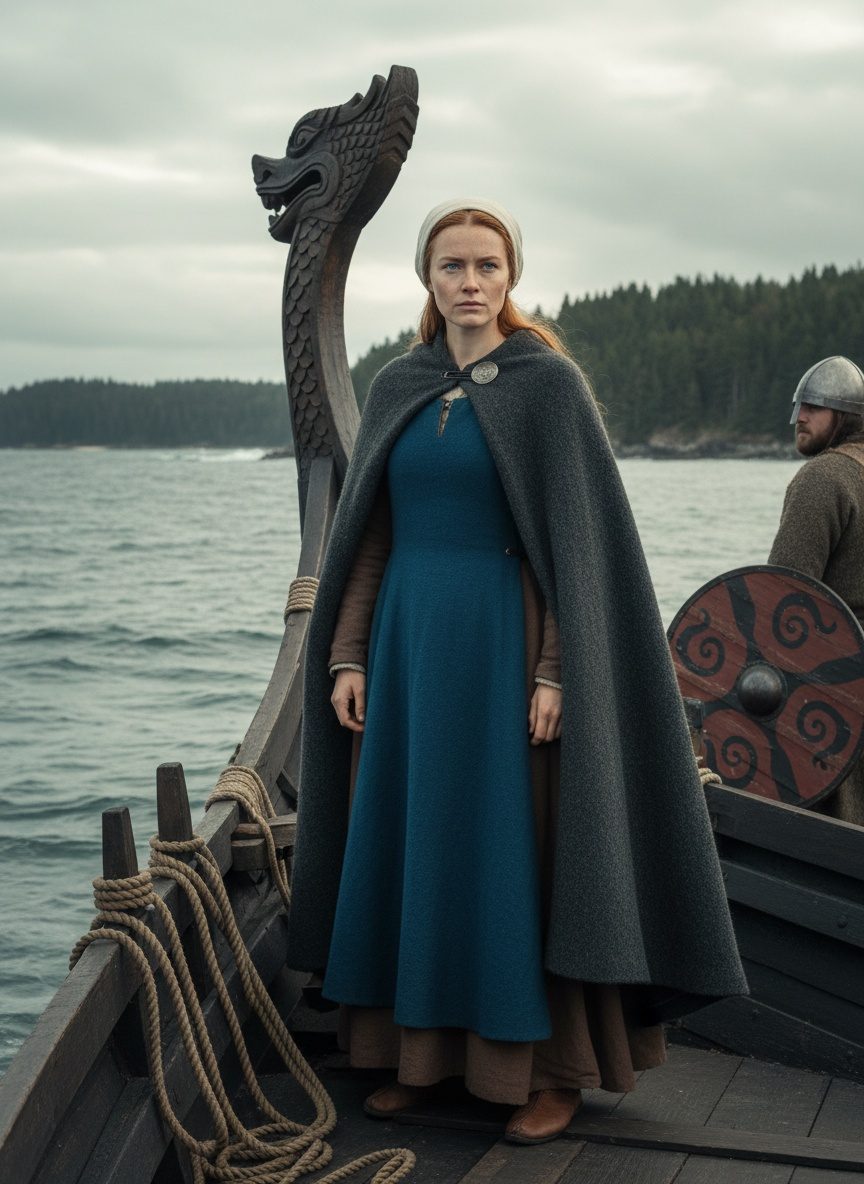
The chilly mists of a Yorkshire dawn clung to the earth like a spectral cloak, wraith-like fingers caressing the streets with a quiet insistence. The sky, a sullen grey, reflected the mood of the city as it stirred to the tentative light of morning. Within the stone walls of Jorvik, the air was heavy with anticipation. On this particular day in 948 AD, history was poised on a knife’s edge. Here, under the watchful eyes of the north’s Norsemen, Egil Skallagrimsson, a Viking poet of unparalleled reputation, was to stand before King Eirik Bloodaxe, a ruler with a famously merciless streak and an old score to settle. The stage was set for a clash of wills where death was the expected outcome.
Born into a family of prominent skalds, Egil was no stranger to the turbulent seas of Viking politics. His life was a tale woven with threads of heroism, defiance, and artistry. Known for his imposing figure and fierce temper, he also carried the power of words with him, a potent weapon in the Viking world. This fateful confrontation with King Eirik was a result of long-standing enmity. Eirik Bloodaxe, a son of King Harald Fairhair of Norway, was renowned for his violent ascent to power and his ruthless enforcement of authority, earning a sobriquet that reflected his bloody path to the throne.
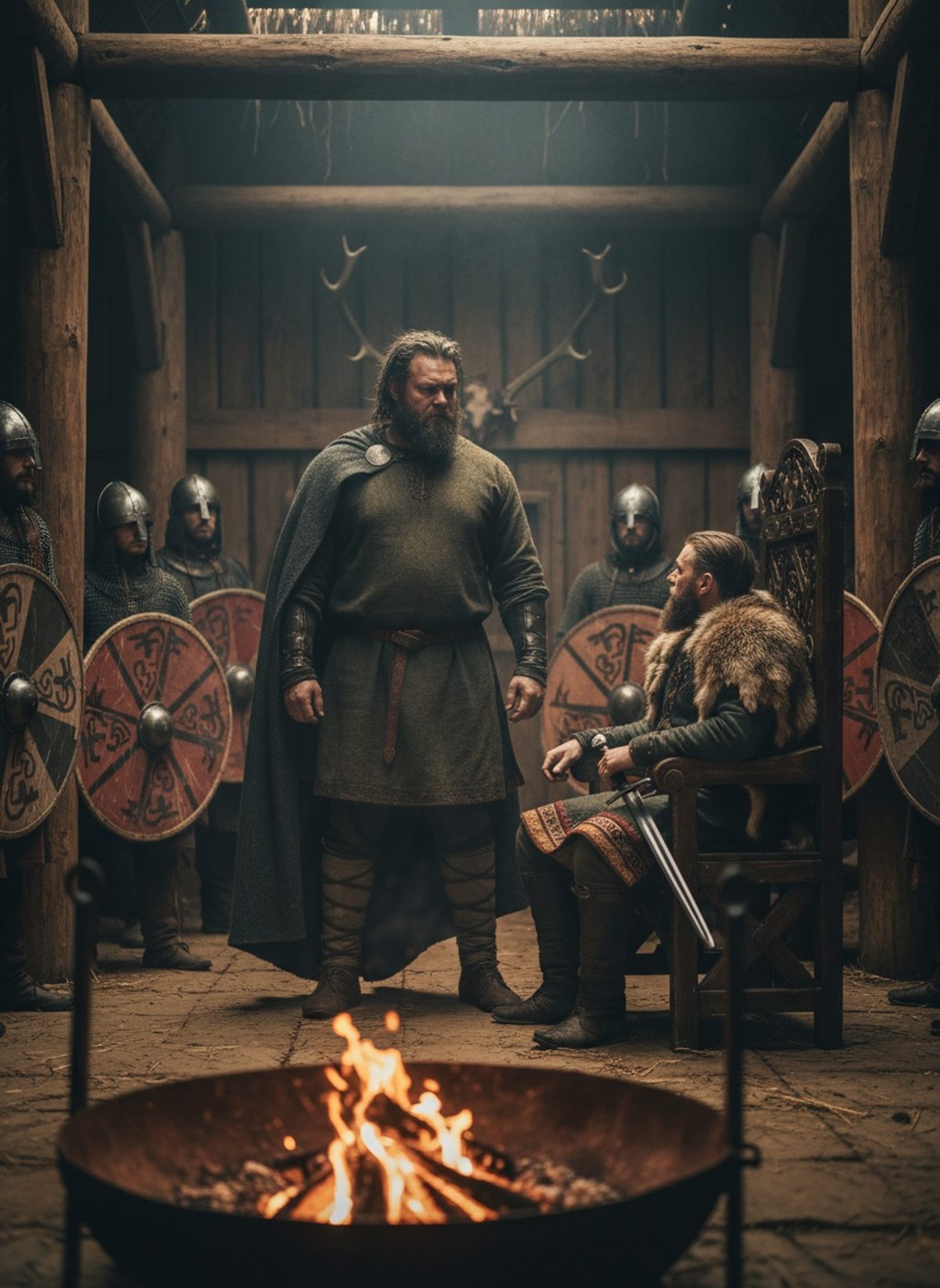
As the guards brought Egil before Eirik, the air seemed to shimmer with tension. The king's hall was dimly lit by the flickering glow of torches, casting elongated shadows that danced restlessly across the walls of woven wood and stone. It was in this hardened atmosphere, surrounded by loyal warriors whose eyes were keenly fixed upon him, that Egil made his plea for one final night. A request that seemed to hover in the smoke-laden air, weighted with the audacity of a man with nothing left to lose. He was granted his wish, an acknowledgment of the power and respect commanded by a true skald.
Through the long night, Egil composed. The chill of the evening seeped through his bones, mingling with the weight of his impending fate. Each line was wrought with the desperation of a man whose life balanced precariously on the edge of each verse. For Egil, the art of the skald was both a shield and a sword; the right words could save him, the wrong words could seal his fate. As dawn broke, the first light creeping tentatively over the horizon, he emerged with a poem ready to charm even the sternest of kings, a masterpiece born from necessity.
This poem, known to history as “Höfuðlausn”, or the “Head Ransom”, was an elaborate weaving of praise and artifice, crafted with the skill of a master bard. In an age where the spoken word held immense power, where sagas and eddas shaped the culture and legacy of a people, Egil’s verses resonated deeply. As he recited his poem in the stillness of the early morning, his voice carried the weight of authenticity and mastery. Each word was a tremor in the foundation of Eirik’s authority, a vivid reminder of the influence wielded by the skalds.
King Eirik, a seasoned warrior and a ruler accustomed to the unyielding demands of leadership, found himself swayed by the unexpected beauty and fervor of Egil’s composition. It is said that no man, however hardened, was immune to the seductive pull of a well-crafted poem, and Eirik was no exception. The brilliance of Egil’s words shone through like sunlight breaking through storm clouds, casting a new light on what might have been yet another dark ending.
With each stanza of the “Head Ransom”, Egil navigated the treacherous waters of flattery and sincerity, his tone a clever orchestration of humility and admiration. Here was a man prepared to lay not only his life but his legacy at the feet of his enemy, a testament to the life-or-death power words carried in Norse culture. In a world defined by the clash of sword and shield, the strength of a well-spoken line proved a formidable force.
In the quiet that followed Egil’s recital, all eyes turned to King Eirik, whose face bore the marks of one deeply moved. A ruler who had silenced countless foes found himself compelled to make a decision that defied the expectations of those who knew him. With a gesture, subtle yet profound, he granted Egil freedom, sparing the life of the man who had once been marked for death. Eirik’s decision was nothing short of extraordinary, a rare moment of clemency recorded in the sagas that chronicle the Viking age.
This historic moment and Egil’s defiant artistry offer a profound insight into the values and dynamics of Viking society. It underscores the immense esteem held for the art of the skalds, the belief in the transformative power of words that transcended even the grasp of a king’s vengeance. For Egil, it was a vindication of the skaldic tradition, a living testament to the truth and beauty that resides in poetry.
Today, as we traverse the highways of history, Egil’s tale serves as a reminder of the enduring power of the spoken word. In a world where force is often placed above reason, his story invites reflection on the importance of perspective and the true strength found in creativity and expression. The legacy of Egil Skallagrimsson reflects a truth as old as time: even in the face of overwhelming adversity, the spark of the human spirit can illuminate the darkest night.