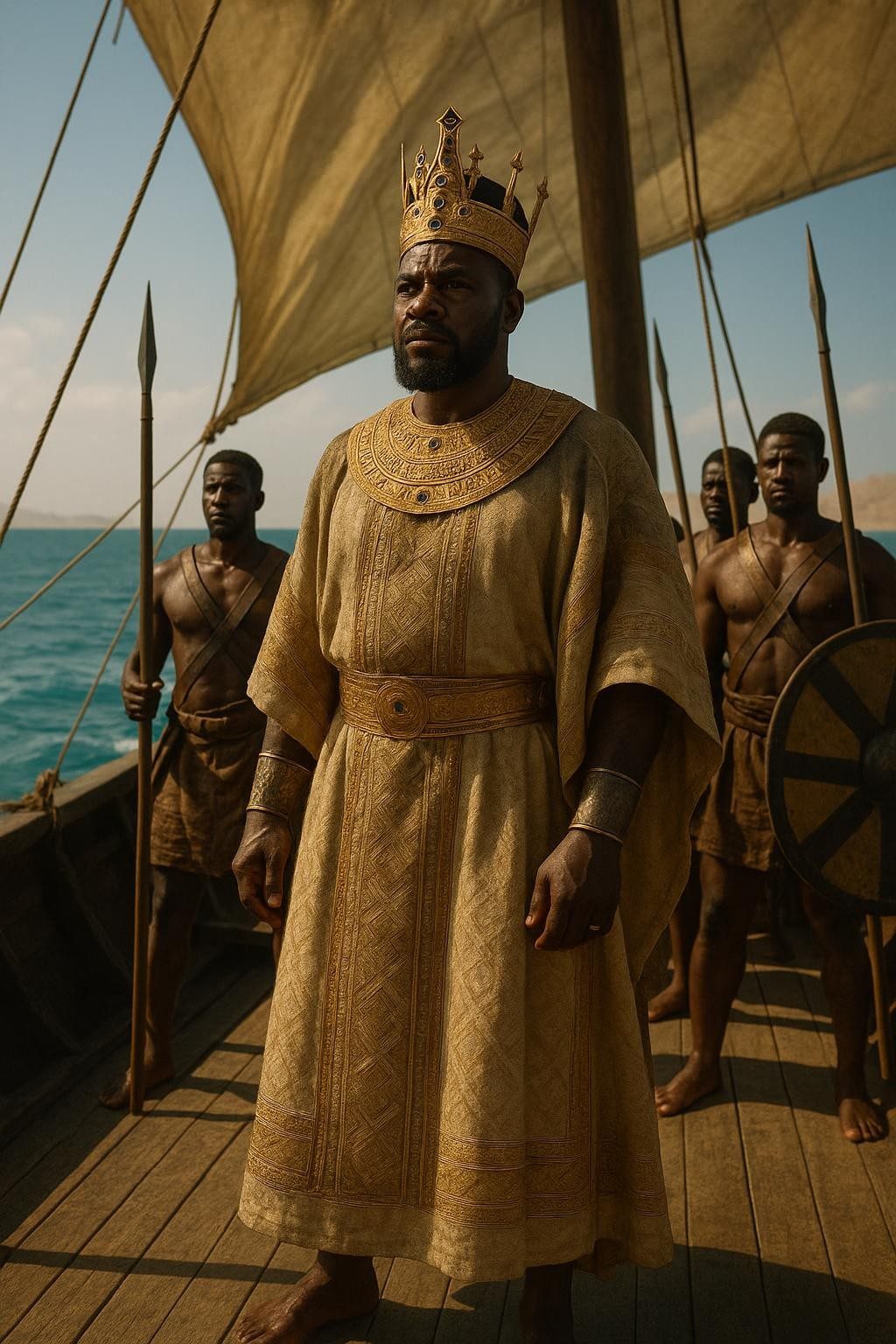
The air over the Red Sea in the mid-sixth century glimmered with heat, the sun casting sharp reflections on the cerulean expanse stretching endlessly towards the horizon. The relentless brightness made it almost difficult to discern the ships slicing through the water, laden with soldiers whose fates intertwined with the unpredictable currents beneath them. At this time, the Kingdom of Aksum was embarking on a mission of audacious proportions. Its king, Kaleb, had received an urgent plea for help — his Christian compatriots in the Arabian Peninsula, subject to a violent purge, demanded the reevaluation of religious devotion and power. The pounding heart of this tale lay between the sun-scorched highlands of East Africa and the arid expanses of Yemen, where a religious confrontation was setting the stage for an unexpected shift in civilization.
Kaleb’s expedition was born from both religious and political motivations, a complex weave of compassionate duty and strategic foresight. Sitting atop the African highlands, Aksum was a thriving hub, its influence extending across the Red Sea where commerce and ideas flowed alongside spices and silks. The kingdom was Christian, a badge of both pride and a political lever in a world largely divided between the rising influence of Byzantine empires and local non-Christian dominions. News of persecution against fellow Christians in Yemen was nothing short of a thunderclap, prompting Kaleb to prepare a military response that few anticipated could succeed. The venture involved a perilous sea crossing, a feat within the grasp of only the most capable and tenacious.
Yemen, a strategic key in Arabian territory, presented a complex religious landscape. Dominated by the Himyarite kingdom, it found itself embroiled in a brutal tussle between monotheistic belief systems. Christianity had found its followers there, but it was threatened, caught in the crossfire of dueling religious hegemony. The official persecution of Christians under the Himyarite king, possibly incited by dichotomous religious ambitions, prompted various regional powers to rouse from their political slumber. It was against this backdrop that Kaleb marshaled his forces, orchestrating a sea crossing like none ever imagined. Failure was a haunting specter looming over this enterprise.
As the ships sailed towards their grim purpose, the clash between the universal pull of faith and the fervor of political dominion grew ever more palpable. Kaleb knew the weight of his decision. His call was not just a humane reaction to religious persecution; it was also a calculated stance against shifting power dynamics in the region. The domain of the Red Sea was opinionated and obstinate, underscoring the commercial lifeline that Aksum must defend. The tumult of motivations exacerbated the tension rocking within the heart of every soldier bracing for what lay beyond the horizon.
When Kaleb’s forces landed upon the Arabian shores, it was with a resolve forged from both intense religious fervor and keen political acumen. They were not just liberators but actors on a broader stage of competitive hegemony. The Aksumite army was a surprise element amidst the sand dunes and mountainous terrain of Yemen, interrupting the oppressive currents of an invincible ruler who sought to establish a new religious order of his creation — a rival Kaaba within the Arabian confines. The significance of this act resonated beyond spiritual assertion; it struck at the heart of existing religious structures, intending to supplant iconic loci to redirect allegiances.
The rival Kaaba became a symbol of audacious challenge, a metaphor of defiance against the divine and communicative order as understood in the ancient world. The attempt to create an alternative sacred site snowballed into political sabotage and religious affront, prompting harsh reprisals. Yemen responded in fiery retribution to what it viewed as sacrilegious subversion. In a dramatic climax of destroy and conquer, nothing remained of the alternate Kaaba, instead leaving simmering frustration and palpable tension scarring the land. Yet this failed enterprise offered Kaleb’s campaign strategic leverage, legitimizing the Aksumite intervention under a banner pivotally compelling — the unshakeable intertwining of faith and power.
Kaleb emerged from the conflict with glowing triumph, not merely protecting his Christian kin but upsetting the region’s political landscape. What initially seemed like an insurmountable adventure transformed into an extraordinary exertion of influence, redefining the place of Aksum in the context of global powers. As Aksumite soldiers returned to their homeland, they carried back not only stories of divine deliverance and military might but renewed trust in the vision of their king. The events in Yemen rumbled across the sands to reach an audience in far corners where power and belief remained closely knit.
The tale of Kaleb and the rival Kaaba resonates deeply with themes of resolute faith intertwined with strategic foresight, marked by audacity and an overwhelming will to survive and influence. The implications of sea crossings for religious and political devotion echo through the corridors of history, drawing into focus the interconnectedness of civilizations across natural barriers. Kaleb’s expedition was more than a military maneuver; it was a declaration of religious solidarity that transcended boundaries — a poignant reminder of the enduring struggle to protect and redefine cultural values against the oppressive tide of homogenizing dominions.