November 9, 1906. The sun was beginning to dip below the horizon, casting long shadows over the Atlantic Ocean.
On that day, the steamship Louisiana plowed through the waves, its destination far from American shores. Onboard, amid the hustle and bustle, stood a man larger than life, both in stature and in spirit. President Theodore Roosevelt, the 26th president of the United States, was bound for Panama, a tiny strip of land pivotal in his grand vision for American influence and commerce. By setting foot on foreign soil while still in office, he was about to break a 117-year-old unwritten rule of the presidency and, in doing so, set a new precedent for the role of a nation’s leader on the world stage.
From the inception of the United States, no president had left the country's borders during their tenure. This tradition was less a written regulation and more a manifestation of the practicalities and perceptions of the era. Fast travel was unavailable, and the responsibilities of the presidency, deeply embedded in Washington’s experience, often required the commander-in-chief to stay close to their seat of power. Moreover, it symbolized a certain form of independence and self-containment, a self-imposed restraint supported by George Washington himself. Governors of states could roam, ministers could venture on diplomatic missions, but the president stayed put, a metaphorical anchor steadied by the idea that none knew the responsibilities of the position better than its first occupant.
Yet, Theodore Roosevelt was not a man to be bound by the cobwebs of old traditions if they conflicted with his vision of progress and action. Known for his robust energy and willingness to test limits, he viewed the Panama Canal as a crucial part of his broader foreign policy agenda known as the "Roosevelt Corollary" to the Monroe Doctrine. This infrastructure would redefine global trade routes, carving a path between the Atlantic and Pacific oceans. Its completion would not only symbolize American engineering might but would assert U.S. dominance in the Western Hemisphere.
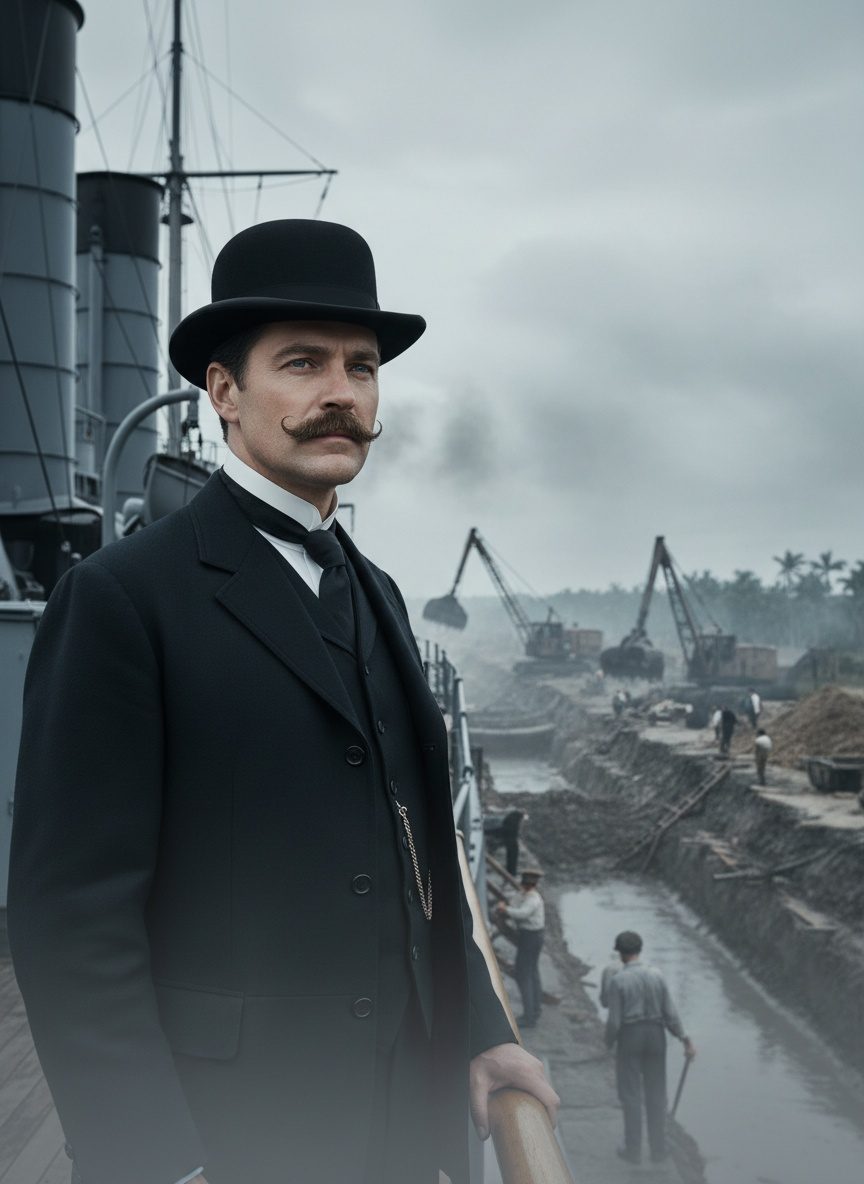
The decision to visit Panama was extraordinary not just for its breach of tradition but also for the reason behind it. Construction on the canal had begun in 1904, following a failed attempt by the French in the late 19th century. Harsh tropical conditions, rampant disease, and challenging terrain combined to make the project nothing short of Herculean. Roosevelt, determined to oversee this transformative endeavor, felt that a personal visit was necessary to invigorate the workers, assess the progress firsthand, and bolster international confidence in the American-led initiative.
As the Louisiana made its way through the bustling waters, Roosevelt's anticipation was palpable. A famed adventurer and political dynamo, he relished the idea of stepping onto Panamanian soil, where the air buzzed with the clamor of workers and machinery. On November 14, 1906, Roosevelt arrived at the Isthmus of Panama, the first sitting U.S. president ever to venture beyond national borders.
The air was thick with the sounds of construction—steam shovels screeching, dirt being heaved into piles, railcars rattling along makeshift tracks—and the scent of possibility and perseverance. Roosevelt, ever the commanding presence, toured the Canal Zone, inspecting locks and talking to the engineers and laborers. The Panama Canal, a then-ambitious dream on the verge of realization, reflected Roosevelt's own philosophy: plough through adversity and create new realities.
A particularly memorable moment occurred when Roosevelt, clad in white tropical suit and iconic straw hat, took a seat at the controls of a steam shovel. Grinning widely, he played at the helm of innovation—a symbol uniting his robust image with the relentless march of industrial progress. This image would echo through time, a hallmark of a president willing to engage directly with the forces shaping history.
Roosevelt’s trip was not just a testament to his personal vigor and ambitions but symbolized a cultural shift in the American mindset, from isolation to engagement. It illustrated the transformative role a president could play, directly influencing events beyond the nation’s borders, a practice that would become increasingly common in the ensuing decade. For the first time, the United States looked outward and projected its influence in a definitive, tangible manner. It was an embrace of the efficiencies of modern technology and transportation coupled with the age-old Republican virtue of direct engagement with progress and change.
Upon his return to the United States, Roosevelt continued to champion the canal project and saw its eventual completion in 1914 as one of the crowning achievements of his foreign policy directives, even though he was no longer president by the time the first ships sailed through. His journey to Panama, however, left an indelible mark on the history of the presidency, paving the way for future leaders to assume more active roles on the global stage.
Before Roosevelt, the idea of an imperially connected presidency was inconceivable. After his bold journey, it became a characteristic tool in the presidential arsenal. By traveling abroad and asserting American interests firsthand, Roosevelt set a new course for U.S. leadership, one that allowed presidents to touch foreign lands, interface with global power, and fundamentally alter international discourse. This unyielding spirit of engagement is as central to the office today as it was revolutionary at its inception over a century ago.
In retrospect, Theodore Roosevelt’s journey transcended its immediate implications for the Panama Canal. It signaled the birth of a new age for the American presidency—a dynamic, outward-looking institution willing to embrace change and innovation far beyond its shores. An act of breaking an age-old tradition thus turned into a lasting legacy, an emblem of a whole era of proactive, involved governance. His sojourn to Panama did more than secure a geopolitical victory; it forever redefined what it meant to lead the United States on the world stage.