The air was thick with tension as Sima Qian nervously stepped forward, the huge lacquered screens of the imperial court looming around him. His heart raced. He was about to do the unthinkable — to speak freely and in defense of a disgraced general. All eyes were on him, the whispering courtiers and ageless statues of past dynasties watching his every move. Would words be enough to protect a man declared a traitor, or would they herald Sima Qian’s own condemnation?
A Sovereign’s Wrath
At the heart of Han Dynasty China, around 99 BCE, Emperor Wu sat upon his throne, cloaked in the opulence of his supremacy. His reign was a time of territorial expansion and consolidation, yet with such ambition came an unforgiving hand towards failure. The general whom Sima Qian sought to defend had returned home failed from battle, a fate tantamount to treason under the Emperor’s watchful eye.
General Li Ling was no ordinary soldier. He was a man of notable courage who, despite leading a significantly outnumbered army, displayed remarkable gallantry against the fierce Xiongnu tribes. Yet, when his campaign faltered, and he was captured, his return did not bring the laurels of a hero, but the chains of a disgraceful prisoner. His failure, magnified by the Emperor’s expectations, became the focal point of a merciless judgment. But Sima Qian saw something different. He saw a fallen warrior’s lingering bravery, demanding justice from a harsh decree. When he spoke for Li Ling, he could feel the weight of a thousand barring stares, yet his voice did not waver.
A Choice Between Death and Dishonor
For his courage in the court, Sima Qian was offered execution — a sentence defined both by urgency and spectacle. This was the cost of crossing an emperor. Yet, Emperor Wu presented a second option, one rarely, if ever, chosen by the nobility: castration and servitude. It was a punishment abhorred, a mark of shame far more agonizing than the quick escape of death. Many would choose the cold embrace of mortality over living as a eunuch in perpetual disgrace.
Here lay the paradox of Sima Qian’s dilemma. To be erased swiftly from the annals of history or to endure and, in doing so, immortalize his work. The world viewed his choice to survive as an act of shame, forever branding him, yet only Sima Qian saw the path to engrave truth into the core of China's understanding.
Crafting Legacy Through Adversity
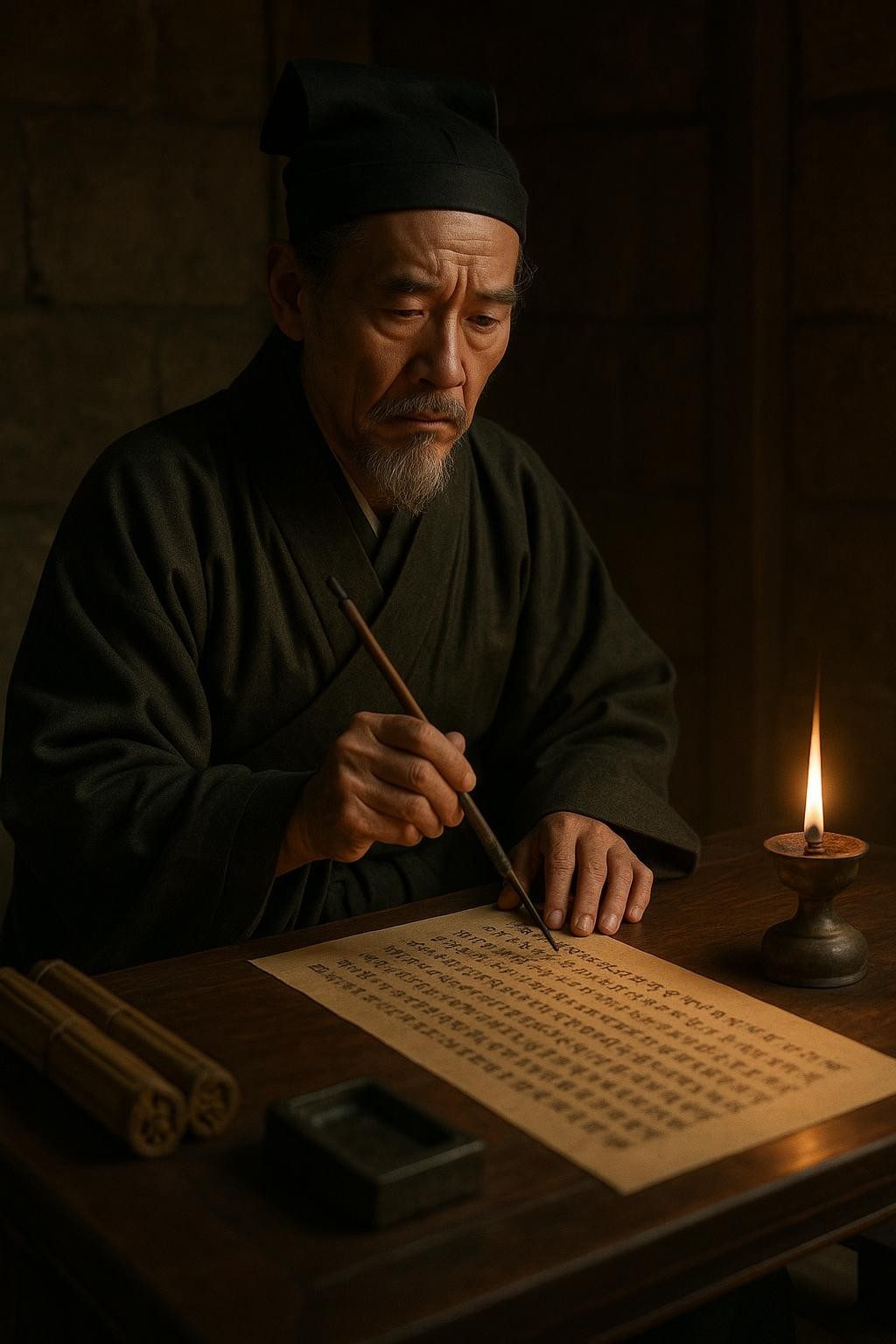
Shamed but undeterred, Sima Qian returned to his desk, an act of defiance wrapped in humility. The Han dynasty's hub of culture and intellect, the imperial archives, became his sanctuary. There, amongst the scrolls and the soft glow of lamps, he set to etch history for all eternity.
Sima Qian poured his pain, his insights, and his unwavering dedication to truth into "Records of the Grand Historian," or Shiji. This comprehensive history chronicled the deep roots of China from the mythical Yellow Emperor to the iron grip of the Han. Filled with chronicles of emperors, soldiers, philosophers, and bureaucrats — Sima Qian's work went beyond mere record-keeping; it dived into the lives, motives, and moral dilemmas of its subjects. Here was not just history, but the raw fabric of humanity contained within the scrolls.
Words That Commanded Time
As decades unfurled into centuries, the labor of Sima Qian’s shame became the cornerstone of Chinese historiography. Shiji was a compendium of lessons, a guide for rulers, and a mirror to the past composed with a sharp intellectual clarity that continued to resonate with scholars and leaders alike.
The beauty of Sima Qian’s work lay in its fearless authenticity. In weaving narratives unbounded by fear, he set a precedent not merely for recounting past events, but for understanding the moral pulses that dictated human behavior. In defending General Li Ling, Sima Qian had glimpsed at a broader consideration: the nature of truth as unyielding to authority.
The Legacy Carved from Resolve
Though he wore the permanent mark of a punishment considered worse than death, Sima Qian forged his identity anew. His sacrifice lent itself to an immortal legacy, transcending time and empire. He understood the inherent power of history to root societies and to reflect their complexities back at them.
In facing his darkest hour, Sima Qian sowed the seeds for generations to revisit and rethink the lives and stories that came before. The emperor's sword had aimed to silence him, but instead, the tides of history embraced him. An act of living shame turned into a triumph of narrative resilience, reminding us that in the quiet solitude of one’s convictions lies the potential to shape cultures and reverberate through millennia.