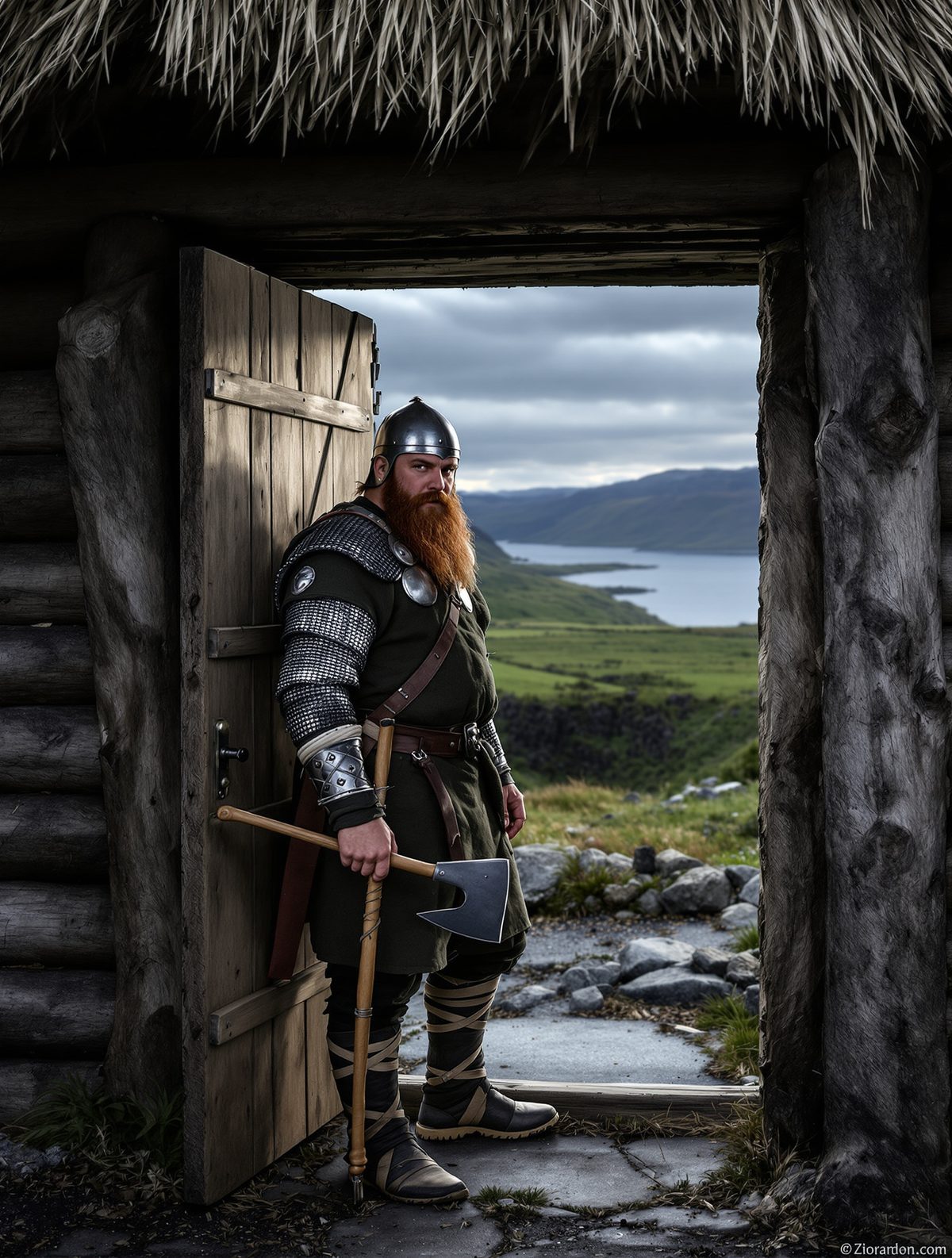
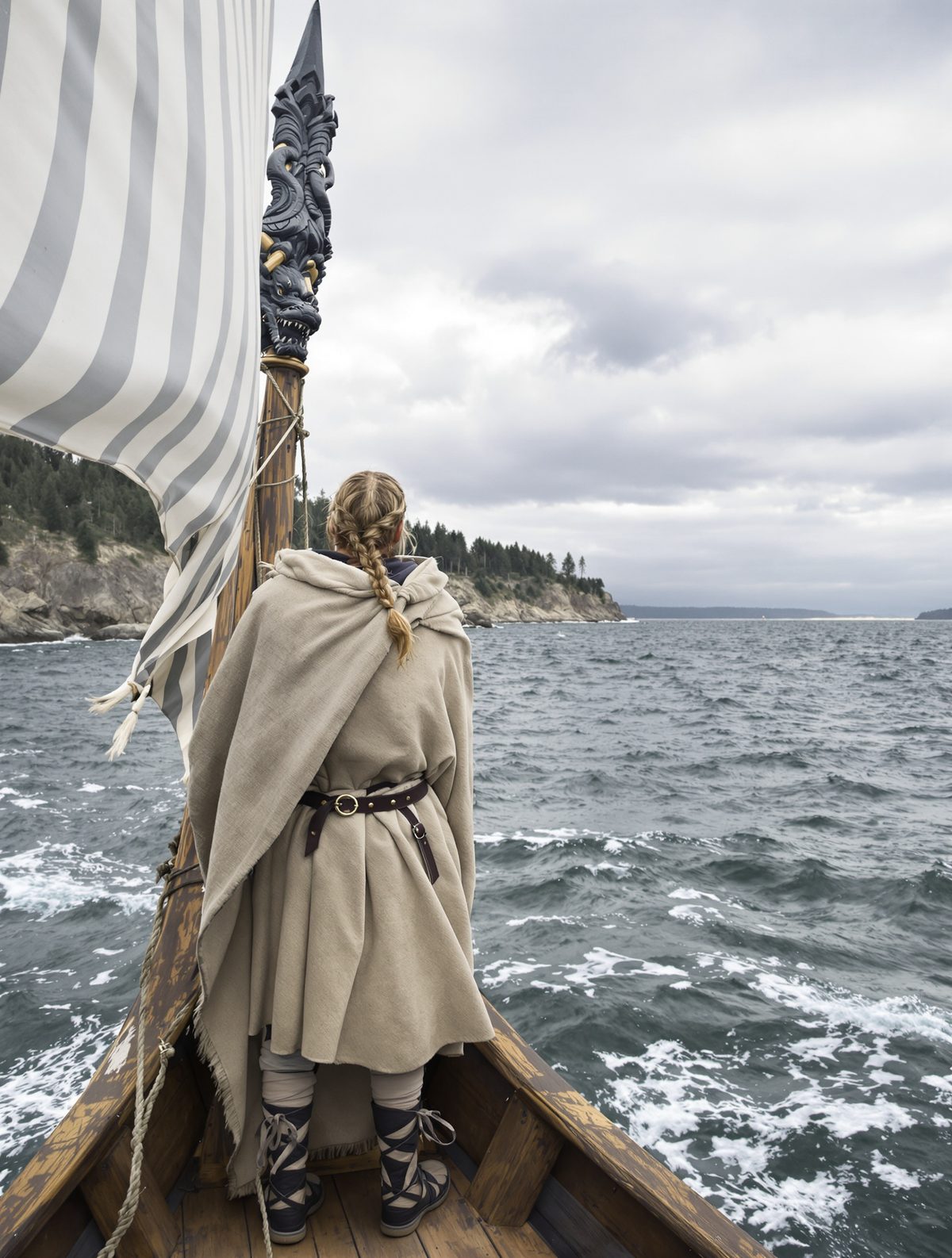
Picture a time when Viking longships haunted the coasts of medieval Europe like apparitions, their dragon-headed prows striking dread into the hearts of coastal dwellers. Among the most fearsome of these Norse seafarers was a warrior known as Rollo — a man whose legacy would ripple through the centuries, culminating in one of the most pivotal moments in English history: the Norman Conquest. Welcome to the story of Rollo the Viking, the fearsome marauder who transformed from scourge of France to the ancestor of kings.
The Colossus from the North
Rollo's story begins around 860 AD in the rugged terrain of Scandinavia, possibly in what is now Norway. Known as "Gange Rolf" in the sagas, which translates to "Rolf the Walker," he was so massive and strong that no horse could carry him, or so the legend goes. His physical presence was matched only by his prowess in battle, a dual gift that soon found purpose in the Viking expeditions that terrorized Europe.
By the late 9th century, Rollo had become infamous for his raids along the Seine, frequently plundering the territory that would one day offer him an unexpected opportunity. It's hard to imagine the chaos brought by Rollo’s band through the forests of Gaul: villages aflame, the screams of the terrified echoing against the hollow thump of axe against shield. His name became synonymous with devastation, yet the seeds of his transformation had already been sown.
The Gamble of a Beleaguered King
Faced with the relentless Norse incursions, King Charles the Simple of West Francia devised a radical solution. In 911 AD, he proposed the Treaty of Saint-Clair-sur-Epte, offering Rollo land in Normandy in exchange for his pledge to defend the kingdom against fellow Viking raiders. As part of this deal, Rollo was to convert to Christianity and swear fealty to Charles.
Acceptance of this offer was far from a foregone conclusion. For Rollo, the idea of settling and bending the knee to a Christian king must have seemed alien, yet the lure of fertile land and the promise of wealth proved persuasive. Legend has it, when asked to kiss the foot of Charles in a sign of fealty, Rollo commanded one of his men to do it for him. Ever the Viking, his warrior lifted Charles’s foot so high the king toppled off his throne — a fitting inauguration for this new chapter in Rollo’s life.
The Transformation of a Warrior
As the first Count of Normandy, Rollo exchanged his raider’s axe for the role of a guardian. He maintained a hold over his proud Norsemen while adeptly navigating Frankish customs and political games. The result was a thriving settlement that began merging Norse and Frankish cultures. He fortified his hold on the region, building castles and establishing a semblance of order among his people.
Rollo’s rule marked the beginning of Normandy’s rise as a powerful duchy. His descendants would preside over a dynamic blend of Norse innovation and Frankish tradition, laying the foundations for a robust society. Rollo’s choice to adapt rather than continue his campaign of plunder proved to be a masterstroke of leadership.
A Dynasty Destined for Greatness
Rollo's legacy did not end with him. His son, William Longsword, consolidated the power Rollo had carved out, further strengthening Norman control. Each subsequent generation carried the torch, ensuring Normandy’s growing influence. By the time Rollo’s great-great-grandson, William the Bastard, ascended to the ducal throne in 1035, Normandy was a formidable power in its own right.
William’s ambitions outgrew Normandy, culminating in his decisive claim on the English throne. Known to history as William the Conqueror, he crossed the English Channel in 1066 and defeated King Harold II at the Battle of Hastings. William’s triumph at Hastings cemented the Normans as rulers of England, forever altering the course of both English and European history.
Legacy and Lessons
The tale of Rollo is more than a narrative of Viking conquest and ruler conversion. It speaks to the transformative power of adaptation and the enduring legacy of cultural fusion. Rollo’s shift from marauding Viking to the progenitor of Normandy's ducal dynasty was both a strategic and cultural turning point, exemplifying the nuanced interactions between invaders and indigenous populations.
Today, Rollo's story offers a lens through which we can explore themes of identity, integration, and the fluid nature of power. His legacy underscores a timeless observation: sometimes the greatest conquerors are those who learn to build and blend, rather than destroy. In transforming from raider to ruler, Rollo set the stage for a new era, illustrating how one man's journey from terrorizer to territory holder rippled through the annals of time, leading ultimately to the Hastings of 1066, shaping the world we know today.