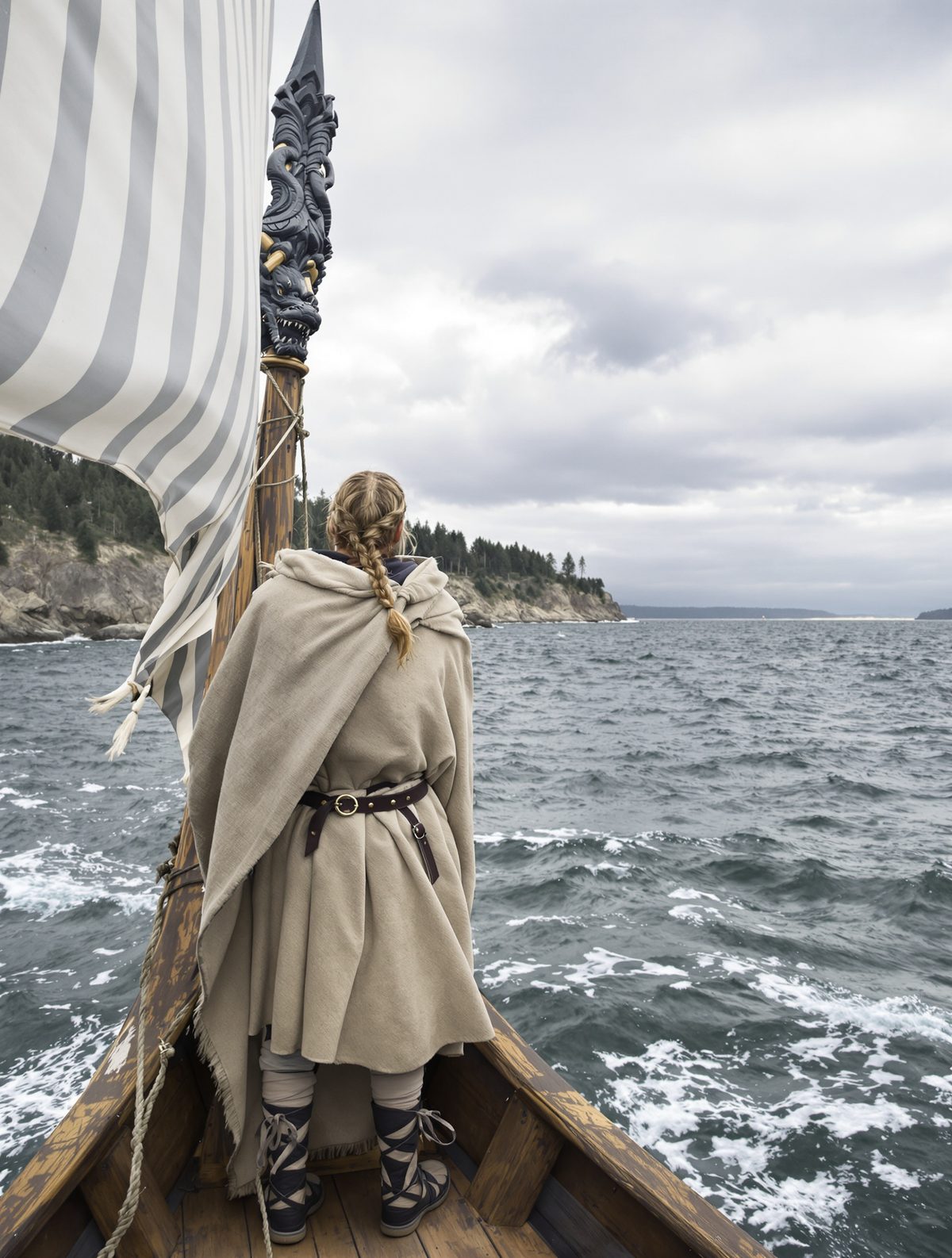
The year was 986 AD, and the winds of destiny howled through the fjords of Iceland, carrying with them whispers of fate unyielding. Gunnar Hámundarson, known to history as Gunnar of Hlíðarendi, stood on the precipice of life and legend. The ship destined to carry him into exile bobbed patiently in the harbor, yet his heart, as fierce and immutable as the cold Icelandic wind, bade him stay. What might compel a man to defy the decree of banishment, to eschew freedom in favor of an almost certain demise? Gunnar's story is one of valor and tragedy—a saga echoing through the ages.
The Prologue of Conflict
Gunnar of Hlíðarendi was not a man whose legend was built overnight. Born around 950 AD, he spent much of his life establishing himself as one of Iceland’s fiercest warriors. His strength was the stuff of legends; it was said he could jump his own height while wearing full armor. His was a presence that commanded respect and elicited both admiration and jealousy.
By 985 AD, feuds and bloodshed had become interwoven with the very fabric of his life. In a society where vengeance was a sanctioned practice, Gunnar found himself ensnared in a cycle of retribution. A series of bloody skirmishes rendered him a formidable figure but also placed a target on his back. The culmination of his disputes led the Althing, Iceland’s grand legislative assembly, to sentence him to the ultimate punishment—exile.
The Decision to Stay
With the ship waiting, Gunnar mounted his horse, his bags packed, and his supporters urging him to leave the land he so fiercely loved. As he rode towards the harbor, the verdant slopes of Hlíðarendi stretched out before him, calling to him with a voice as sweet as the memory of balmy summer nights.
In a moment of solemn reflection, he paused, turning his gaze back upon the farmstead—and his heart surrendered. "Fair is the hillside," he declared. "Never has it seemed so fair. Green are the fields and blooming are the meadows upon which I have worked and bled. Here is where my soul belongs."
Gunnar turned his horse away from the ship, away from the safety that awaited him across the sea. In that instant, he embraced his fate. The move stunned his supporters; the bewilderment was palpable. Yet through their bewilderment shone an understanding of Gunnar's love for his homeland—a love deeper than the cold waters that could have ferried him to safety.
The Last Stand
The echoes of Gunnar’s refusal stirred quickly among his enemies, and that night, they came for him with one purpose—vengeance. The Vápnfirðingar, as they were known, arrived at dusk, descending upon Hlíðarendi with grim determination.
Alone in his hall, Gunnar fought like a cornered wolf, his bow singing the notes of defiance as arrows flitted through the shadows. But as the shadows of twilight darkened, fate intervened in the form of a snapped bowstring. In poetic cruelty, the fibers snapped precisely when hope seemed a fleeting mirage.
Despite attempts at negotiation, Gunnar’s enemies were unforgiving, besieging his homestead, battering it like waves against the rock. He fought valiantly, single-handedly fending off attackers, even when the odds seemed insurmountable. But numbers prevailed where resolve and skill could not. As his strength waned, his saga took its final turn—a blaze of glory that would etch his name into the lore of Iceland.
The Legacy of Valor
The tale of Gunnar of Hlíðarendi doesn’t end with death. Instead, death marks the beginning of his legend. His defiance against exile and the courage with which he faced his fate immortalized him in the Icelandic sagas. Gunnar's saga, a critical piece of medieval Icelandic literature, reflects the valor and relentless human spirit that Gunnar embodied—traits that resonate in the heroes of sagas throughout time.
Even centuries later, the bards who recount Gunnar's tale do so with reverence. Iceland has not forgotten its son—a warrior who, in choosing to face death, captured a nation's enduring spirit. His life serves as a testament to the indomitable essence of human will and the profound connection one can have to their homeland.
Why Gunnar’s Story Matters Today
In an age where the notion of home may seem more transient than permanent, Gunnar’s story reminds us of the deep roots we often overlook. It’s a poignant reminder of the ties that bind us to place, the memories that shape our identities, and the courage it takes to stand one's ground.
This story of Gunnar of Hlíðarendi, with its mingling of valor, tragedy, and love, echoes the heroic narratives we find not only within history books but within the core of human experience. His legacy is a mirror reflecting the unyielding spirit that defies time’s passage, inspiring us to live courageously and with purpose.
So, the next time you find yourself gazing upon the land you call home, consider the story of a Viking who loved his land so fiercely that even in death, he chose to stay.