By the crackling warmth of history’s firelight, come gather round for a tale of resilience, a man at his absolute end – only to be inspired by the most unlikely of creatures. As the winds of the winter of 1306 howled outside his hideaway, Robert the Bruce, the beleaguered King of Scots, watched a lone spider attempt the impossible. It was a scene both humbling and invigorating, like a brush against destiny’s cloak.
The King in the Cave
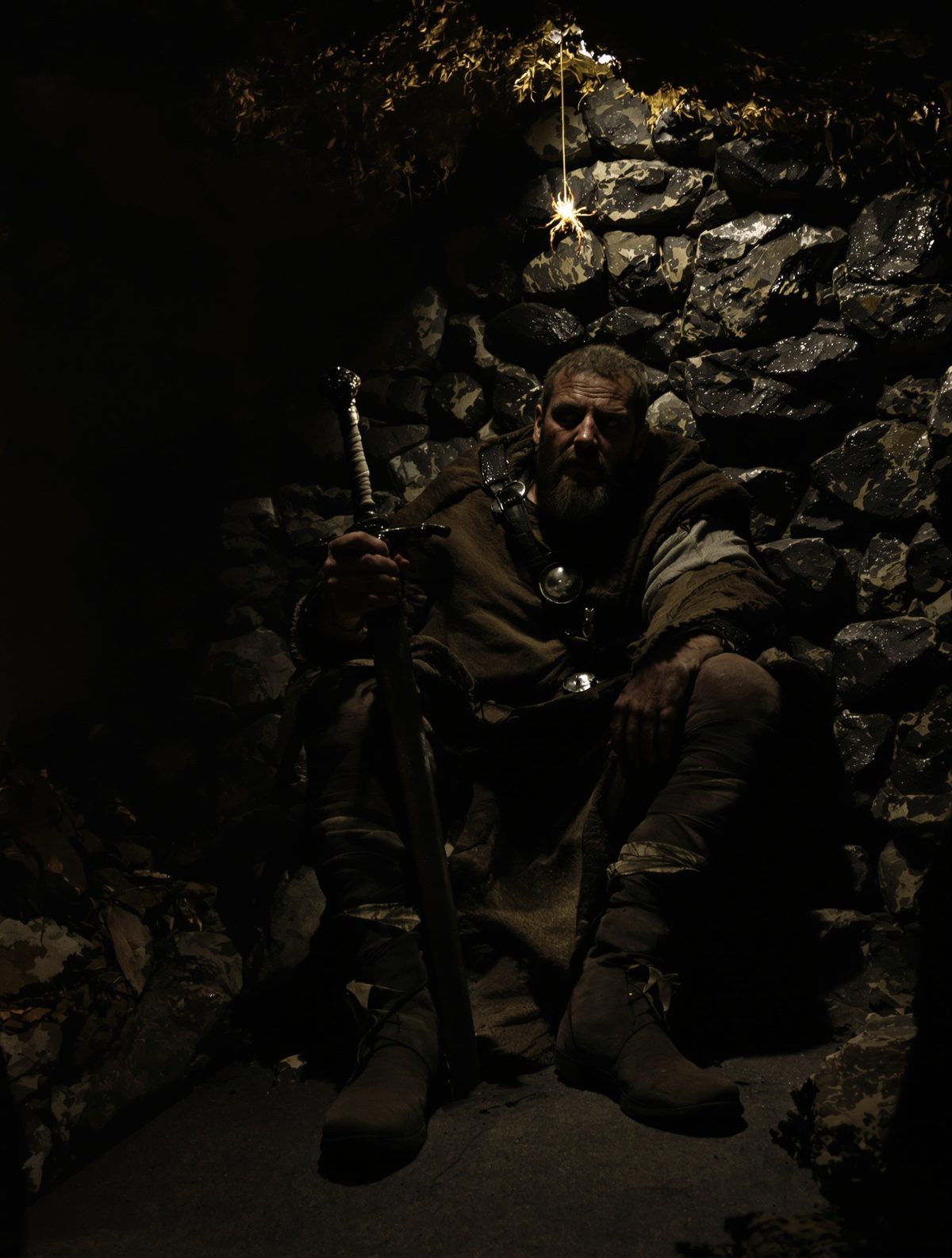
The year was 1306, and Robert the Bruce was a king in name alone. Crushed by recent defeats at the hands of the English and the mighty King Edward I, Bruce was on the run. His contentious claim to the Scottish crown had left his every step fraught with danger and despair. Six times within a year, he had attempted to turn back the tide of conquest — and six times, he met with utter defeat, a sequence of failures punctuated by personal loss. His brothers, loyal and bold, had been captured and ruthlessly executed, a harrowing toll of rebellion. With his companions scattered and morale depleted, Bruce retreated to an isolated cave by the tempestuous Irish Sea.
Outside, waves lashed the shores in a wild symphony, as unforgiving as the struggle itself. Within the dark recesses, a chill pervaded the air and Bruce sat alone, contemplating a return to obscurity. To abdicate his claim appeared the only path left.
The Spider's Resilience
A chance sight would alter history’s path. In the dim light filtering through the cave’s entrance, Bruce observed a spider dangling from a slender thread. In defiance of nature’s chaos, the spider was attempting to weave its gossamer web. Time and again, the breeze tore at its delicate structure. Six times the creature failed, a pattern mirroring Bruce’s own strife.
Yet, as the perseverant insect resumed its task, Bruce was captivated. It was on the spider's eighth attempt that something remarkable happened — the web held. Through repeated efforts, the little arachnid conquered the elements, completing its intricate design. It was a tiny victory, yet to Bruce, it was a revelation.
A Call to Arms
Stirred by the spider’s resilience, Bruce emerged from the cave with renewed determination. He realized that just as the web had persevered against adversity, so too must he. Returning to Scotland, he embarked upon a new campaign, rallying his scattered supporters, rekindling the flickering flame of rebellion. Bruce adapted new tactics, relying on the rugged terrain and guerilla warfare to nullify the English forces’ superiority.
The reborn fire of resistance crackled through the Scottish heartland as Bruce’s forces started to secure victory after victory. These skirmishes, fought in the dense forests and rocky landscapes, built his legend and gathered strength and numbers. Behind him lay memories of defeat, before him was a vision of a freed Scotland.
The Triumph at Bannockburn
In 1314, the moment of reckoning arrived at Bannockburn, near Stirling. It was here that the forces of Bruce would meet the English in a decisive confrontation. Outnumbered and up against a formidable army, Bruce's tactical ingenuity would shine. His forces, nimbly wielding the landscape to their advantage, confounded the English with their ferocity and strategic placement.
On the eve of battle, Bruce recounted the story of the spider to his men, an allegory of promise and persistence against all odds. The significance was not lost on his army, whose spirits soared with newfound vigor. Over the course of two days, the Scottish forces routed their enemies, marking Bannockburn not just as a location on the map but as a turning point for a nation. Against expectation, they claimed a monumental victory.
Legacy of Resilience
The man who once sought solace in a shadowy cave had thus emerged a symbol of resilience, embodying the struggle of an entire people. In 1328, the Treaty of Edinburgh-Northampton officially recognized Scotland’s independence, triumph born out of the undying courage first kindled by a mere spider.
Robert the Bruce’s story remains a testament to the indomitable spirit capable of overcoming even the most dire of situations. The spider's unwavering resolve offered Bruce a lesson in perseverance, echoing through history as a timeless reminder that success often requires repeated efforts.
Why This Matters Today
In a world still brimming with trials and tribulations, the story of Robert the Bruce and his eight-legged muse resonates profoundly. It reminds us that when faced with daunting challenges, the key is not to surrender to despair but to "try, try, and try again." Just as the threads of the spider's web require patience and resilience to withstand storms, so too do our endeavors in life demand persistence against adversity.
From a cave on the Irish coast to the fields of Bannockburn, Bruce's transformation from a defeated fugitive to a victorious king inspires in us the courage to craft our destinies. It reminds us that even in our darkest moments, the smallest flicker of hope can kindle the flames of change.