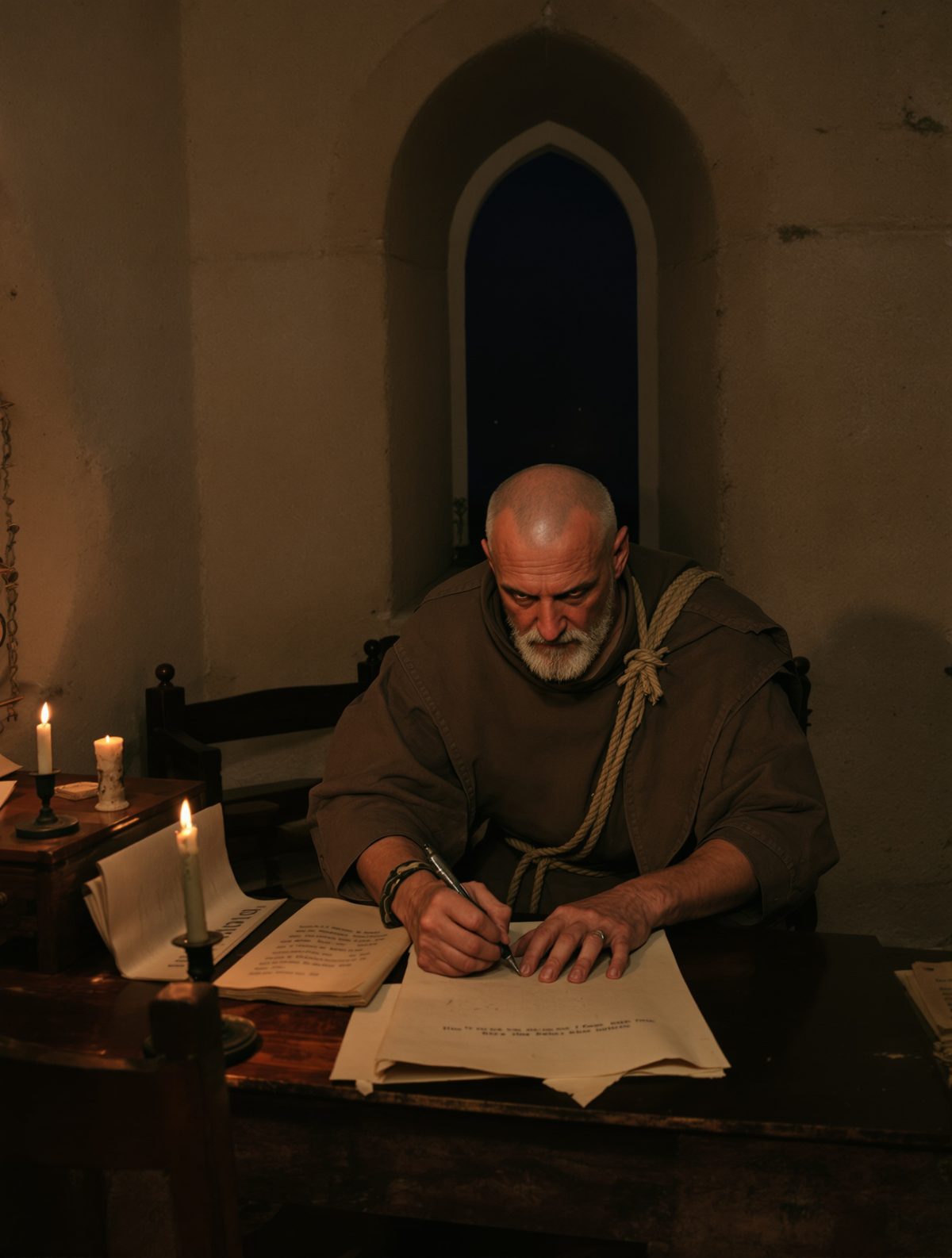
In the waning twilight of his earthly days, a humble hermit known as Pietro del Morrone found himself thrust into the highest echelons of power. As Pope Celestine V, this simple man of devout faith would become an unlikely symbol of humility and tragedy. His astonishing ascent to the papacy and subsequent resignation was a journey that painted the turbulent canvas of the medieval Church with vivid strokes of ambition, betrayal, and fear.
The Hermit Who Became a Pope
Imagine the unforgiving, craggy peaks of Mount Morrone in Italy in 1294. Nestled within, amongst the solitude and sanctuary of the Apennine Mountains, lived an 85-year-old hermit, Pietro del Morrone. Known for his piety and wisdom, Pietro had dedicated his life to prayer and simplicity. But in a twist of fate that could only be construed as divine intervention, the conclave of cardinals, embroiled in a deadly stalemate, saw in him a beacon of hope.
On July 5, 1294, their decision was announced: Pietro del Morrone would become Celestine V, the 192nd Pope of the Catholic Church. It was an unprecedented choice that flipped the world on its head. Here was a man who embodied the ascetic virtues the Church prized, yet sought to escape the burdens of the world rather than lead it.
What followed was a papacy as brief as it was eye-opening. For five dizzying months, Celestine V grappled with the responsibilities he never desired, culminating in a decision no pope before or since has made voluntarily: he resigned.
An Unforgiving Successor
While Pietro longed for a return to his beloved mountains, the corridors of power had other plans. On December 13, 1294, as Celestine laid down his papal crown, Boniface VIII ascended to the throne of St. Peter. Unlike his predecessor, Boniface was a creature of the court with ambitions as lofty as the cathedrals he wished to erect. His ascent spelled doom for the gentle Celestine.
Seeing his resignation as both an opportunity and a threat, Boniface realized he could not allow the former pope to remain free. Celestine's existence was an uncomfortable reminder of a purity the new pontiff could never claim. Worse still, factions within the Church saw him as a potential puppet to challenge Boniface's authority.
Boniface swiftly dispatched guards to hunt down the retreating hermit and bring him to heel. It was a terrible irony: a man who had once lived in solitude now found his freedom stripped away by the very institution he endeavored to serve in humility.
Imprisoned in Castle Fumone
In the heart of Lazio, atop a hill rising defiantly against the Roman sky, stood the formidable Castle Fumone. It was here, within its cold stone walls, that Celestine was forcibly sequestered. The austere edifice watched over the landscape like a silent sentinel, its storied past steeped in layers of political intrigue and bloodshed.
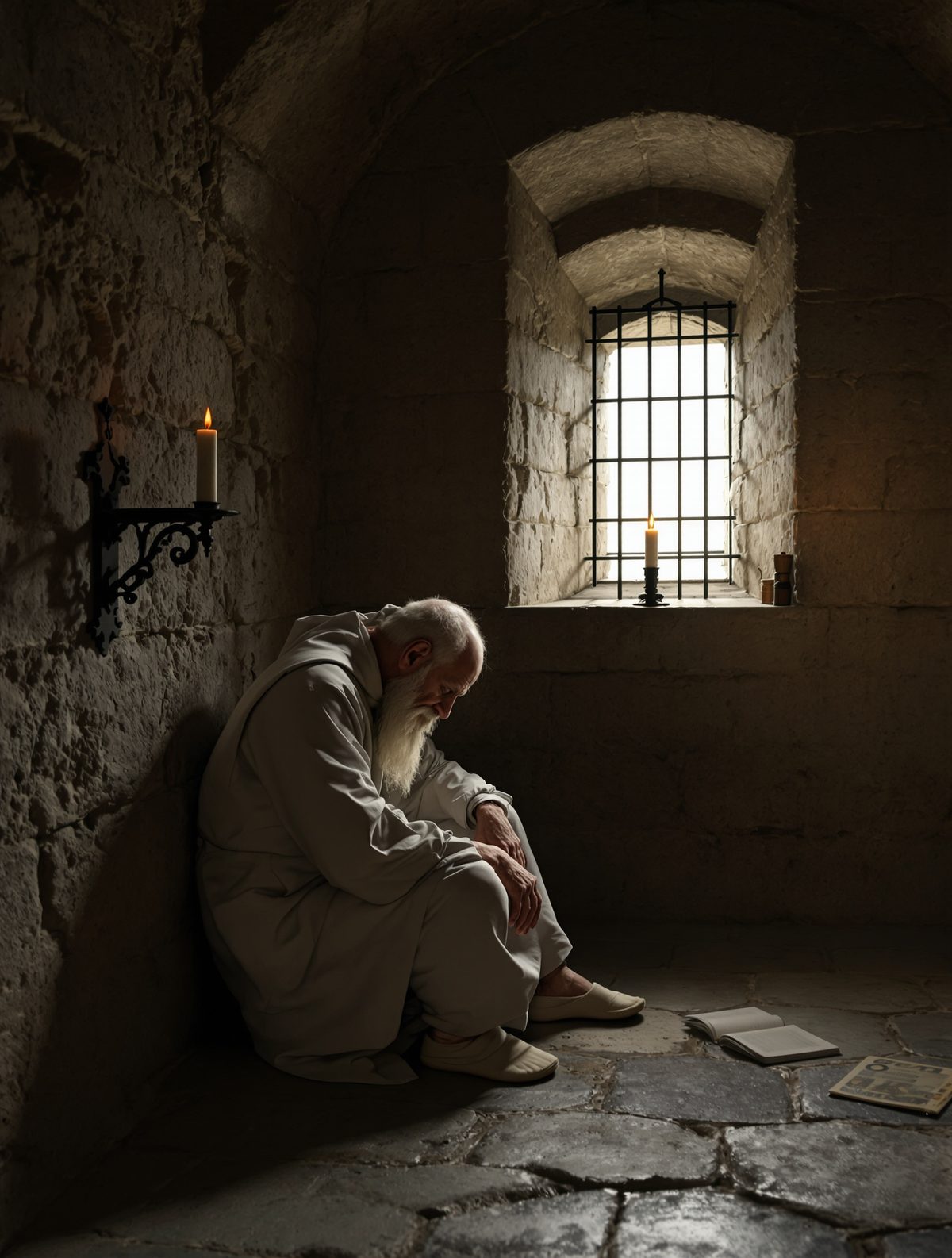
Beneath its vaulted ceilings, the former pope’s days unfolded in the dank confines of a cell—more prison than retreat. Stripped of the natural beauty and serenity he once knew, Celestine found himself enfolded by darkness. He was treated less as a revered figure and more as a captive; a mere pawn in Boniface’s unyielding game of power.
Iron shackles, relentless in their cruelty, adorned his frail wrists. Tales from the castle spoke of his unyielding faith, how he continued to pray and sang hymns amidst the echoing halls. Yet, his spirit, though indomitable, could not mend a body worn by age and imprisonment.
The Tragic End of a Reluctant Leader
Celestine’s final curtain came on May 19, 1296. Over the course of 10 desolate months, the man who once wore the robes of Christ’s vicar shed the title and trappings of papacy, only to embrace the anonymity of eternity. He was said to die of natural causes, though murmurs of possible foul play resonated through the ranks.
For Boniface, the death of Celestine was a sigh of relief. The singular reminder of an exception to his iron rule was gone, yet Celestine’s legacy lingered. His resignation was canonically enshrined, an ecclesiastical oddity that provided future Benedict XVI the precedent to abdicate centuries later.
Today, visitors to the Basilica of Santa Maria di Collemaggio in L’Aquila can find his remains, a poignant testament to a man who, despite his avowals to a higher calling, found himself ensnared in the all-too-earthly web of human ambitions. On display in a glass casket, the skeleton of Celestine seems to echo the lesson in humility he, unwittingly, delivered to the ages.
Legacy and Lessons
The story of Celestine V is a testament to the daunting intersections of piety and politics. It underscores the timeless struggle between faith and authority, a delicate dance that echoes even today in the halls of power around the world. In an age where resignation is often seen as a sign of weakness, Celestine's narrative urges a pause—a reflection on the importance of humility and the courage to step aside for the greater good.
Pope Celestine V's life serves as a guiding star, a beacon illuminating the complexities at the heart of humanity’s relentless pursuit of power. His journey from mountain hermit to pope and prisoner is a solemn reminder of the virtues of simplicity and the perils that lie in ambition's expansive shadow.
In the grand tapestry of history, the short papacy of Celestine V and the chilling sequel penned by Boniface VIII offer a compelling parable—one that beckons us to question how much of our integrity is sacrificed at the altar of power, and whispers the wisdom that sometimes, the greatest strength lies in knowing when to let go.