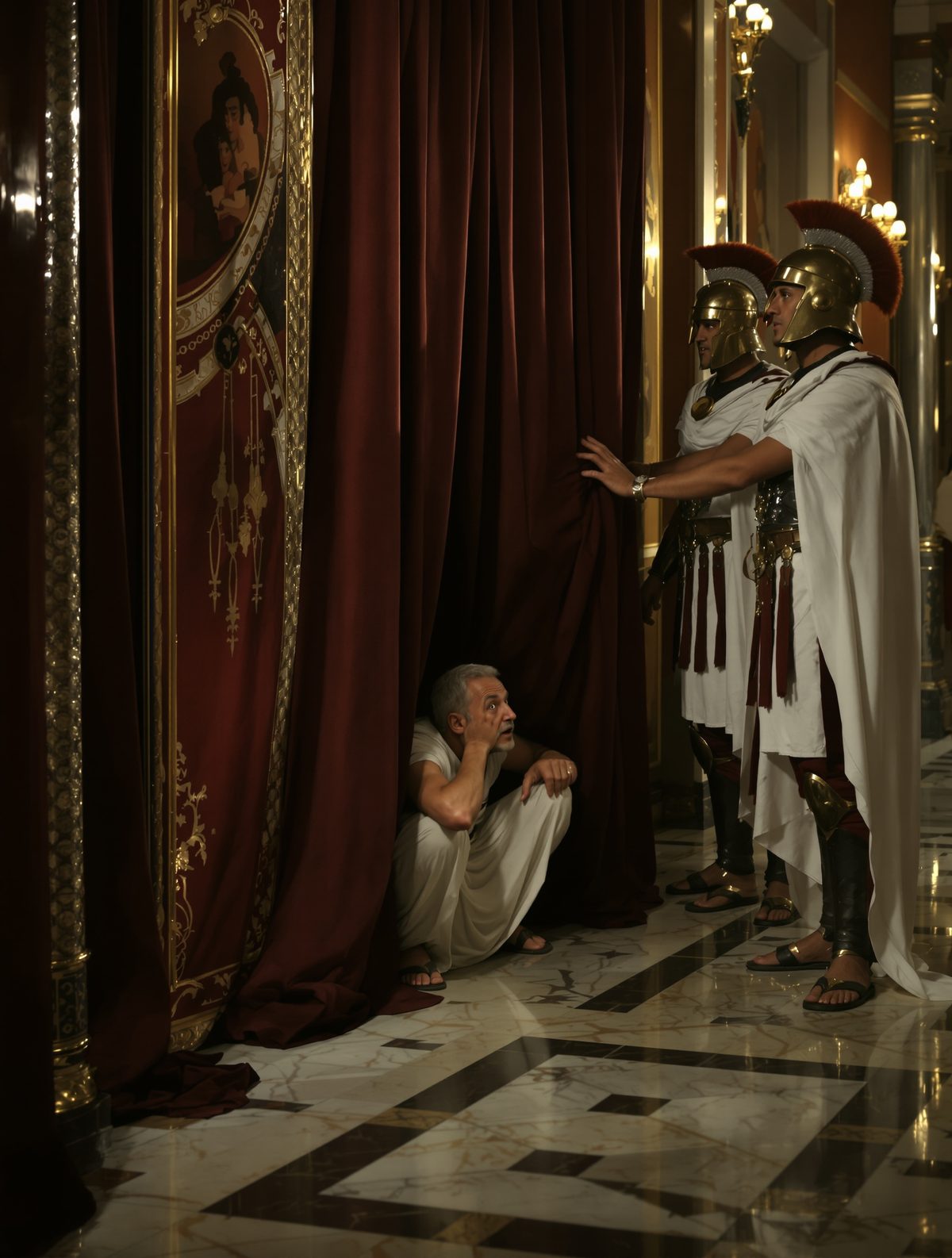
In the dim, candle-lit corridors of Avignon, a man moved swiftly and quietly, shrouded in the heavy cloak of both night and necessity. It was June 1328, and William of Ockham, a once-respected thinker, was on the run. Behind him lay the threat of arrest and the Church, whose doctrine he had dared to question. Ahead of him was a future uncertain, but burgeoning with revolutionary ideas that would, in time, not just survive his condemnation but immensely influence the world.
The Monk Who Questioned Everything
William of Ockham was no ordinary monk. Born circa 1287 in the small village of Ockham in Surrey, England, he was educated at Oxford where he quickly gained a reputation for his sharp intellect. But his keen mind would become both his greatest asset and his most perilous curse. Ordained as a Franciscan, William soon began questioning the complexities of the ecclesiastical teachings and practices of his time.
At the heart of Ockham's inquiries was a pivotal idea that would later be known as "Ockham's Razor." This principle advocated that among competing hypotheses, the one with the fewest assumptions should be selected. It was a deceptively simple notion, yet it boldly challenged the convoluted scholastic arguments prevalent in medieval theology and philosophy.
Ultimately, it was Ockham's criticisms of the accumulation of wealth by the clergy and his insistence on the separation of spiritual and temporal powers that painted a target on his back. In 1324, charges of heresy were levied against him, and he was summoned to Avignon, then the seat of the Papacy, to defend his teachings before Pope John XXII.
A Fugitive in Avignon
The years between 1324 and 1328 were a series of ecclesiastical struggles and theological battles. While Ockham awaited the Pope's judgment, a fateful alliance formed between him and another formidable figure: Emperor Louis IV of Bavaria, who was locked in his own conflict with the papacy over imperial authority. This bond was forged out of necessity as much as mutual respect.
In June 1328, facing arrest and perhaps even execution, William of Ockham made a harrowing decision. Under the cover of secrecy, he fled the clutches of Avignon with other fugitive Franciscans, seeking refuge with Louis IV in the imperial city of Munich. In the chill of the summer night, Ockham left behind his monastic life for good, carrying nothing but his critical manuscripts and his daring ideas.
The Exile's Pen Mightier than the Sword
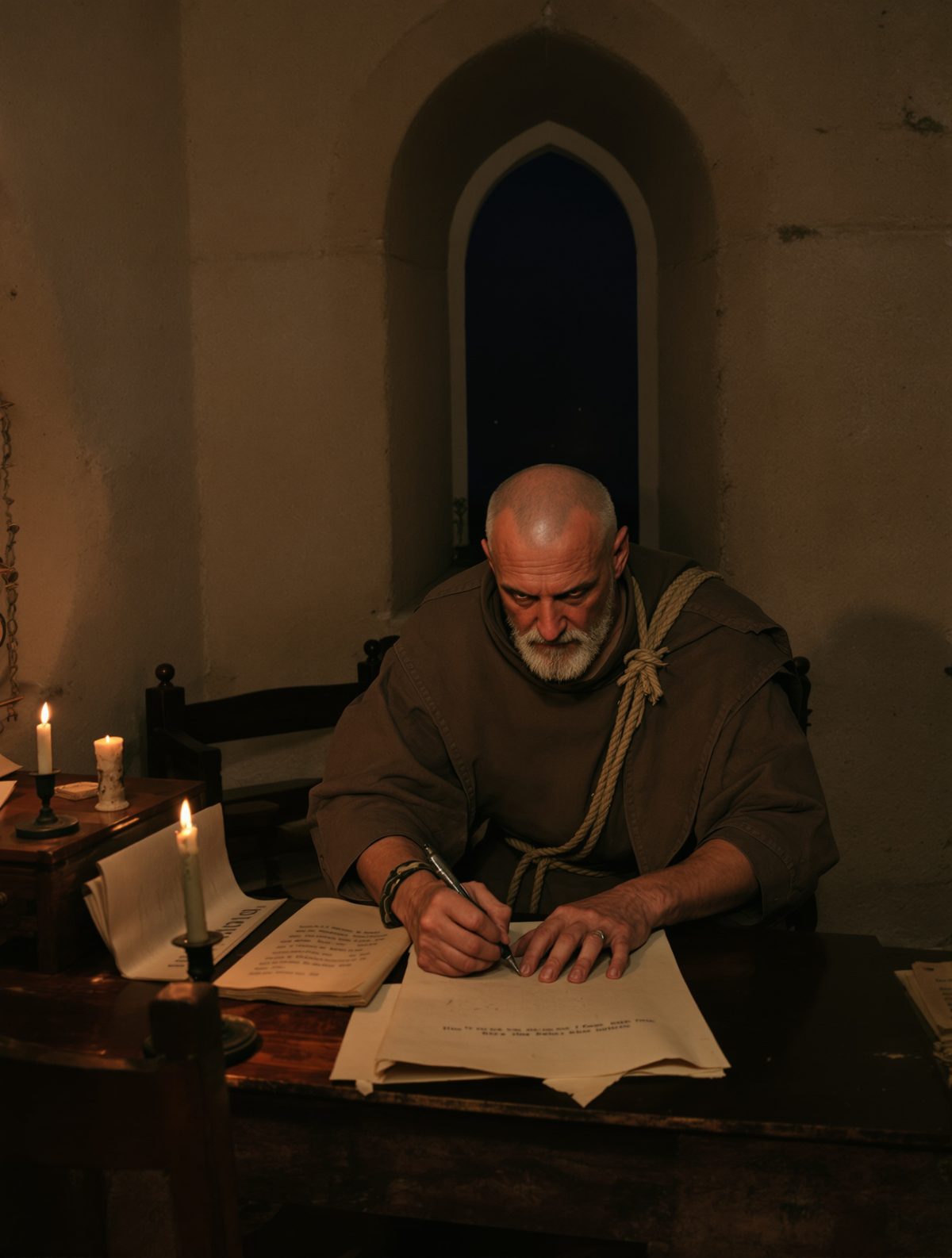
Life in exile was harsh, yet remarkably productive for William of Ockham. He spent the rest of his life in Munich, sheltered by Emperor Louis IV. Despite his precarious situation, Ockham's pen never faltered. Stripped of his clerical status and without a single possession, he continued to write prolifically, crafting treatises that were sharp and incisive.
Impressively, Ockham addressed not only theological discourses but provided profound critiques on political theory and logic. His powerful writings included the influential political treatise Dialogus de Imperatorum et Pontificum Potestate, which argued vigorously for the separation of church and state and the limitations of papal power, ideas centuries ahead of their time.
His most famous intellectual legacy, however, lies in the principles of reductionism and logical parsimony. Although Ockham did not invent the "razor" term, his elegantly persuasive arguments laid a cornerstone for what would evolve into modern scientific methodology. In a world bound by superstition and the intricate dogma of the Church, Ockham's idea sliced away the superfluous to reveal the essence of logic and reason.
Legacy Beyond the Cloister
William of Ockham died in 1347, in the very city that had offered him sanctuary. However, his influence did not die with him. Over the years, Ockham's Razor has been echoed in the voices of trailblazers like Galileo, Newton, and Einstein. Through the centuries, scholars have wielded it as a guiding principle — from philosophers in dusty libraries to scientists in cutting-edge laboratories.
Indeed, Ockham's life of tumult and exile nurtured the very ideas that would subvert tyranny and champion individual reasoning. His simple but profound insight inspired the courses of scientific revolution and enlightenment. His surviving works, numbering roughly 70, were instrumental in urging Europe away from medieval scholasticism and toward modern empirical science.
A Thought Simple, Yet Profound
Over 600 years later, William of Ockham’s legacy endures like a sentinel, guarding the annals of rational thought and progress. The sheer force of his simple dictum — to cherish parsimony of explanation — revitalizes intellectual rigor in a complex world burdened with excess noise and information.
In a modern landscape where the battle between misinformation and truth rages on, the razor remains an invaluable tool. It serves as a reminder that the simplest path, though dismissed in its time, can hold the greatest truth. Ockham's ideas, distilled from a life of passion, poverty, and principle, continue to slice through the convolutions of our era, illuminating clarity in its wake.
Thus, the man who was exiled for heresy became a beacon for future generations — proving that while rulers may sway and institutions may crumble, powerful ideas endure, outlasting the very structures that sought to silence them.