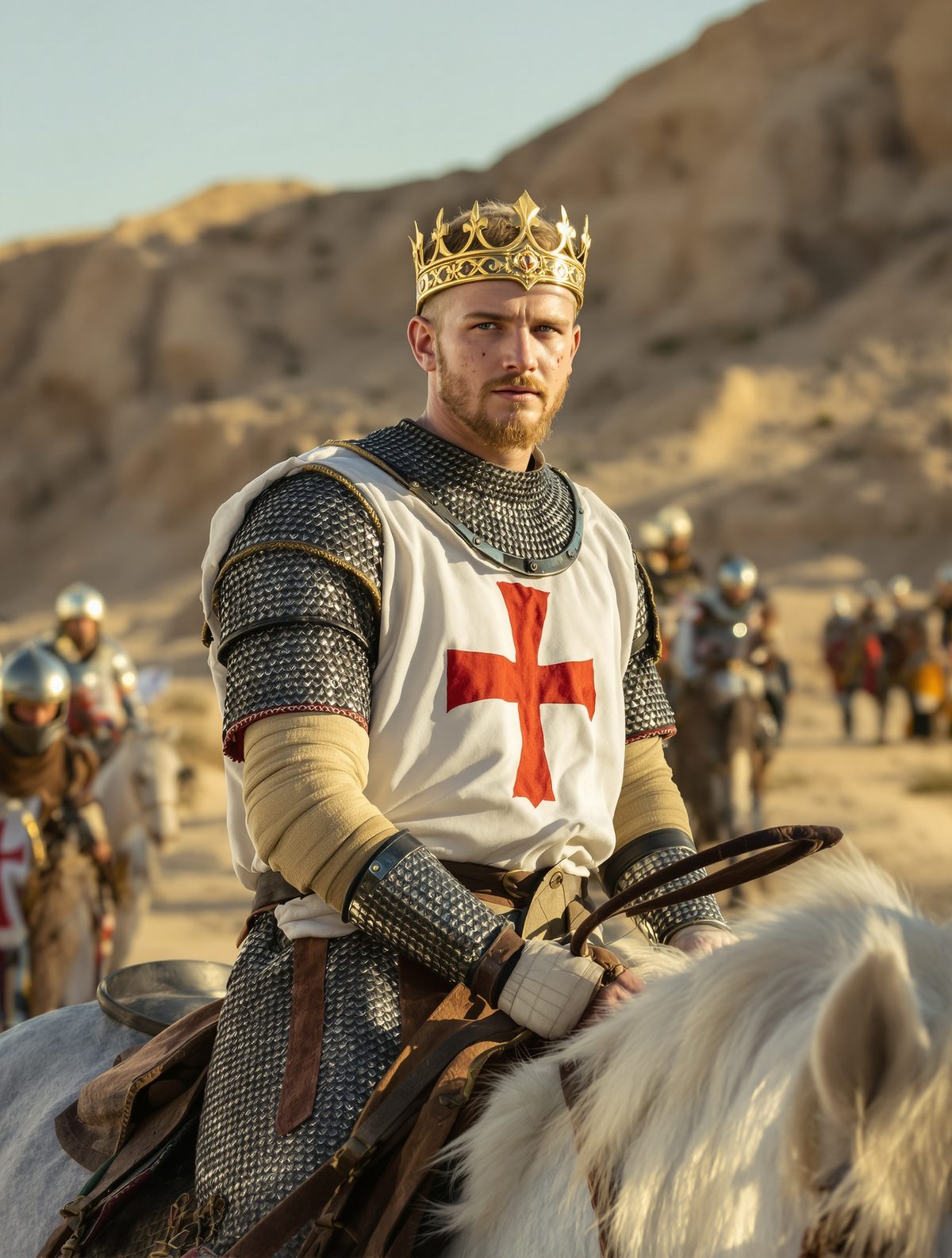
Picture this: it's 1045 AD, and the most powerful religious office in the world—the papacy itself—is being sold like a used horse at market. The seller? A twenty-something pope who wants to get married. The buyer? His own godfather, who thinks he can clean up the mess. The result? The most spectacular power struggle in medieval history, with three men simultaneously claiming to be God's representative on Earth.
This isn't the plot of a medieval soap opera—this is the true story of Pope Benedict IX, a man who treated the papal throne like his personal playground and nearly destroyed the Catholic Church in the process.
The Boy King of Christianity
In 1032, when most twelve-year-olds were learning to read, Benedict IX was being crowned Pope. Born Theophylactus of Tusculum around 1020, he belonged to one of Rome's most powerful families—the Tusculani—who had turned papal elections into their personal monopoly game. His father, Alberic III of Tusculum, had already installed two of his other sons as Pope. Benedict was simply next in line.
The sight must have been surreal: a child barely tall enough to see over the papal altar, draped in sacred vestments that probably dragged on the marble floors of St. Peter's Basilica. Contemporary chroniclers were horrified. The monk Rodulfus Glaber wrote that Benedict was "a boy of about twelve years," while others described his appointment as "shameful" and "against all canon law."
But here's what makes this story even more incredible: Benedict didn't just serve for a few ceremonial years before stepping aside. He held onto power for over a decade, ruling through the turbulent 1030s with all the restraint you'd expect from someone who became the most powerful person in Christendom before hitting puberty.
A Pope Behaving Badly
If you think modern scandals are shocking, Benedict IX's papacy reads like a medieval crime spree. Contemporary accounts describe orgies in the Lateran Palace—the papal residence—with Benedict hosting wild parties that would make a Roman emperor blush. The German chronicler Hermann of Reichenau wrote that Benedict "practiced abominations which are shameful not only to relate, but even to think of."
Benedict allegedly sold church positions to the highest bidder, a practice called simony that was considered one of the gravest sins a pope could commit. He reportedly had people murdered who crossed him politically. Most scandalously, persistent rumors suggested he was openly homosexual at a time when the Church was pushing for clerical celibacy—though some historians debate whether these accusations were politically motivated slander.
The situation became so intolerable that in 1044, the Roman nobility—fed up with their boy-pope's antics—actually drove Benedict out of the city. They installed their own pope, Sylvester III, in his place. But Benedict wasn't finished. Within months, he had gathered enough military support to march back into Rome and reclaim his throne, sending Sylvester packing. It was like a medieval version of a hostile corporate takeover, except with armies and excommunications.
The Deal That Shocked Christendom
This is where our story takes its most bizarre turn. In 1045, Benedict IX fell in love. The object of his affection was his cousin—not unusual for medieval nobility—but marriage would require giving up the papacy. Canon law was crystal clear: popes don't get married. They especially don't get married to family members.
Most people in Benedict's situation might have chosen between love and power. Benedict chose both. In what remains the most audacious deal in Church history, he approached his godfather, John Gratian, with a proposition: buy the papacy from me for 1,500 pounds of gold—roughly equivalent to millions of dollars today.
Think about that for a moment. The office that claimed direct spiritual succession from Saint Peter, the position that ruled over all of Western Christianity, was being sold like a piece of real estate. John Gratian, who would become Pope Gregory VI, was reportedly a devout reformer who genuinely believed he was saving the Church by removing Benedict. He agreed to the deal.
On May 1, 1045, Benedict IX officially resigned from the papacy—the first pope to do so voluntarily. He took his gold and headed off to get married, probably thinking he'd pulled off the deal of the century. Gregory VI was installed as the new pope, and for a brief moment, it seemed like the crisis might be over.
Buyer's Remorse and the Three-Pope Problem
But Benedict IX's retirement didn't last long. Maybe marriage wasn't as appealing as he'd imagined. Maybe he missed the absolute power. Maybe he just realized he'd made a terrible mistake. Whatever the reason, by 1047, Benedict had changed his mind in spectacular fashion.
He marched back to Rome—apparently without returning the gold—and declared that his resignation was invalid. He claimed the papal throne was rightfully his and that Gregory VI was an illegitimate usurper. Meanwhile, the Roman nobility still supported their own candidate, Sylvester III, who had never formally stepped down when Benedict returned in 1044.
The result was unprecedented chaos: three men simultaneously claiming to be Pope, each with their own supporters, each excommunicating the others. Rome was divided into armed camps. Different churches recognized different popes. The very concept of papal authority—the idea that there was one supreme leader of the Catholic Church—had collapsed into farce.
Picture the scene: in a city where you could walk from one end to the other in an hour, there were three separate papal courts, three men wearing the sacred ring of Saint Peter, three different versions of Christianity's highest authority. Pilgrims arriving in Rome must have been utterly bewildered about which pope to recognize or which basilica represented the "real" Catholic Church.
The Emperor Steps In
The situation had become so ridiculous that it threatened the stability of all medieval Europe. Enter Henry III, the Holy Roman Emperor, who decided he'd had enough of Italian papal politics. In 1046, he marched south with an army and called the Synod of Sutri—essentially a church council with military backing.
Henry's solution was characteristically Germanic in its efficiency: fire everyone. He declared all three papal claimants deposed and installed his own candidate, Clement II, as pope. It was a stunning assertion of imperial power over the Church, but most of Europe was so exhausted by the chaos that they welcomed anyone who could restore order.
Benedict IX, however, refused to accept defeat gracefully. When Clement II died suddenly in 1047 (possibly poisoned, though this was never proven), Benedict seized Rome one final time, declaring himself pope again. His third papacy lasted only eight months before Henry III sent another army south and permanently removed him from power.
Legacy of a Scandalous Pope
Benedict IX's story matters because it represents a turning point in Church history. His scandals became a rallying cry for reformers who argued that the papacy needed to be purified and removed from the control of corrupt Italian families. The chaos he created helped spark the Gregorian Reform movement, which would transform the Catholic Church into a more centralized, disciplined institution.
Perhaps most importantly, Benedict's sale of the papacy forced Church lawyers to develop clearer rules about papal resignation—rules that wouldn't be tested again until Pope Benedict XVI's shocking resignation in 2013. In a strange way, the boy who treated the papacy as his personal toy helped create the legal framework that governs papal succession to this day.
Benedict IX died around 1055, reportedly in the monastery of Grottaferrata, having finally found some measure of peace. But his legacy lived on as a cautionary tale about what happens when absolute power falls into the wrong hands—and as proof that even the most sacred institutions are only as strong as the people who lead them.
In our own age of institutional scandals and leadership crises, Benedict IX's story feels surprisingly relevant. It reminds us that corruption, chaos, and the abuse of power are not modern inventions—and that sometimes the most outrageous scandals can ultimately lead to genuine reform. After all, it took a pope who sold his office to make the Church realize that some things should never be for sale.