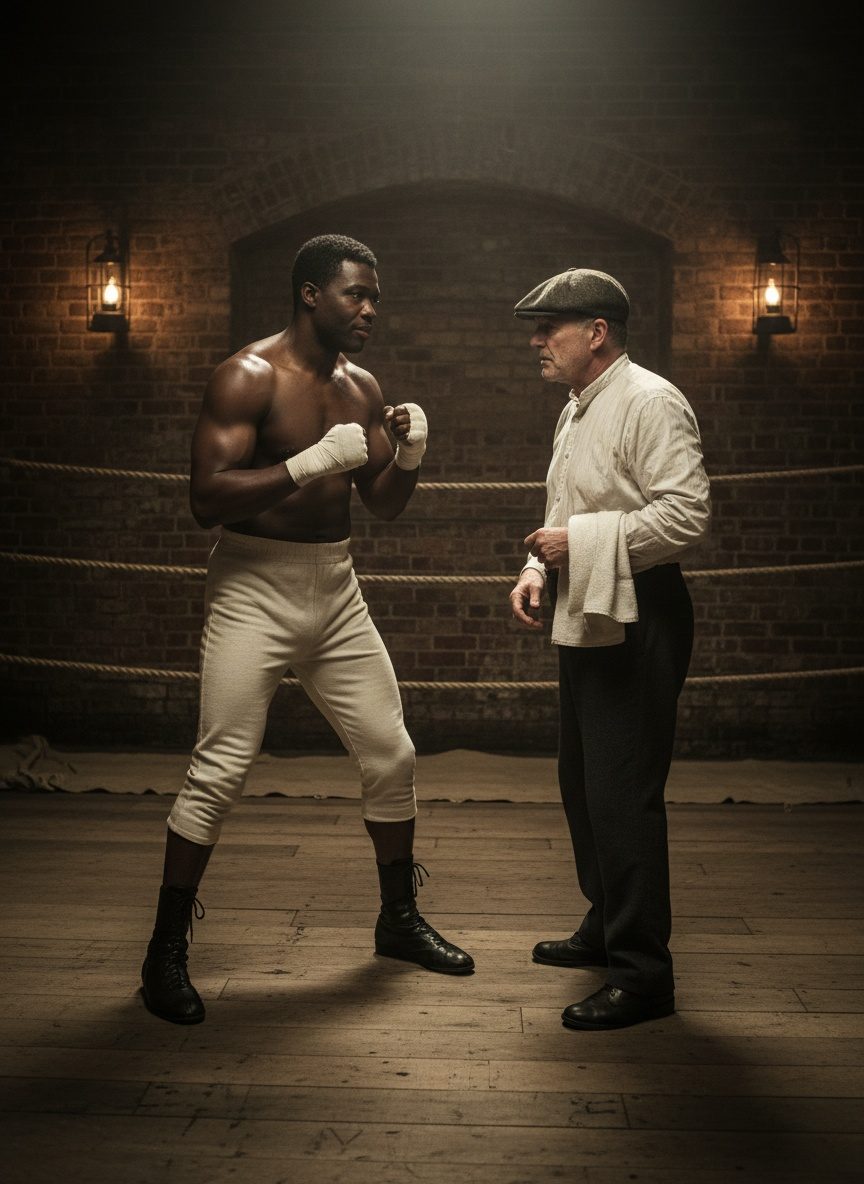
The tension in the room was palpable as Peter Jackson, the powerful and graceful boxer, dodged yet another blow with an artful sidestep. The atmosphere crackled with the shouts of spectators, each punch echoing like thunder in the packed arena. This was the arena that had become Jackson's second home, a place where he repeatedly etched his legend with each swing of his fists. Yet outside this ring of commotion, his name was one whispered with potential, one fraught with frustration as the pinnacle of boxing glory eluded him, not for lack of skill, but because of the color of his skin.
The Titan and the Shadow
Peter Jackson was an enigmatic force in the boxing world of the late 19th century, known for an unparalleled combination of skill, strength, and strategy that left opponents reeling and audiences enthralled. He was a titan, standing shoulder to shoulder with the finest boxers of his era, yet he remained in the shadow — the shadow of racial prejudice that stained the era’s sporting world. The heavyweight champion John L. Sullivan, known as the "Boston Strong Boy," was the reigning titleholder who ruled the roost with bravado and not a small measure of racial exclusion.
Sullivan’s refusal to face Jackson was not due to ignorance of the latter's capabilities. Despite Jackson's formidable victories and reputation as one of the greatest, Sullivan remained steadfast in his refusal to step into the ring with a Black man. This racist stance was emblematic of the era’s widespread segregation, a barrier that prevented Jackson from holding the title many believed him to deserve, a title he could have claimed had he been white.
A Journey Paved with Victories and Injustice
Born in the Caribbean, Peter Jackson's journey to the boxing apex was marked by victories that should have soundly justified a chance at the world title. His fights, a blend of raw power and agility, were a spectacle that lured audiences from all over. Jackson roamed the globe, fighting wherever he could, gathering fans, and adding scalps to his belt. Yet, the recognition he craved most remained tantalizingly out of reach.
Conquering the Australian boxing circuits, Jackson became a symbol of excellence, his prowess recognized around the world — except by those who could give him the championship bout. He nearly boiled over with frustration when repeated challenges to Sullivan were met with silence or refusal. Instead, Jackson fought others who dared, amassing a remarkable record that to this day remains a testament to his outstanding talent. He was a sporting nomad, relentless in his pursuit for the title bout destiny seemed disinclined to deliver.
Fighting Beyond the Ring
There were glimmers of recognition and admiration from those who saw in Jackson a fighter who transcended more than just the sport of boxing. His life was a blend of resilience and reputation, one where the personal battles were as demanding as the professional ones. Beyond the pugilistic pursuits lay the story of a man who exhibited dignity and strength off the canvas, setting a standard for athletes who would later face similar racial barriers.
Jackson’s dedication to his craft did not go unnoticed by all. He became a hero of sorts, inspiring those marginalized by society, and his story foreshadowed a larger movement of athletes fighting against the manacles of racial discrimination. For every punch thrown in the ring, there was another dealt to the societal norms that sought to bind him. Jackson became more than a boxer; he was a catalyst for change, a symbol of the fight against racial injustice.
The Legacy Unseen, but Profound
Although Jackson never clinched the official heavyweight title for which he hungered, his influence is profound, his legacy enduring. His story is a reminder of the heroes who exist on the fringes of history, overlooked not because of their lack of achievement or greatness, but because of the systemic racism that tainted the past. Today's discussion of race in sports, the efforts to level the playing field, and the achievements of Black athletes owe a debt to pioneers like Peter Jackson.
In recounting Jackson's tale, we uncover the truths of exclusion and excellence, of an athlete who fought not just opponents in the ring, but the very fabric of a society blackened by prejudice. His life's journey urges us to look deeper at the stories left untold, at the legacies denied only to rise above what history had intended. For it is in the shadows that we often find the brightest stars, and Peter Jackson was a star of the highest order, only briefly eclipsed by the ignorance of his times.