The air was thick with anticipation as Alberto Ruz Lhuillier directed his team to hoist the final slab of limestone. The darkness of the ancient chamber enveloped them, broken only by flickers of flashlight beams bouncing off the stone walls. A thousand-year mystery lay beneath their feet, sealed long ago beneath the Temple of the Inscriptions, hidden since the time of the great Maya ruler, Pacal the Great. As the dust began to settle from their last efforts, history was waiting to be uncovered.
The Pyramid That Housed a Secret
In the once-vibrant Maya city of Palenque, nestled in the heart of Mexico, an architectural marvel stood tall—the Temple of the Inscriptions. Beneath its imposing pyramid structure, a secret lay entombed for centuries, unrecognized by those who admired the tiered steps above. This was not just a place for rituals or a testament of the Maya’s astronomical prowess; it was a mausoleum—a king’s final resting place devised to protect Pacal the Great from looters and time itself.
The very presence of a massive tomb beneath a city’s most prominent temple was unheard of before 1952, making its discovery a revelation. Pacal, who ruled from 615 to 683 AD, was known for his ambitious constructions and the prosperity he brought his people. Yet, for generations after his death, his actual resting place was swallowed by the jungle, forgotten by history save for whispers and local legend.
Alberto Ruz Lhuillier's Unyielding Quest
Alberto Ruz Lhuillier, a determined archaeologist, refused to let Pacal's story fade into the annals of history. Born with a fervent curiosity about ancient civilizations, Ruz found his calling amidst the ruins of Mexico. In 1949, his explorations led him to the Temple of the Inscriptions, intrigued by its architecture and the secrets it might conceal.
Three years of painstaking research and excavation followed. Ruz dug beneath the temple, driven by a hunch and a relentless pursuit of knowledge. Finally, in 1952, his persistence paid off. His team stumbled upon a hidden staircase—an entrance never meant to be found. Descending hundreds of steps into the earth was like traveling back in time, his heart pounding with each step taken closer to what might be a historic breakthrough.
The Unveiling of a Forgotten King
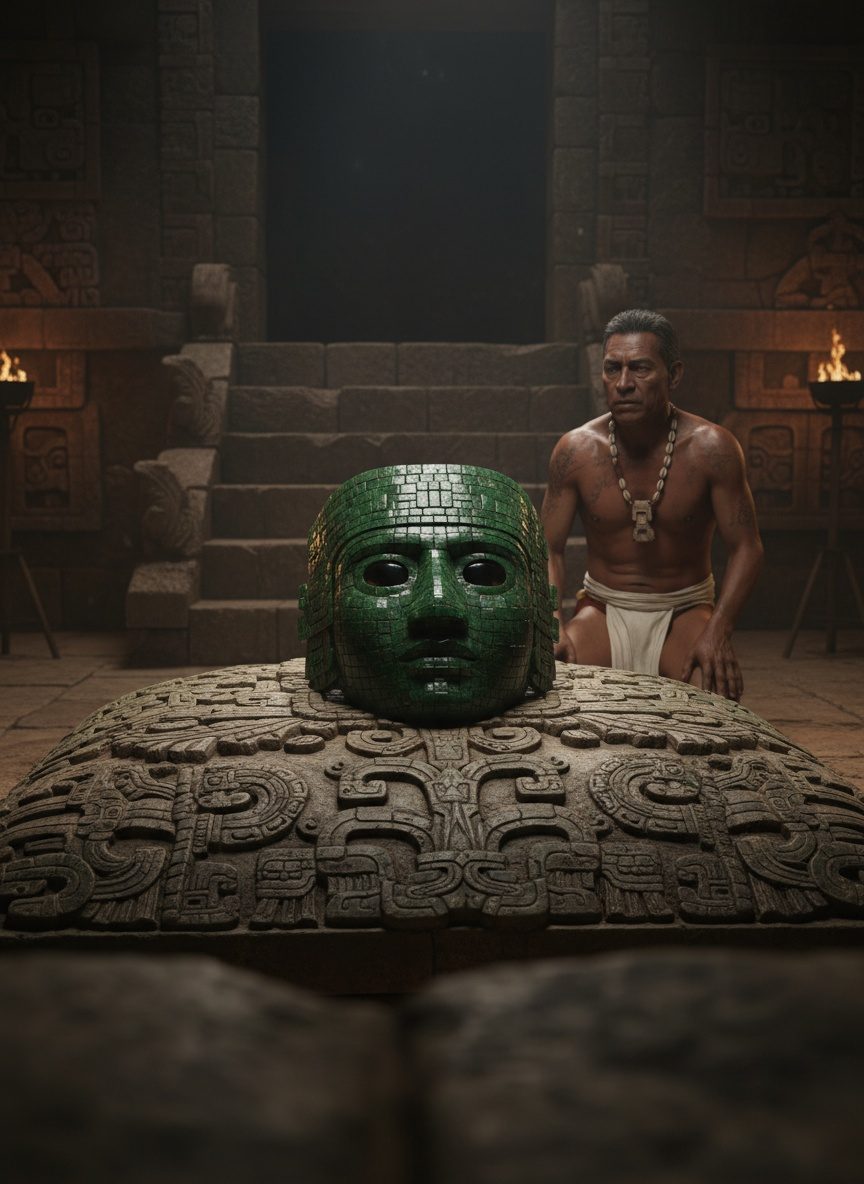
Nearly twelve centuries after the last seal was laid, Ruz and his team entered the burial chamber. The center was dominated by an enormous stone sarcophagus, its lid adorned with intricate artistry depicting Pacal’s journey to the afterlife. Even more astonishing, the spirit of Pacal lived on in the forms of jade jewelry and carvings that surrounded his perfectly preserved remains.
Ruz’s discovery was more than just a tomb; it was a portal to understanding the complexities of Maya civilization. The hieroglyphs covering the sarcophagus and the chamber walls revealed insights about their beliefs, traditions, and the pivotal role played by rulers like Pacal in shaping their world. The pyramid itself was a kind of sunken monument to Maya cosmology, reflecting in stone the empire’s brilliance.
What We Learned From the Past
As word of the discovery spread, scholars were forced to reassess their understanding of the Maya. Here was definitive proof that these ancient people had sophisticated funerary practices and a penchant for memorializing their dead in spectacular ways. The socio-political implications of Pacal’s life and death became the subject of rigorous study, as researchers sought to piece together the life of the man whose voice was etched into stone.
His reign, now illuminated, was recognized for its architectural achievements and the relative stability it brought to Palenque. Pacal’s posthumous reputation soared, transforming from a half-remembered name into a symbol of Maya ingenuity and resilience. The artifacts and inscriptions from his tomb have since offered invaluable clues about Maya society, transcending his individual legacy to illuminate a powerful civilization.
A Story Worth Telling
The unveiling of Pacal’s tomb remains a resonant tale of discovery and a reminder of the vast tapestries of history still hidden beneath the earth. As Ruz Lhuillier’s journey illustrates, the past is not merely a series of textbook dates and lost cultures; it is a living narrative waiting to be explored by those willing to seek it. The Temple of the Inscriptions and the tomb of Pacal the Great are testament to humanity’s unending quest to connect with its roots, bridging the gaps between long-buried civilizations and the bustling world of today. In the shadows of Palenque’s jungle, where stone meets story and time shields its secrets, we’re reminded of the enduring nature of the human spirit's quest for history and meaning.