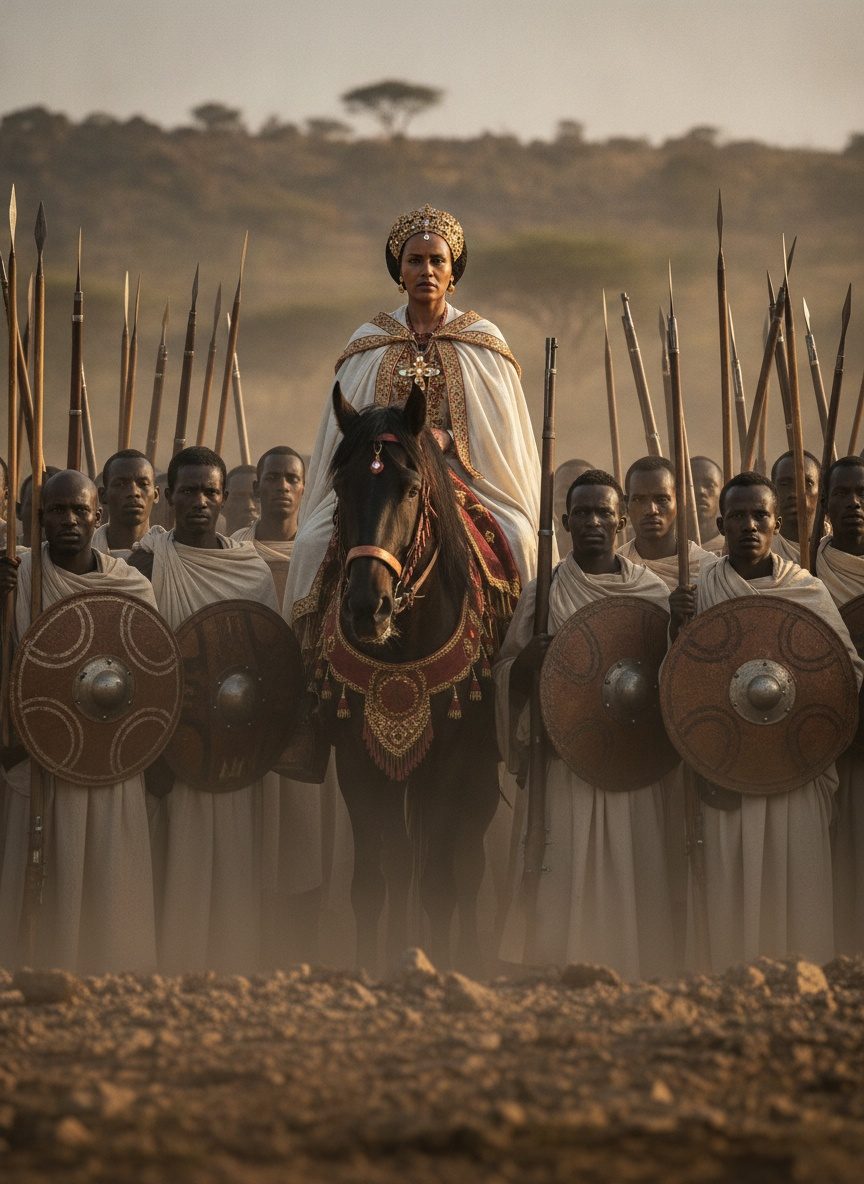
The Governor of Angola thought he had the upper hand. Nzinga Mbande proved him very wrong.
A Trap in Luanda
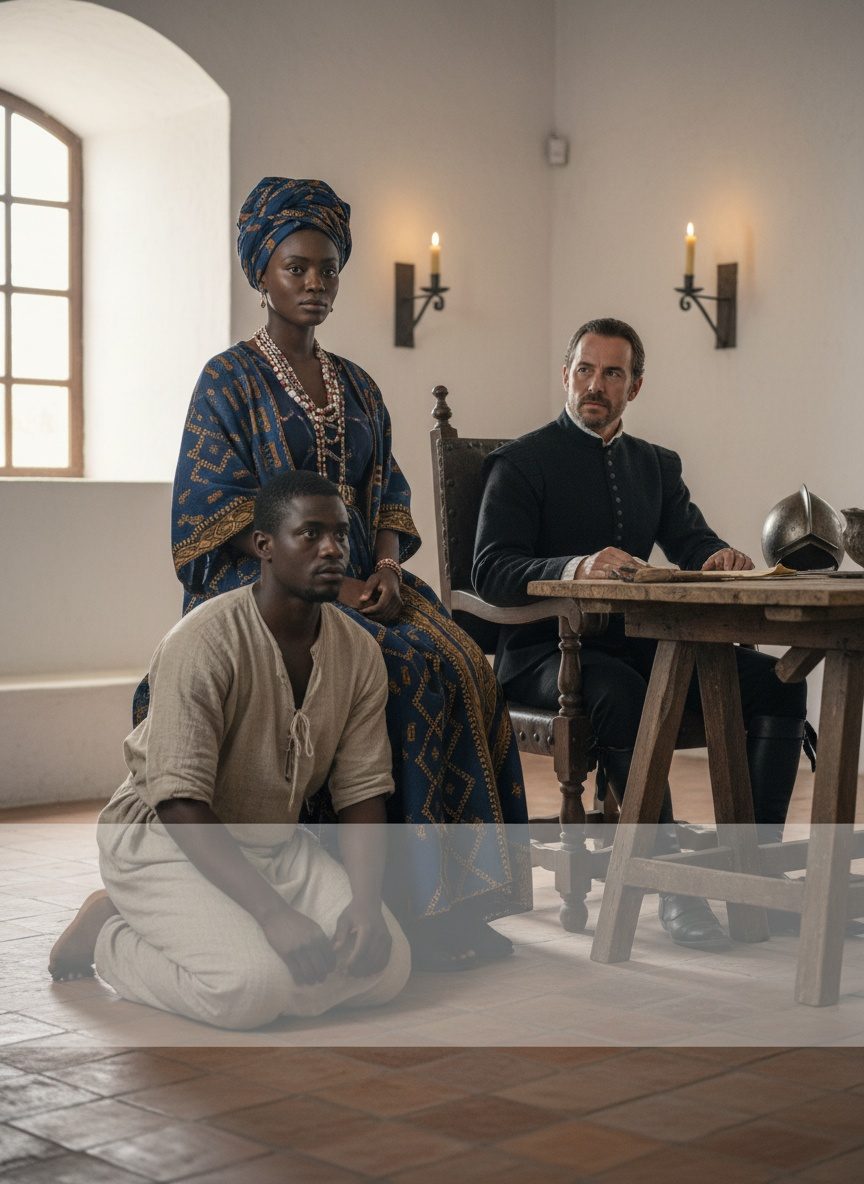
In 1622, a meeting was arranged in the bustling city of Luanda between Governor João Correia de Sousa and an envoy from the Kingdom of Ndongo, led by Nzinga Mbande. The Portuguese, eager to tighten their grip on the lucrative slave trade and expand their colonial territories, prepared a setting that bespoke both condescension and craftiness. When Nzinga arrived, she was met with an intended slight — a mat laid out on the floor for her to sit, while the governor sat in a grand chair, looking down at her. This was no mere detail; it was a calculated move to establish dominance before negotiations even began.
Nzinga, however, was not easily intimidated nor was she unfamiliar with the intricacies of political theater. She knew this was more than a meeting; it was a performance, and one she intended to rewrite in real-time. As her eyes scanned the room, she refused to be lured into starting these critical discussions from a symbolic position of submission. She turned to one of her attendants and, without missing a beat, transformed his back into her own throne. With her height now matching the governor’s, the power dynamic in the room shifted abruptly, leaving a palpable tension in the air.
This audacious act was not solely a rebuttal of the governor’s dismissal; it was a declaration. Nzinga demanded respect and equality through a remarkable display of wit and authority. Her presence, as she sat regally atop her human seat, could not be ignored. The language of the meeting, once favoring the Portuguese, found itself struggling as the governor now looked at an unwavering Nzinga at eye level. The trap had indeed been set, but it was Nzinga who had spun it into an opportunity, forcing the Portuguese to regard her not just as a negotiator, but as an equal.
The Politics of Power and Perception
Nzinga Mbande's adeptness at navigating political landscapes can be traced to her distinct upbringing. Born into the royal family of the Ndongo people, she was more than a princess. Her education extended beyond royal decorum and into the realms of politics and war, instilled by her father, King Kiluanji Kia Samba. The diplomatic skills she honed in her youth were sharpened as she maneuvered through the dangerous waters of succession after her father’s death. These skills quickly could prove life-saving in the complex web of alliances and enmities that crisscrossed Central Africa and its European invaders.
This moment in Luanda wasn’t an isolated instance of Nzinga’s boldness. It was emblematic of her strategic brilliance and understanding of perception in power plays. Her calculated actions at the meeting played into the broader socio-political game, a series of moves that would define her rule. She understood that her strength lay in the narrative she could construct and the image she projected: one of fearlessness and parity amidst a heavily gender-biased world.
The negotiations in 1622 were vital. Angola was a crucial hub for the transatlantic slave trade, and Nzinga was acutely aware of the stakes. By matching de Sousa’s gaze directly, she not only countered their initial dominance but took control of the dialogue that followed. The balance Nzinga managed to maintain was a delicate one, deftly weaving through conciliatory gestures and staunch demands, always ensuring that no statement diminished the sovereignty of her people.
Nzinga’s Enduring Influence
In the years following the iconic stand-off in Luanda, Nzinga Mbande’s legacy grew. After her brother’s death, she ascended to the throne, becoming the ruler of the Ndongo and later the Matamba Kingdom. Known not just for her tactical genius but also for her diplomatic flair, Nzinga maintained alliances while fending off Portuguese advances for decades. Her reign saw the adoption of new policies and the reinforcement of her kingdom’s economically strategic and militarily strong status.
Nzinga embraced numerous cultural techniques, understanding well that survival meant adaptation as much as resistance. She even used religion to her advantage; she converted to Christianity, taking on the name Dona Anna de Souza, in her efforts to forge European alliances and portray her kinship with European rulers while never losing sight of her traditional roots, and striking a finely tuned balance that confused her adversaries and galvinised her supporters.
The episode of the makeshift throne in Luanda stands as an indelible testament to Nzinga’s indomitable spirit and intellectual prowess. She was a leader who broke the mold, challenging European assumptions about gender and authority long before such conversations found their way into mainstream discourse. As these colonial powers mapped out plans in foreign lands, Nzinga re-mapped their expectations, one bold move at a time.
Her story, often overshadowed by European narratives, is a powerful reminder of resilience and ingenuity. It underscores a timeless lesson: true leadership is not merely a function of position but a result of courage, cleverness, and the ability to transform even the gravest challenges into opportunities for change. In a world still grappling with its colonial past, Nzinga’s legacy resonates as a beacon of what it means to stand one's ground — in any century.