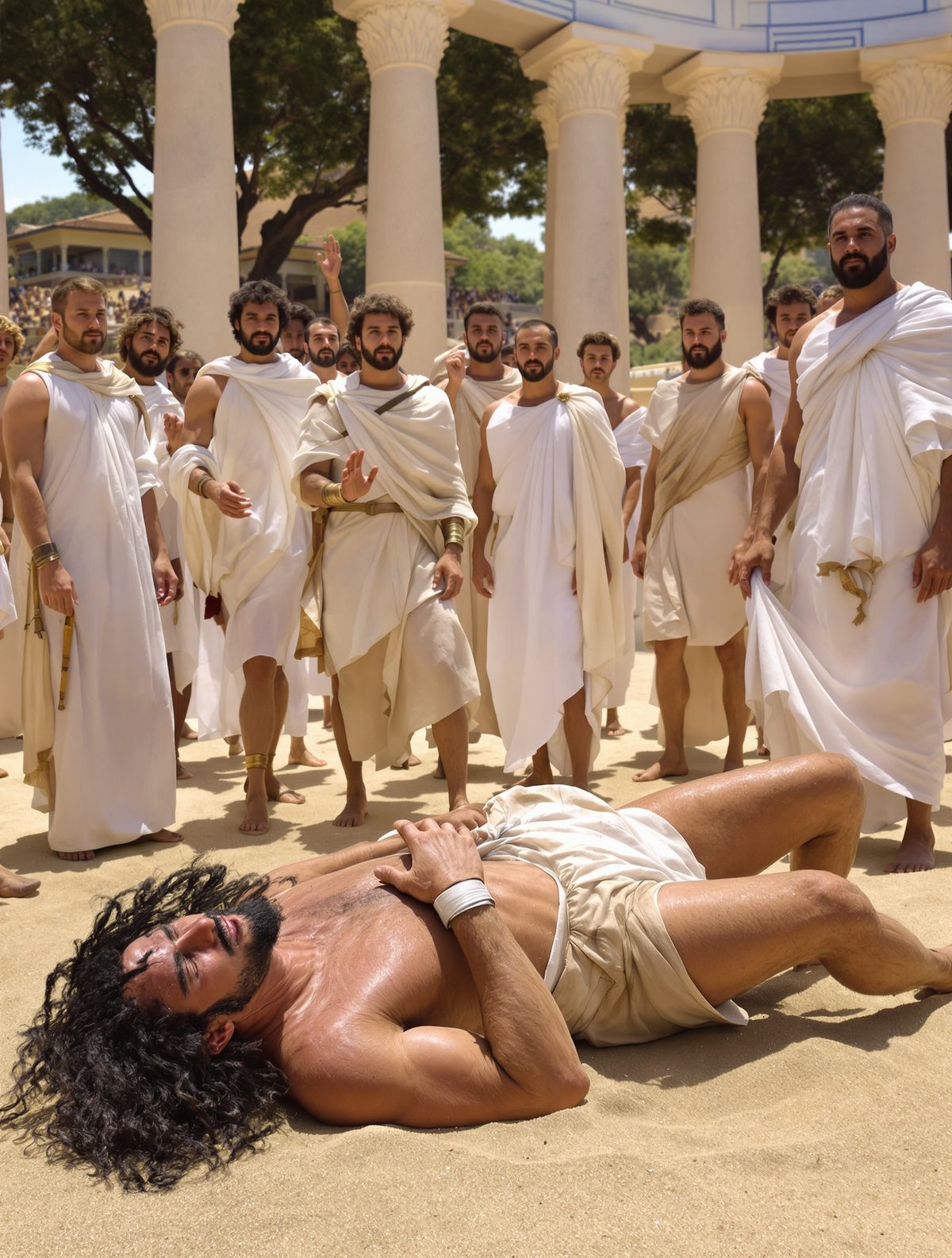
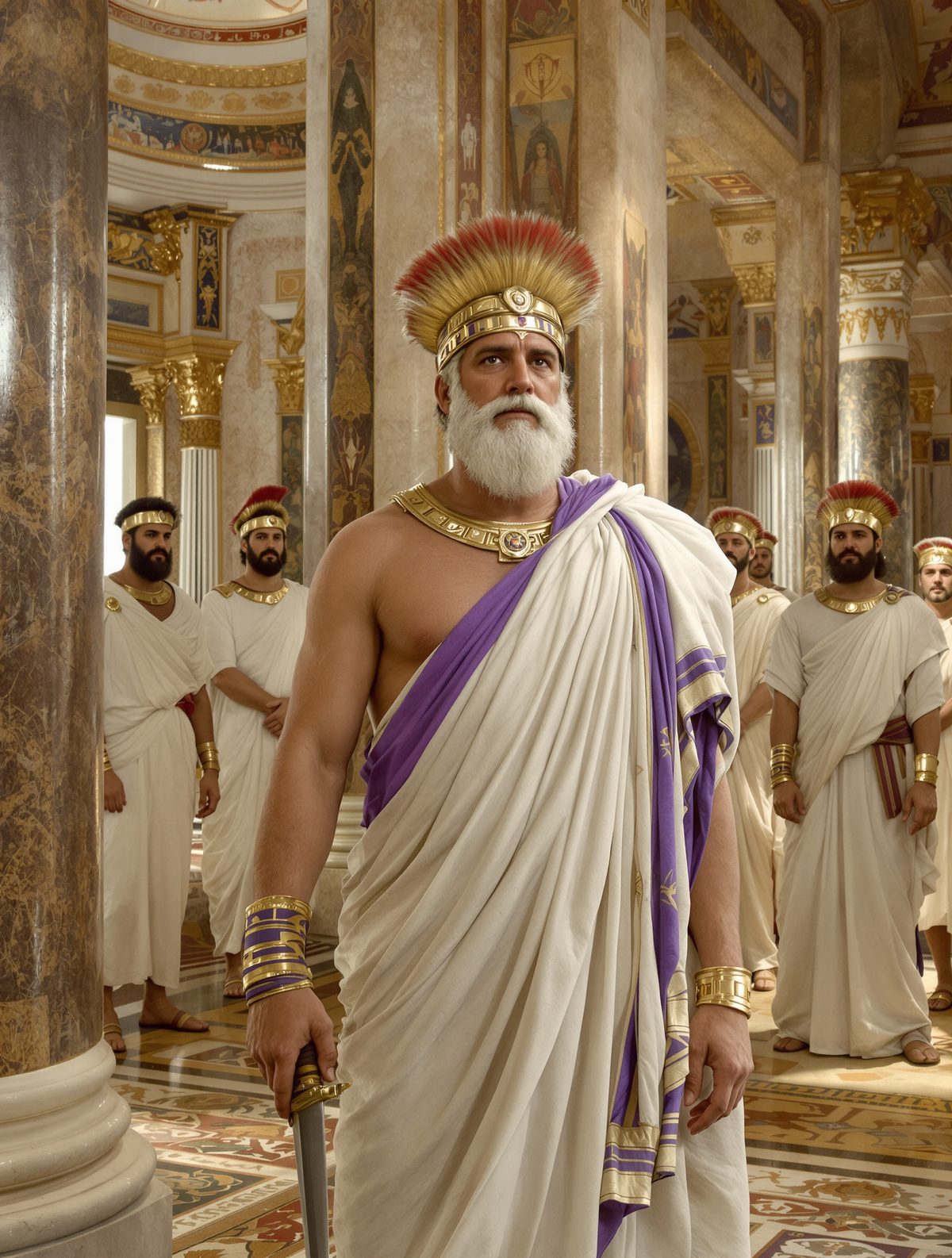
Picture this: while European kings were still throwing waste from castle windows and settling disputes with swords, a philosopher-ruler in 15th-century Mexico was composing legal codes in verse, engineering floating gardens that defied gravity, and defeating entire armies without drawing a single blade. His name was Nezahualcóyotl, and in 1430 AD, he transformed the city of Texcoco into something that would make modern urban planners weep with envy—a metropolis where justice flowed like poetry, where gardens cascaded down mountainsides like green waterfalls, and where the very architecture embodied the harmony between human civilization and the natural world.
This is the story they never taught you in school: how one man's vision created what may have been the most beautiful and intellectually advanced city in the pre-Columbian Americas, all while the Renaissance was just beginning to stir in distant Europe.
The Making of a Philosopher-King
Nezahualcóyotl's path to greatness began with tragedy. Born around 1402, he was just a teenager when his father, King Ixtlilxóchitl of Texcoco, was murdered by the tyrant Tezozómoc of Azcapotzalco in 1418. The young prince spent the next decade in exile, dodging assassins and building alliances while watching his beloved city suffer under brutal occupation.
But here's where the story takes an unexpected turn: instead of becoming hardened by loss, Nezahualcóyotl used his years in the wilderness to study. He learned from priests, poets, engineers, and astronomers across Mesoamerica. By the time he reclaimed his throne in 1431 at age 29, he wasn't just a king—he was a walking university.
The young ruler immediately set about transforming Texcoco from a war-torn city into something unprecedented. Unlike other Mesoamerican rulers who measured success in conquered territories and captive hearts, Nezahualcóyotl had a different vision: a city that would be remembered not for its military might, but for its beauty, wisdom, and innovation.
When Laws Became Poetry
Most rulers of the era governed through fear and arbitrary decree. Nezahualcóyotl took a revolutionary approach: he codified his laws in verse, creating a legal system that was both practical and beautiful. His legal code consisted of 80 laws covering everything from property rights to environmental protection—and every single one was written as poetry.
Consider this stunning fact: while medieval Europe was still operating under the chaotic patchwork of feudal customs, Nezahualcóyotl created the Americas' first systematic legal code that applied equally to nobles and commoners. Death sentences required review by the king himself, judges faced severe penalties for corruption, and—perhaps most remarkably—many environmental crimes carried the death penalty. Cutting down a tree without permission? That could cost you your life in Texcoco.
But here's the detail that makes historians' jaws drop: Nezahualcóyotl established courts of justice in neighboring cities and staffed them with judges who had to memorize not just the laws, but the exact poetic meter in which they were written. Imagine a legal system where jurisprudence and literature were inseparable, where every court case was decided by scholar-poets who understood that justice, like poetry, required both precision and beauty.
The Garden City That Defied Gravity
If Nezahualcóyotl's legal innovations were impressive, his architectural achievements were nothing short of miraculous. The king designed Texcoco as a living poem written in stone, water, and vegetation. The centerpiece was an extraordinary system of terraced gardens that climbed the hillsides around Lake Texcoco, creating the visual effect of green waterfalls flowing upward toward the sky.
These weren't just pretty gardens—they were marvels of engineering that would challenge modern landscape architects. Nezahualcóyotl's engineers carved an intricate network of canals, aqueducts, and irrigation channels directly into the mountainside. Water flowed through hundreds of precisely calculated channels, creating microclimates that allowed tropical plants to flourish alongside temperate species at different elevations.
The numbers are staggering: the main garden complex covered over 1,000 acres and included more than 2,000 species of plants from across Mesoamerica and beyond. Nezahualcóyotl sent botanical expeditions as far as Guatemala and northern Mexico, creating what was essentially the world's first international botanical research center. European visitors centuries later would compare it favorably to the Hanging Gardens of Babylon.
But here's the detail that reveals Nezahualcóyotl's genius: he designed the gardens not just for beauty, but as a massive urban planning project. The terraced system prevented erosion, managed rainwater runoff, provided food for the city's 100,000+ inhabitants, and created natural air conditioning that moderated Texcoco's climate year-round.
The Engineer Who Fought Wars with Water
Perhaps the most extraordinary chapter of Nezahualcóyotl's reign came when enemies approached his borders. While other rulers marshaled armies, the poet-king reached for his engineering tools.
In 1449, when a coalition of hostile city-states threatened Texcoco, Nezahualcóyotl unveiled a defense strategy that must have seemed like magic to his contemporaries. He had spent years secretly engineering a massive hydraulic system that could redirect entire rivers and lakes. When enemy armies approached, Nezahualcóyotl simply opened certain floodgates and closed others.
The result? Enemy forces found themselves trapped on islands as water rose around them, or struggling through sudden marshlands where solid ground had been the day before. Some enemy contingents literally watched their planned invasion routes disappear underwater while they slept. It was warfare by geography—Nezahualcóyotl was rewriting the very landscape to defend his people.
The most spectacular example came during the siege of 1450, when Nezahualcóyotl defeated an army of 30,000 warriors without losing a single life on either side. He simply redirected water flow to create temporary islands where enemy forces became stranded, then sent negotiators instead of soldiers. Faced with this display of seemingly supernatural power over nature itself, the invading army surrendered and agreed to become allies.
The Philosopher's Temple
Perhaps the most telling insight into Nezahualcóyotl's character comes from the temple he built for himself. In an era when Mesoamerican rulers constructed massive pyramids dedicated to gods of war and sacrifice, Nezahualcóyotl built something unprecedented: a temple to "the Unknown God, Creator of All Things."
This nine-story tower contained no idols, no altars for sacrifice, no priestly chambers. Instead, it was designed as a meditation space where Nezahualcóyotl would go to compose poetry and contemplate the mysteries of existence. The king, who wrote more than 60 surviving poems, saw no contradiction between ruling an empire and pursuing philosophical enlightenment.
One of his most famous poems captures this perfectly: "I love the song of the mockingbird, bird of four hundred voices. I love the color of jade and the enervating perfume of flowers, but more than all I love my brother, man." This wasn't just pretty poetry—it was a revolutionary statement of humanistic values in a world dominated by divine kingship and religious orthodoxy.
A Legacy Written in Water and Words
Nezahualcóyotl ruled for 40 years until his death in 1472, transforming not just Texcoco but the entire concept of what a civilization could be. His influence spread throughout Mesoamerica, inspiring other rulers to invest in infrastructure, education, and the arts rather than endless military campaigns.
When Spanish conquistadors arrived decades later, they found Texcoco still flourishing under Nezahualcóyotl's successors. Hernán Cortés himself wrote to the Spanish crown that Texcoco was more beautiful than any city in Europe. The conquistador Bernal Díaz del Castillo described the gardens as "like something from an enchanted dream."
Today, as we grapple with climate change, urban sustainability, and the relationship between technology and nature, Nezahualcóyotl's vision feels remarkably contemporary. He proved that a ruler could prioritize environmental protection without sacrificing economic growth, that cities could be designed in harmony with natural systems rather than opposition to them, and that the highest achievements of civilization come not from conquest, but from the marriage of human creativity with respect for the natural world.
In our age of concrete and carbon, perhaps it's time to remember the poet-king who defeated enemies with engineering, governed with verses, and built a city where justice and beauty were inseparable. Nezahualcóyotl didn't just rule a kingdom—he imagined a better way for humans to live on Earth, then built it with his own hands.