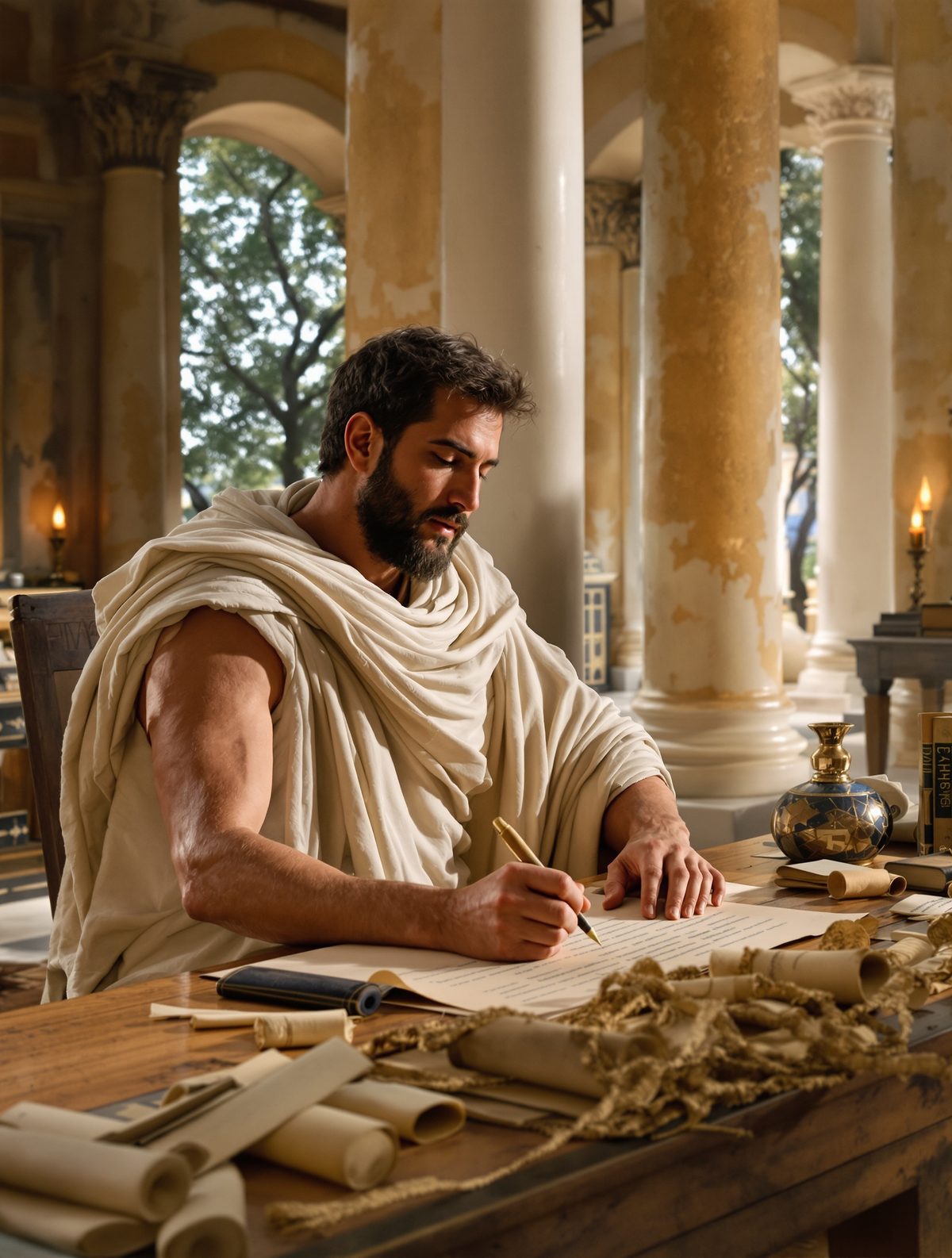
Picture this: it's 67 AD, and the most powerful man in the world is lying face-down in the dirt of the Olympic hippodrome, his chariot wheels spinning uselessly in the air above him. Dust settles on his purple robes as 40,000 spectators watch in stunned silence. Emperor Nero Claudius Caesar Augustus Germanicus—ruler of 50 million people across three continents—has just spectacularly crashed out of the chariot race without even completing a single lap.
What happens next defies belief. The Olympic judges, their faces pale with terror, step forward and declare the fallen emperor the winner. Not just of the chariot race he never finished, but of every single event he entered that day. Welcome to the most corrupt Olympics in history—where gold medals were bought not with talent, but with the promise of keeping your head attached to your shoulders.
When Gods Walked Among Mortals
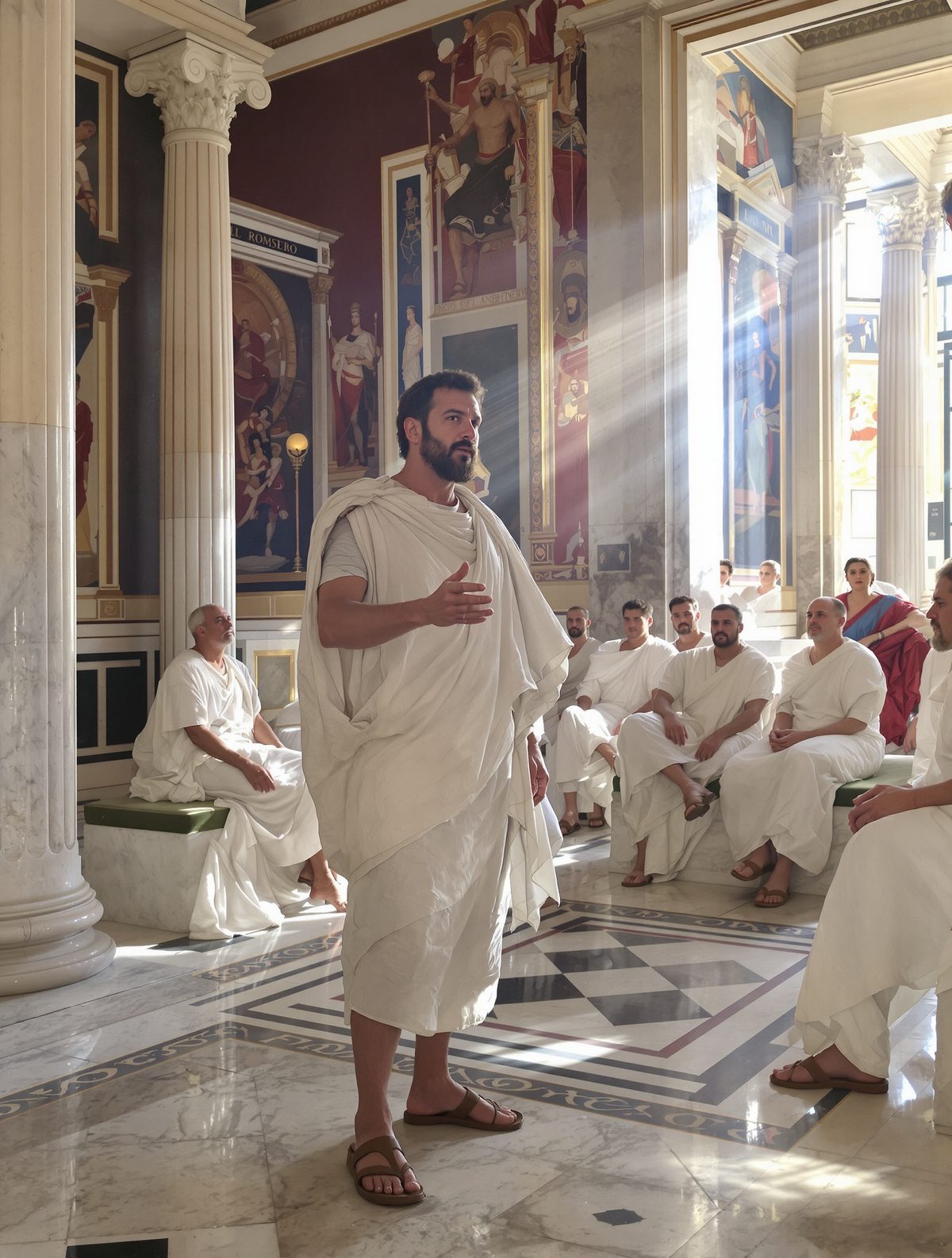
To understand the sheer audacity of Nero's Olympic adventure, you need to grasp just how sacred these games were to the ancient Greeks. For over 600 years, the Olympics at Olympia had been held every four years without fail. Wars stopped. Truces were called. The entire Greek world paused to honor Zeus and celebrate human athletic perfection.
These weren't just any sporting event—they were a religious festival where only the finest athletes could compete, and only freeborn Greek men could even spectate. Cheating was punishable by massive fines, public humiliation, and bronze statues erected to shame cheaters for eternity. The games were so sacred that when the Romans conquered Greece, they largely left the Olympics untouched, understanding that some things were too holy to meddle with.
Then Nero showed up.
By 67 AD, the 30-year-old emperor had already earned a reputation for excess that made other Roman rulers look restrained. He'd murdered his own mother, Agrippina, in 59 AD by having her ship sabotaged. When she survived the wreck and swam to shore, he sent assassins to finish the job. He'd kicked his pregnant wife Poppaea to death in a fit of rage. He'd performed on stage as an actor and singer—occupations so beneath imperial dignity that senators wept openly in the theater.
But Nero had bigger dreams than just scandalizing Rome. He wanted to be remembered as the greatest artist, athlete, and performer who ever lived. And what better stage than the Olympics themselves?
Rigging the Sacred Games
Nero's Olympic ambitions created an immediate problem: the games were scheduled for 65 AD, but the emperor wasn't ready. His solution was breathtakingly arrogant—he simply ordered the Olympics postponed by two years to accommodate his schedule. Imagine if a modern leader delayed the Olympics because they felt like competing and needed more training time. The Greeks were horrified, but they complied. What choice did they have?
When Nero finally arrived in Olympia in 67 AD, he came with an entourage that would make a modern celebrity look modest. He brought 5,000 Praetorian Guards, hundreds of servants, court musicians, actors, and an entire traveling theater. He commissioned special luxury accommodations and demanded that Greek officials treat him not just as an emperor, but as a living god worthy of Olympic victory.
The emperor entered himself in multiple events, but he had his eyes on the crown jewel: the chariot race. Chariot racing was the Formula One of the ancient world—dangerous, expensive, and prestigious. Champions became legends whose names echoed through history. Nero wanted that immortality, but he wanted it without the inconvenience of actually having to earn it.
Before the race even began, Nero's team engaged in some creative rule interpretation. Standard Olympic chariot races used two-horse teams, but Nero insisted on racing with ten horses—giving himself an enormous advantage in power and speed. When officials protested, Nero's representatives made it clear that disappointing the emperor was a career-limiting move. The rules were quietly amended.
The Most Expensive Crash in History
On race day, 40,000 spectators packed the hippodrome at Olympia—the largest crowd in Olympic history. Word had spread across the Greek world that the emperor himself would compete, and people traveled hundreds of miles to witness this unprecedented spectacle. The atmosphere was electric with anticipation and underlying dread.
As the chariots lined up at the starting line, Nero cut an impressive figure in his purple racing outfit, his ten magnificent horses pawing the ground. The other competitors—experienced charioteers who had trained their entire lives for this moment—must have felt the surreal absurdity of racing against the most powerful man on earth in a rigged competition.
The race began with a thunderous roar of hooves and wheels. Nero's ten-horse team shot forward with tremendous speed, just as planned. For a brief, shining moment, it looked like the emperor's audacious gamble might actually work through sheer overwhelming force.
Then physics intervened.
Managing a ten-horse chariot requires extraordinary skill, strength, and experience—qualities that Nero, for all his imperial confidence, simply didn't possess. As the chariots rounded the first turn, Nero's unwieldy team became impossible to control. The chariot lurched sideways, hit the turning post, and launched the emperor through the air like a purple-clad projectile.
Nero hit the ground hard and lay motionless as his riderless horses stampeded past. The crowd fell into shocked silence. For several terrifying moments, it looked like the Emperor of Rome might have just killed himself in front of 40,000 witnesses at the most sacred sporting event in the Greek world.
When Truth Becomes Treason
As Nero's servants rushed to help their dazed emperor to his feet, the Olympic judges faced an impossible situation. The most powerful man in the world had just publicly humiliated himself in spectacular fashion. He'd never completed a single lap, let alone won the race. But he was also a man who had murdered family members for far lesser slights.
The judges understood their predicament perfectly: tell the truth and risk execution, or lie and corrupt the most sacred competition in the ancient world. It wasn't really a choice at all.
When the actual race winner—some anonymous charioteer whose name history has forgotten—crossed the finish line, the judges barely acknowledged him. Instead, they declared that Nero had won through his "superior courage and divine favor." The emperor, still covered in dust and probably nursing a concussion, was crowned Olympic champion to thunderous applause from a crowd that knew exactly what was expected of them.
But Nero wasn't finished. Over the course of the games, he entered 1,808 different events—a staggering number that included singing competitions, acting contests, and athletic events he invented on the spot. In a display of sportsmanship that would make a participation trophy seem rigorous, Nero won every single competition he entered. Even events where he forgot to show up were retroactively awarded to him.
The emperor was so pleased with his Olympic performance that he extended his stay in Greece for months, touring other athletic festivals and collecting over 1,800 crowns total. He returned to Rome in 68 AD for a triumph that celebrated his "athletic victories"—parading through the streets in the same chariot that had launched him into Olympic infamy.
The Price of Imperial Ego
Nero's Olympic farce had consequences that rippled far beyond the hippodrome at Olympia. His extended absence in Greece while pursuing athletic glory left the Roman Empire rudderless during a period of growing instability. Rebellions erupted in Gaul and Spain. The Praetorian Guard grew restless. Senators who had endured years of Nero's excesses began to whisper about alternatives.
Within a year of his Olympic "triumphs," Nero was dead—driven to suicide in 68 AD as his empire collapsed around him. His last words, according to the historian Suetonius, were "What an artist perishes in me!" Even facing death, Nero remained obsessed with his imagined talents rather than his very real failures as a leader.
The Olympic officials, meanwhile, faced a crisis of legitimacy that threatened the games' sacred status. How could future competitions maintain their integrity after such obvious corruption? Their solution was as drastic as it was unprecedented—they struck Nero's name from all Olympic records, refunded his bribes to the temple of Zeus, and declared the 67 AD Olympics to have never officially happened.
It was the ancient equivalent of erasing someone from history, and it worked. For centuries afterward, Olympic records simply skipped from 65 AD to 69 AD, as if those corrupted games had been a collective fever dream.
Why This Ancient Scandal Still Matters
Nero's Olympic debacle offers a timeless lesson about the corruption that occurs when power becomes more important than truth. In our era of "alternative facts" and leaders who demand personal loyalty over institutional integrity, the image of terrified judges crowning a failed emperor resonates with uncomfortable familiarity.
The story also reveals something profound about the nature of competition and achievement. The Olympics were sacred to the ancient Greeks precisely because they represented merit triumphing over status, talent defeating privilege. When Nero corrupted that ideal, he didn't just cheat in a sporting event—he attacked the very concept that excellence should be earned rather than inherited or imposed.
Perhaps most importantly, Nero's Olympic catastrophe shows how quickly revered institutions can be corrupted when those who should protect them choose fear over principle. The judges who crowned a lying emperor weren't evil men—they were frightened officials trying to survive under an unstable autocrat. But their understandable cowardice helped enable a tyrant and corrupted something sacred.
The next time you watch athletes compete in the Olympics, remember that you're witnessing something precious and fragile—a system where victory is supposed to be earned through talent, training, and determination rather than power, politics, or fear. Nero's dusty crash in 67 AD reminds us that this ideal, however beautiful, requires constant vigilance to preserve.
After all, there's always another emperor waiting in the wings, convinced that the rules don't apply to him, ready to turn triumph into farce with a single, spectacular fall.