The desert wind blew gently across the sands, swirling grains around the buried face of Nefertiti. Time seemed motionless as the sculptor’s chisel slipped from his grasp and clattered to the floor, the air thick with tension and silent disbelief. Before him lay a visage untouched by the millennia — serene, enigmatic, and hauntingly alive.
The Woman Who Ruled From the Shadows
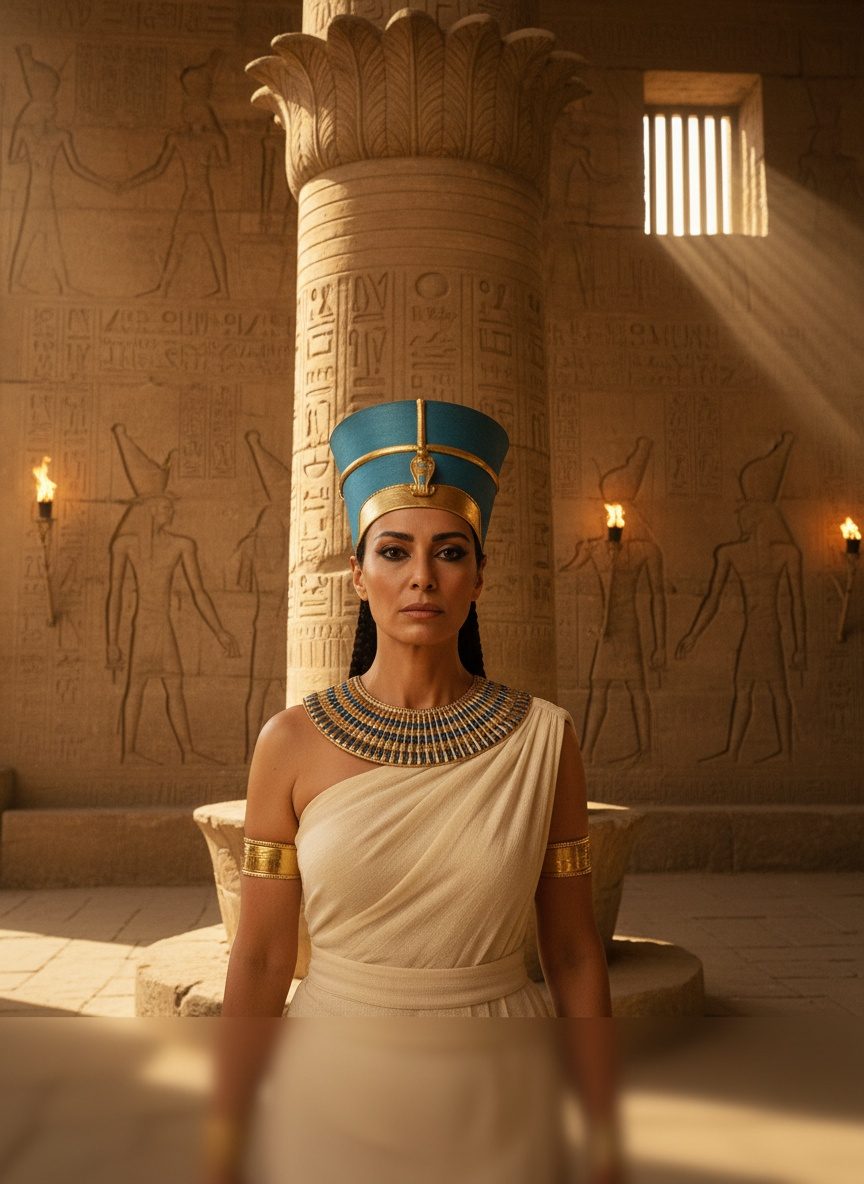
Under the blazing Egyptian sun, the land of the Pharaohs was ruled by a woman whose power resonated far beyond what any scribe dared to inscribe on papyrus. Nefertiti, the Great Royal Wife of Pharaoh Akhenaten, was not merely a consort. She was a queen who commanded influence and admiration, a fixture in both ritual and political life. Her name, which means "the beautiful one has come," heralded her significant presence in the court of the 18th Dynasty. Together, she and Akhenaten led a cultural and religious revolution, worshiping Aten, the sun disk, in a break from Egypt's millennia-old polytheistic traditions.
Nefertiti’s image adorned temples and monuments, depicting her as an equal to the Pharaoh — a role not afforded to many queens before her. Yet, around 1340 BC, Nefertiti vanished abruptly from all official records. The uncertainty of her fate sparked centuries of speculation. Was she dethroned, did she fall from grace, or did she ascend to even greater unseen power in a new guise? The sands of time closed over her legacy, burying secrets alongside her name.
The Forgotten Workshop of Thutmose
Centuries later, in the city of Amarna, archaeologists sifted through the dust and debris where once stood the bustling workshop of Thutmose, the royal sculptor. Amidst the ruins, they unearthed what was to become one of the most iconic symbols of ancient Egypt: the painted limestone bust of Nefertiti. Enthroned amidst a collection of artistic fragments, she emerged unscathed from the passage of time, her colors as vibrant as if they'd just been brushed by divine hands. Such finery hinted at Thutmose’s skill but also at the remarkable reverence held for Nefertiti, even in those forgotten corners of history.
The workshop, bustling with artisans engaged in creating the divine visages of gods and monarchs, was where this masterpiece lay hidden. The bust's undeniable allure lay in its meticulous craftsmanship — smooth, lifelike features captured in timeless serenity. The lips, parted ever so slightly, seemed poised to speak age-old secrets to anyone who dared to listen. For centuries, this elegant creation waited in silence for the world to notice once more.
The Queen Without a Tomb
The absence of Nefertiti’s tomb is a riddle that continues to intrigue historians and Egyptologists alike. In a civilization that revered eternal life, her missing sepulcher represents a glaring omission in an otherwise well-documented lineage of royal burials. Was it removed, destroyed, or hidden under layers of deception? The long-standing quest to uncover her final resting place has added layer upon layer to the mystique surrounding her life and legacy.
While some scholars believe she might have been buried clandestinely in the Valley of the Kings under a different guise or name, others suggest that her fate was to be erased by those who ousted Akhenaten’s religious reforms. The mystery truly deepens in the face of further archaeological discoveries that reveal new insights without conclusively solving the enigma.
Resurgence of a Legend
The rediscovery of Nefertiti’s bust was not merely the uncovering of exquisite art but the rebirth of her story. Her reappearance challenged previous historical narratives, demanding a reevaluation of her impact and legacy. The silent testament of her bust reshaped perceptions of female authority in ancient Egypt, demonstrating a period when a queen could stand alongside a king in shaping a dynastic future.
Nefertiti was more than a side note in Akhenaten's radical vision. Their partnership rewrote spiritual channels across Egypt, reflecting a potential dual rule — a partnership that defied the social norms of their time. Her visage, perfect and enigmatic, revitalized interest not only among those fascinated by ancient history but also in broader cultural and feminist discourses. Nefertiti transcended her era, becoming a beacon of lost memory, a monument to resilience and hidden power.
The Ageless Queen Speaks to Us
As we gaze upon Nefertiti’s eternal face — a face that has traveled unblemished through tumultuous eons of silence — we are compelled to reflect on history’s fluidity. In studying the gaps and fragments of the past, we grasp the delicate threads of stories that might have been lost forever if not for serendipitous discovery. Nefertiti's enduring allure urges us to look beyond official narratives, towards hidden truths. In the resounding silence of her gaze, we are reminded of the transient nature of power and immortality. Her story is a testament not just to what was, but to what could have been.