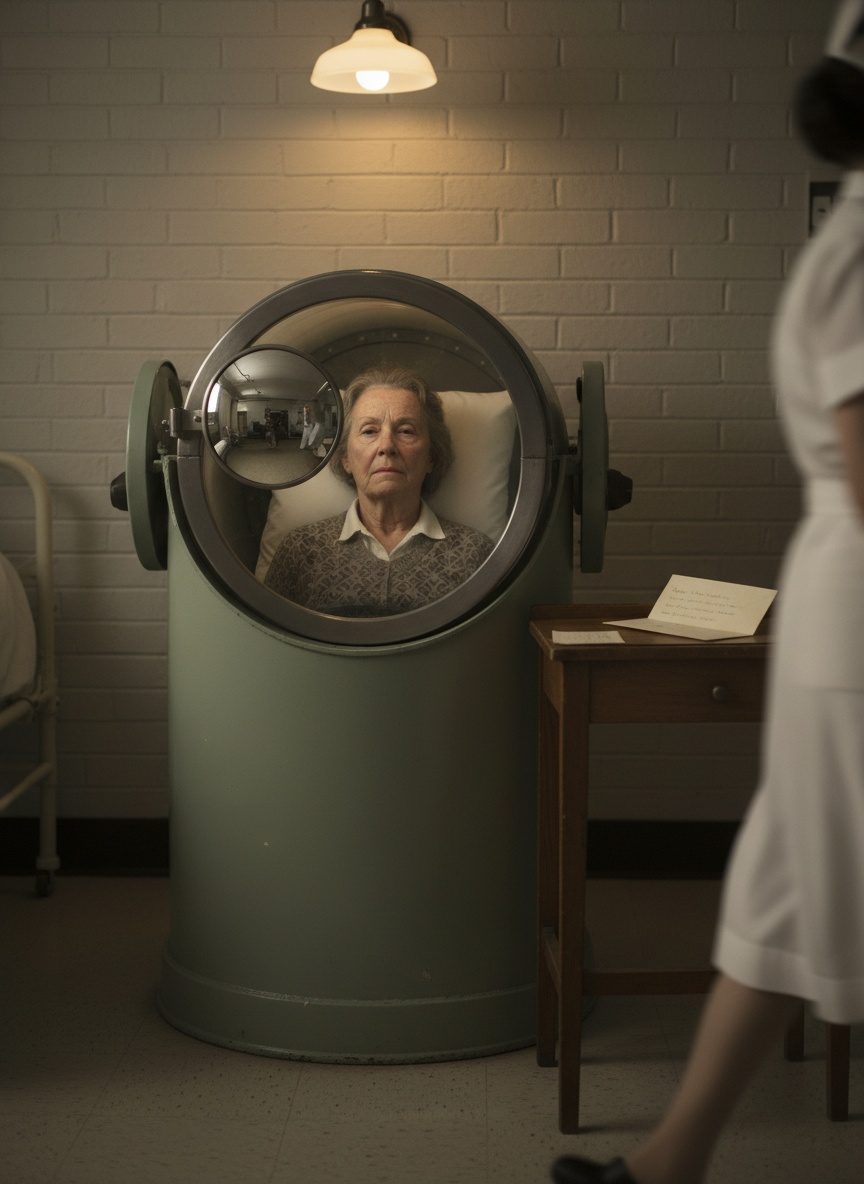
April 17, 1953. A machine hummed steadily in the corner of a hospital room.
The Day the World Changed
The birthplace of Martha Lillard's story was Oklahoma, a place where the vast skies and endless prairies serve as a backdrop to both everyday life and extraordinary events. It was a spring morning in 1953 when life as Martha knew it was irrevocably altered. Polio, the dreaded and highly contagious viral disease that haunted communities across America, made its insidious mark on her young body. As the virus took hold, it attacked her nervous system, rendering her muscles unable to perform the simplest, yet most crucial function of them all — breathing.
In the mid-20th century, communities were gripped by fear each summer, waiting to hear who would be the next victim of polio. The illness struck swiftly, and its effects could be devastating. For Martha, the consequences were immediate and terrifying. Unable to breathe unaided, she was placed into an iron lung, a mechanical respirator that encased her entire body and rhythmically forced air into and out of her lungs.
Doctors, bound by the medical knowledge of the time, painted a stark future for young Martha. They gave her little chance of reaching her 20th birthday, convinced that the iron lung would be both her life support and her prison. However, Martha's story was just beginning, and the decades to come would tell a tale of resilience and an indomitable spirit.
Life in a Metal Shell
The device that supported Martha's life was a cumbersome metal cylinder, designed during an era when medical innovation was racing to combat the relentless march of diseases like polio. Weighing hundreds of pounds, the iron lung was more than a piece of medical equipment; it was a constant companion. For Martha, this hulking machine became her world — both a savior and a symbol of her condition.
Life confined within the metal walls of her iron lung was challenging, but Martha was undeterred. Although the device limited her physical movement, it could not confine her mind or spirit. Over the years, Martha transformed her situation into an extraordinary existence. She wrote poetry, expressing her innermost thoughts and emotions in a way that touched those who heard her words. Her creativity also found an outlet in music, where every note and melody served as an anthem of hope and defiance.
As Martha grew, so did the world outside her iron lung, evolving and changing in a myriad of ways. While most people left the era of polio far behind with the advent of vaccines, she remained tethered to the disease's legacy. Martha became a living monument to a bygone era, a testament to how life could persist even in the face of overwhelming odds.
Defying the Odds
Martha's journey did not conform to the predictions made by her doctors. She reached adulthood and thrived in ways no one believed possible. As the decades rolled on, she embraced life's challenges with an unmatched determination. Living independently, Martha managed to navigate daily life with the aid of caregivers who helped maintain her physical needs. But in many ways, it was she who inspired and supported those around her.
Her condition did not define her limits but rather highlighted her strengths. Like the wings of a butterfly that triumph over emerging from the chrysalis, Martha found beauty and meaning in her unique existence. She became an advocate for those with disabilities, imparting wisdom gleaned from her experiences, teaching others about the value of life, resilience, and hope despite the confines of circumstance.
Through long nights and years marked by the rhythmic sound of the iron lung, Martha's story unfolded as a chronicle of survival, inspiring countless individuals who encountered her tale, whether through personal meetings or through the headlines that occasionally spotlighted her incredible journey.
A Legacy of Breath
In the spring of 2024, the incredible journey of Martha Lillard came to its natural end at the age of 78. She left behind a legacy unlike any other, having lived the majority of her life within one of the world's last operational iron lungs. She outlasted nearly every other person who ever shared her experience, becoming a poignant symbol of a bygone era that many had forgotten.
Why does Martha's story matter today, in a world that has largely moved beyond the shadows of polio? She embodied the enduring human spirit, a reminder that life is not solely defined by its constraints but by how one chooses to transcend them. Martha's existence served as a living testament to resilience, not just surviving within her metal shell, but truly living and leaving a mark on the world.
Her story is a reminder that even in the most exhaustive circumstances, life continues to hold value and beauty. Dr. Albert Sabin, whose vaccine helped free the world from polio's grip, once noted, "Her bravery enriched our understanding of what it means to inhale, to continue, and to hope." Martha Lillard's life was a testament to the idea that with every breath — even those given by a machine — there is a story worth telling, a life worth living.